


menu

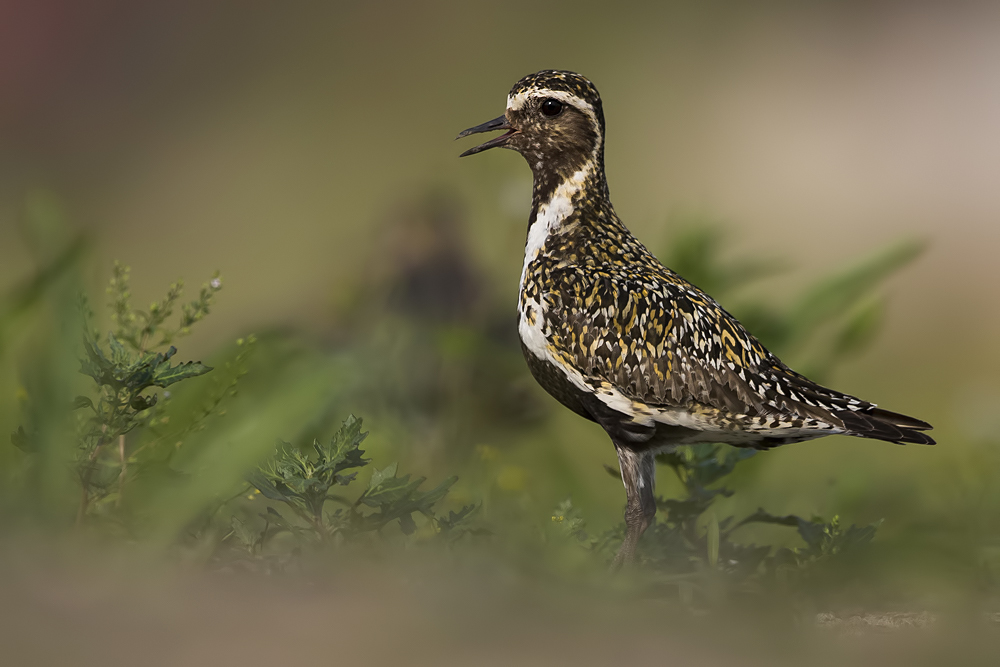
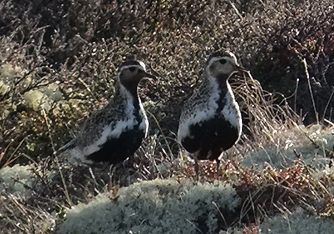
Goudplevier
Pluvialis apricaria
soort binnen Charadriidae


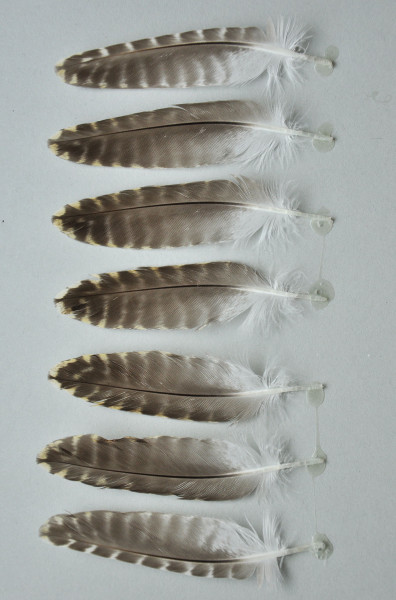
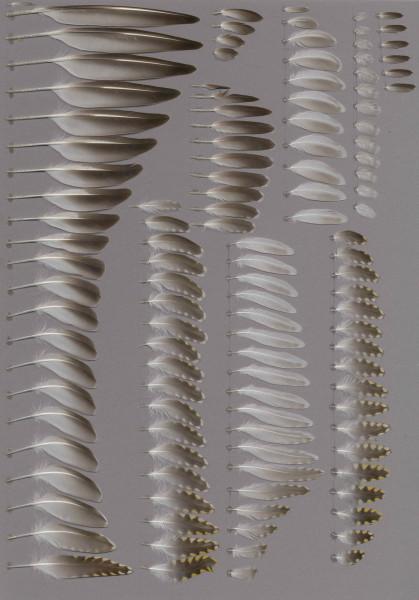
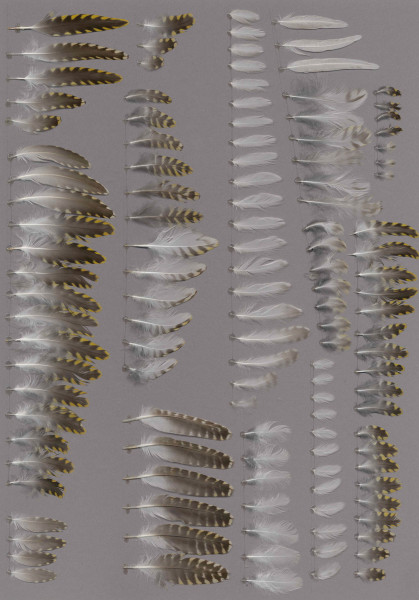
afb. 513 © Kristin Schwenk
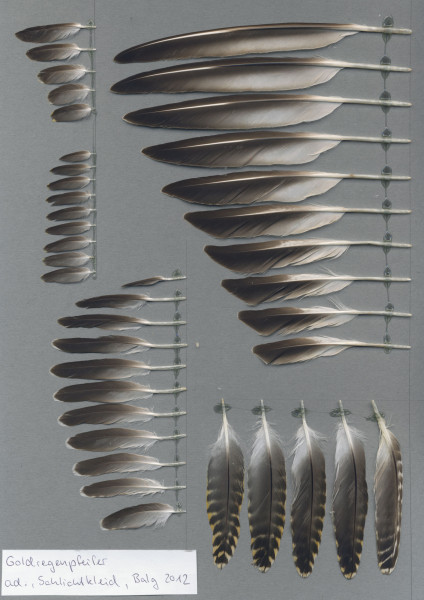
aantal langste
handpen 10 per vleugel 138.5 - 145.0mm n=4
P9 (75%) P10 (25%)
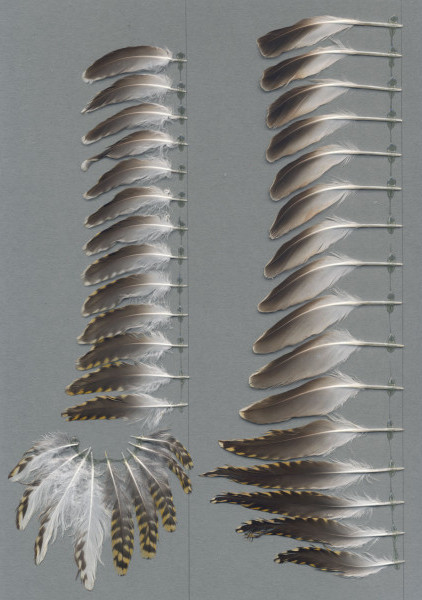
armpen 17-18 per vleugel 88.5 - 102.0mm n=4
S13 (25%) S14 (25%) S11 (25%) S12 (25%)
staartpen 12
78.0 - 83.5mm n=3
R5 (33%) R6 (33%) R3=R5 (33%)
wing length1 hand-wing-index1,2 (HWI) primaries-index wing length/longest primary ratio hand-wing-index/primaries-index ratio
180 - 188mm n=6 56 - 58% n=5 47 - 52% n=4 ⌀129% ⌀119%
detailed information

The wing length is measured on the flattened and straightened wing ("maximum chord") from the carpal joint to the tip of the longest primary feather, the so-called "Kleinschmidt-method".

combined data from:
Avonet1: 180 - 185mm n=5
Featherbase: 188 - 188mm n=1

The hand-wing-index, introduced by Kipp 1959, is calculated as the ratio of the hand length (difference between the length of the longest primary and the first secondary) to the wing length.

combined data from:
Avonet1: 56 - 58% n=4,
Featherbase: 56 - 56% n=1
The primaries-index is calculated as the ratio of the longest primary feather length to the first (outermost) secondary. It is the equivalent of the hand-wing index for feather measurements. The wing length/longest primary ratio is calculated as the ratio of the wing length to the length of the longest primary feather. The hand-wing-index/primaries-index ratio is calculated as the ratio of the hand-wing index to the primaries-index.
1 Tobias, J. A., et al. (2022). AVONET: morphological, ecological and geographical data for all birds.
2 Kipp, Friedrich A.: "Der Handflügel-Index als flugbiologisches Maß", erschienen in "Vogelwarte - Zeitschrift für Vogelkunde", 1959, Band 20, Heft 1


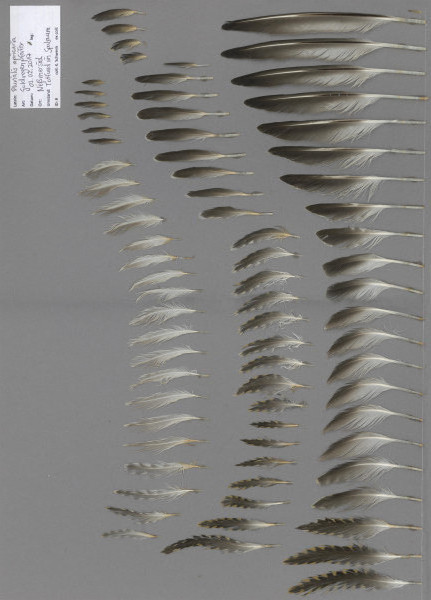
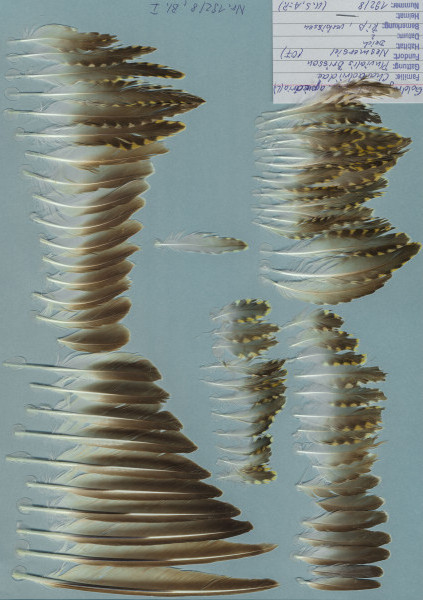
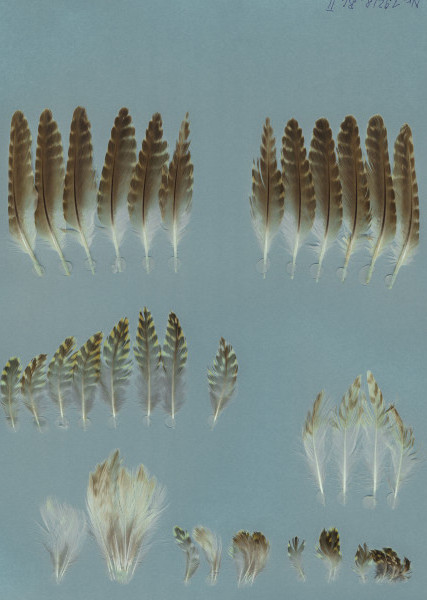
galerij van specimens

landtoewijzingen

Waders, gulls and auks

verspreiding

beschermingsstatus

  • CITES
    niet vermeld
  • Verordening (EG) Nr. 865/2006
    niet vermeld
  • de Duitse Federale Natuurbeschermingsakte §44
    streng beschermd