
menu

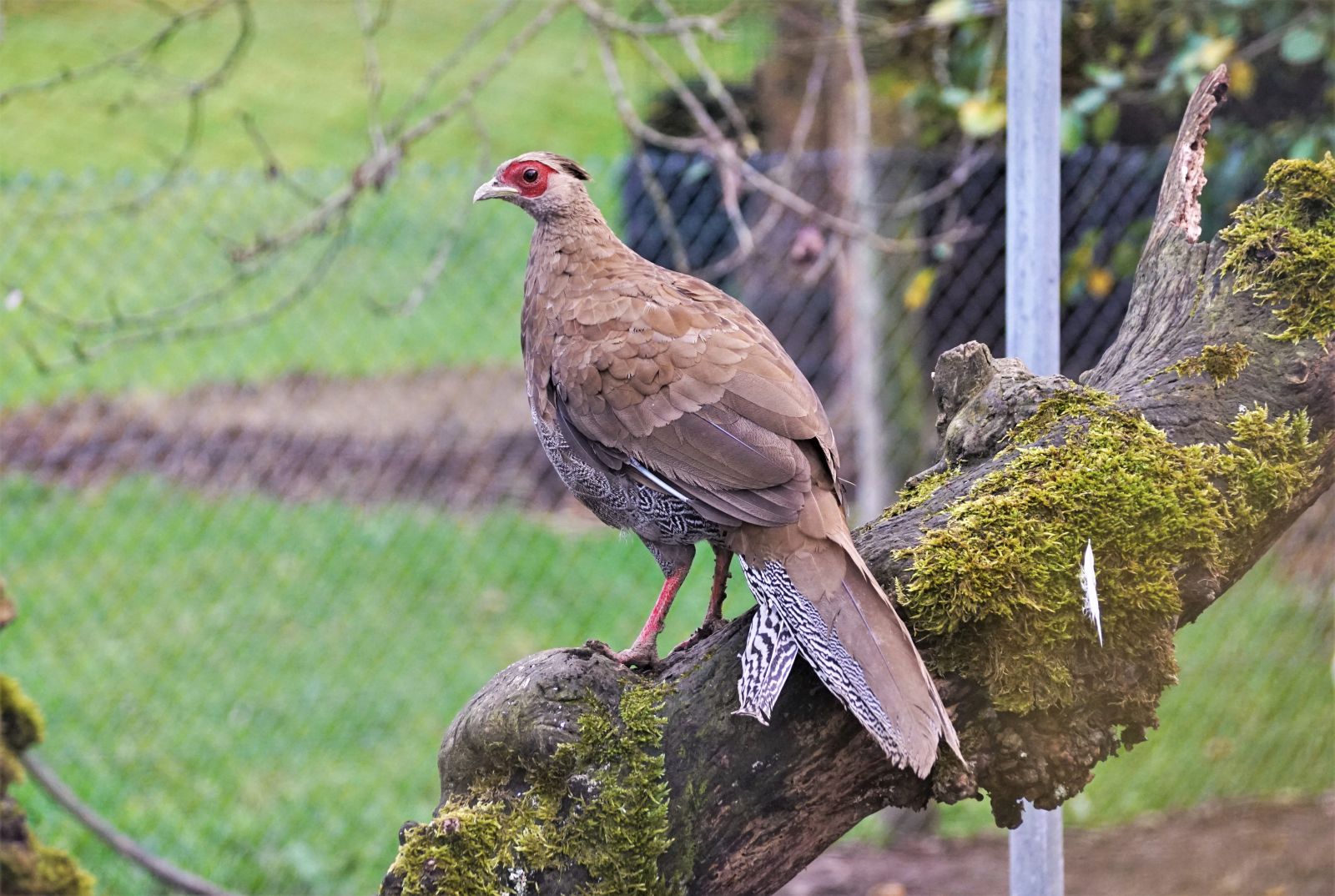
Zilverfazant
Lophura nycthemera
soort binnen Phasianidae


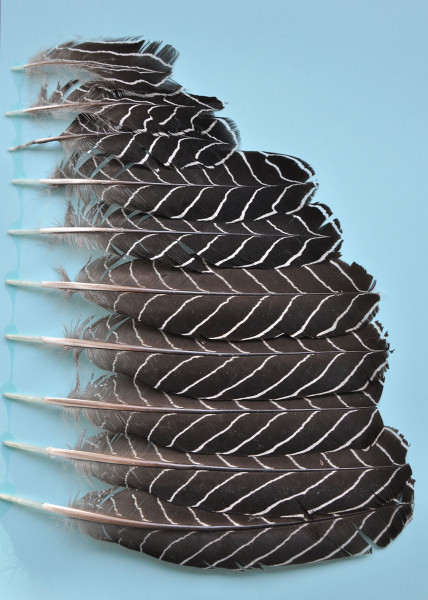
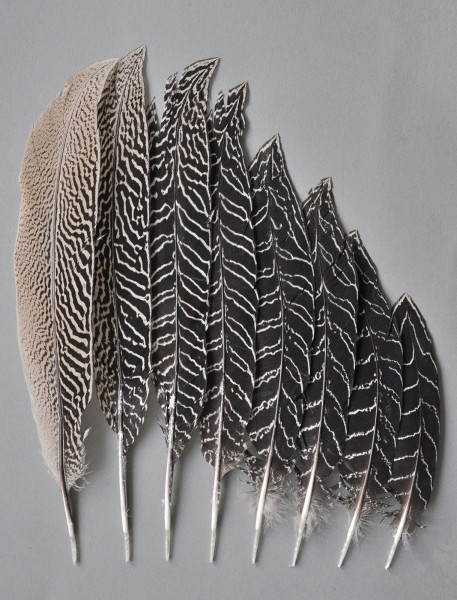
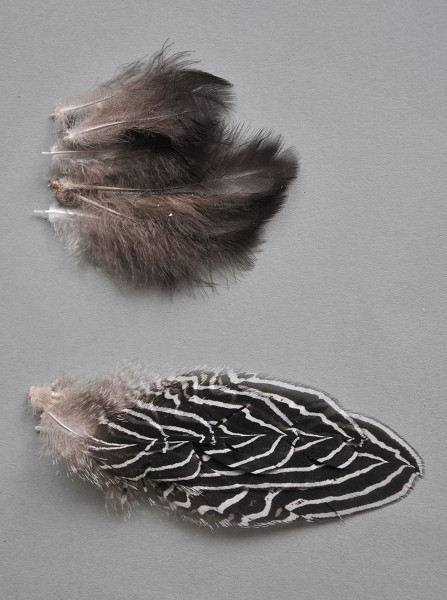
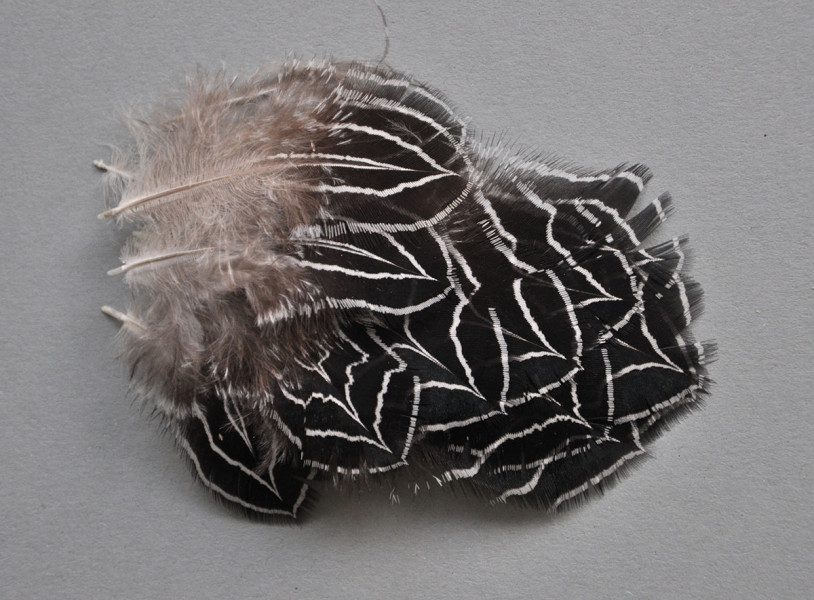
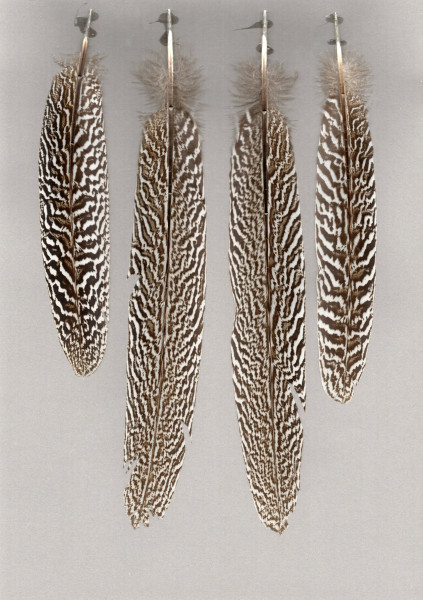
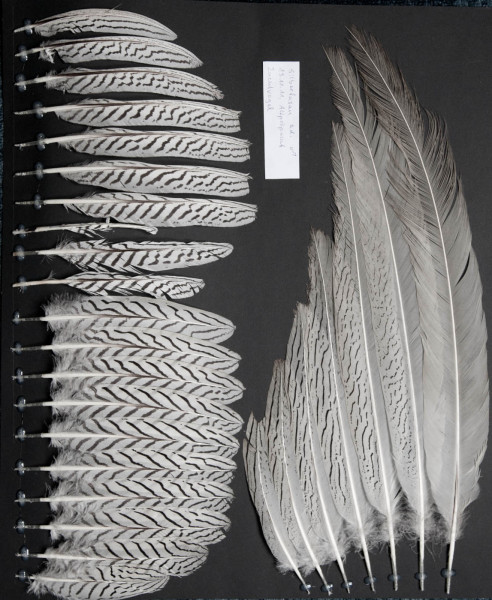
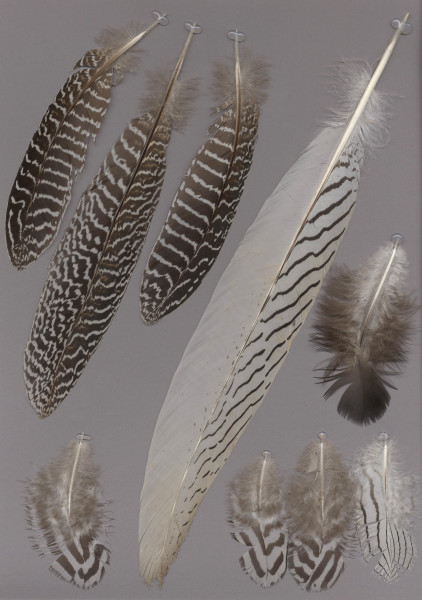
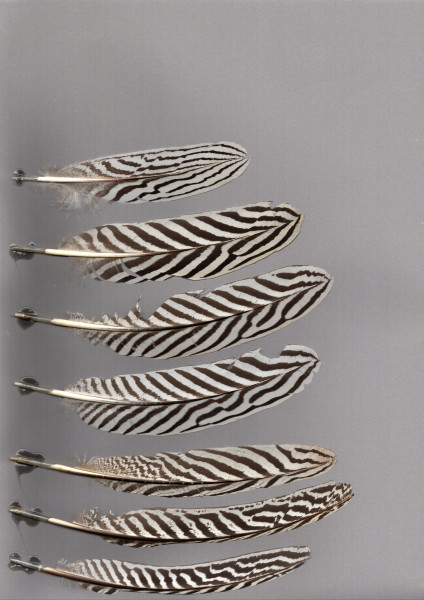
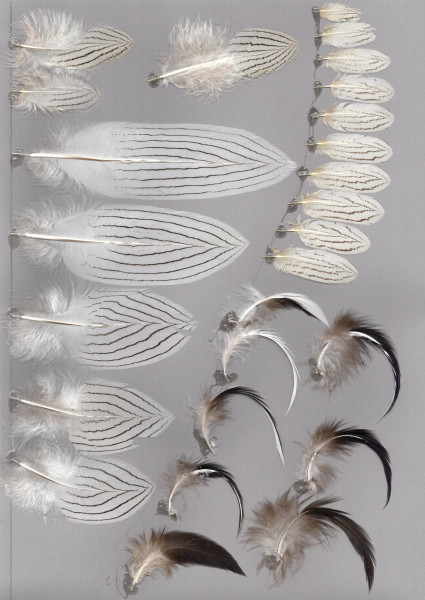
afb. 1254 © Jo Kuyken

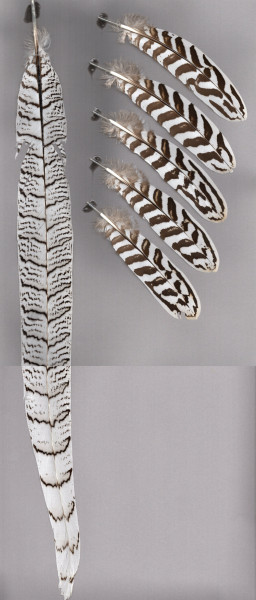
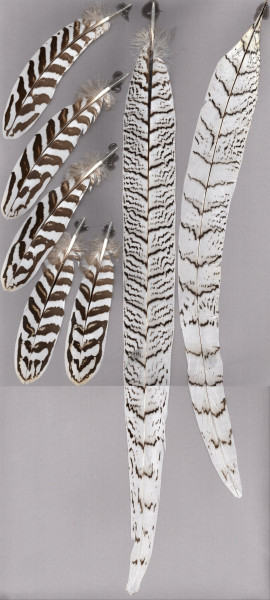
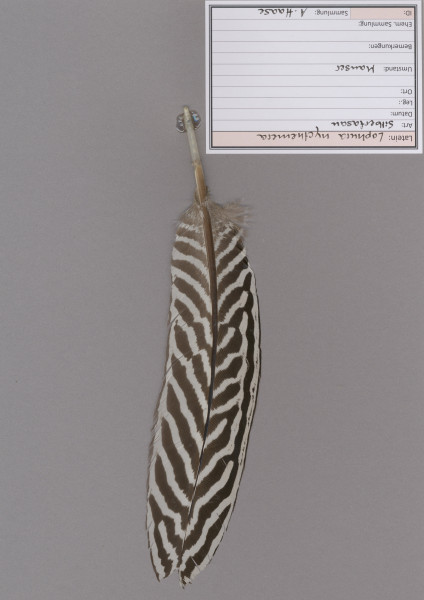
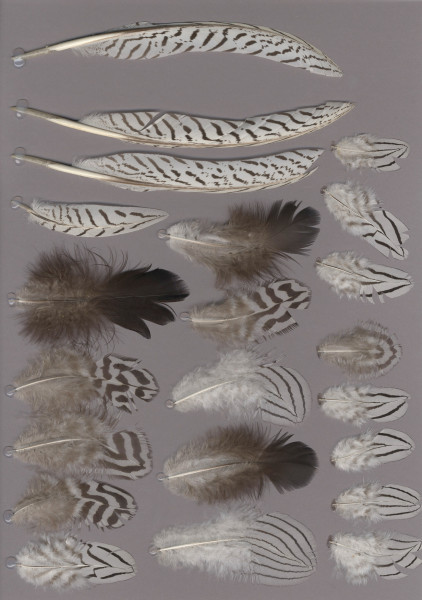
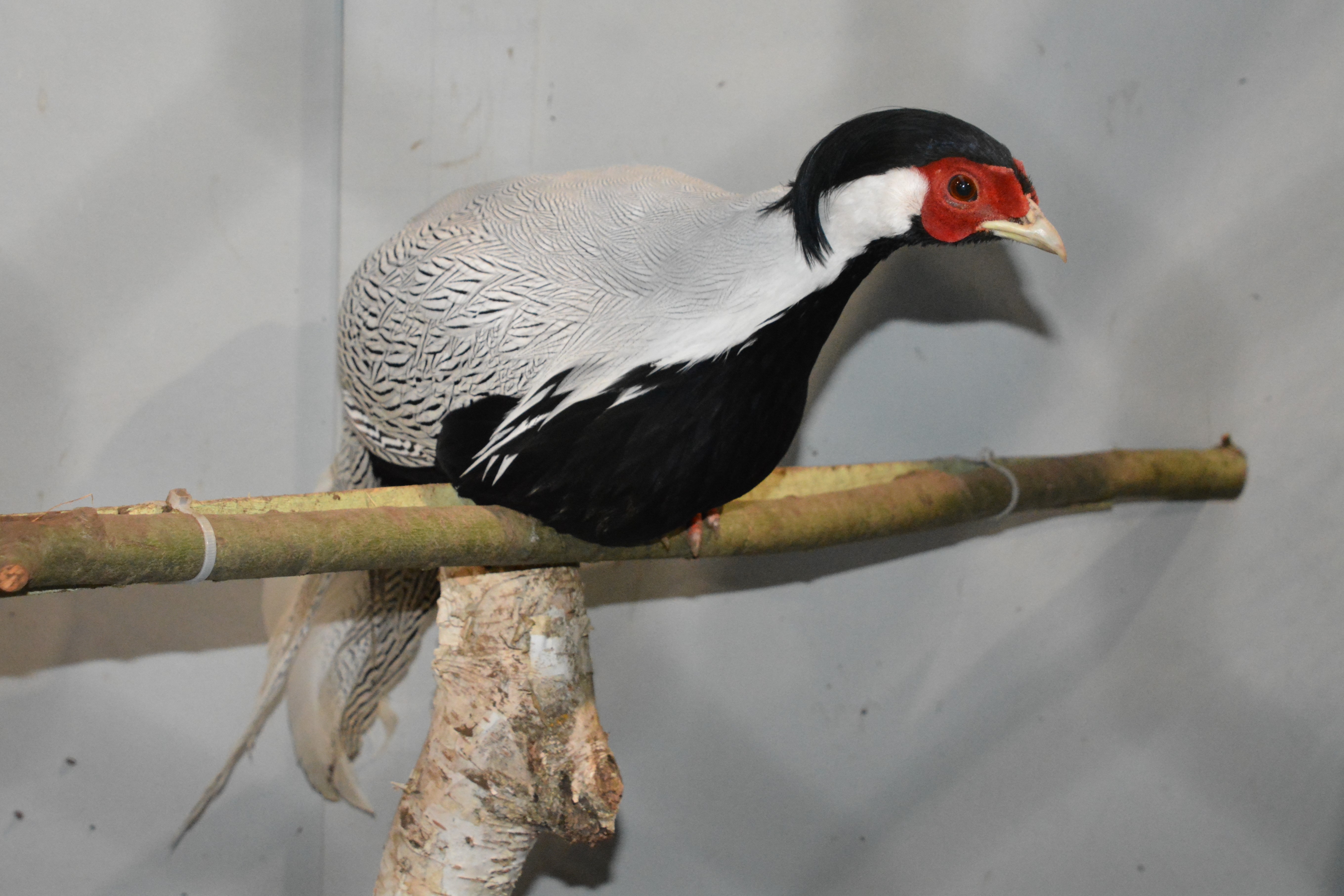
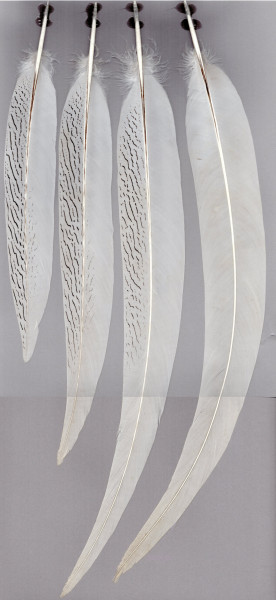
afb. 1255 mannelijk ssp. jonesi © Jo Kuyken

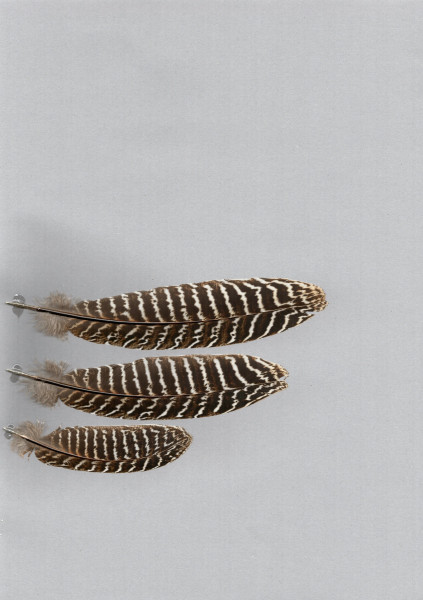
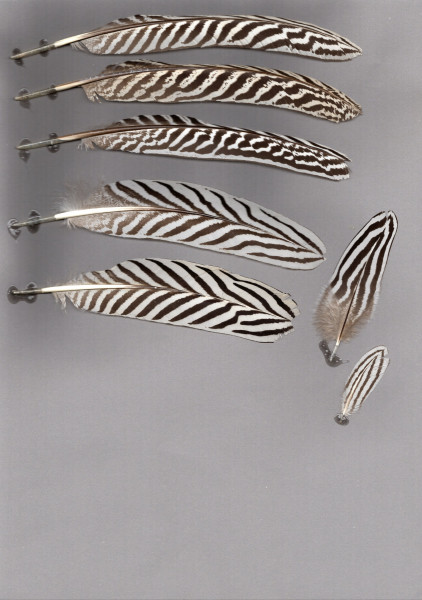
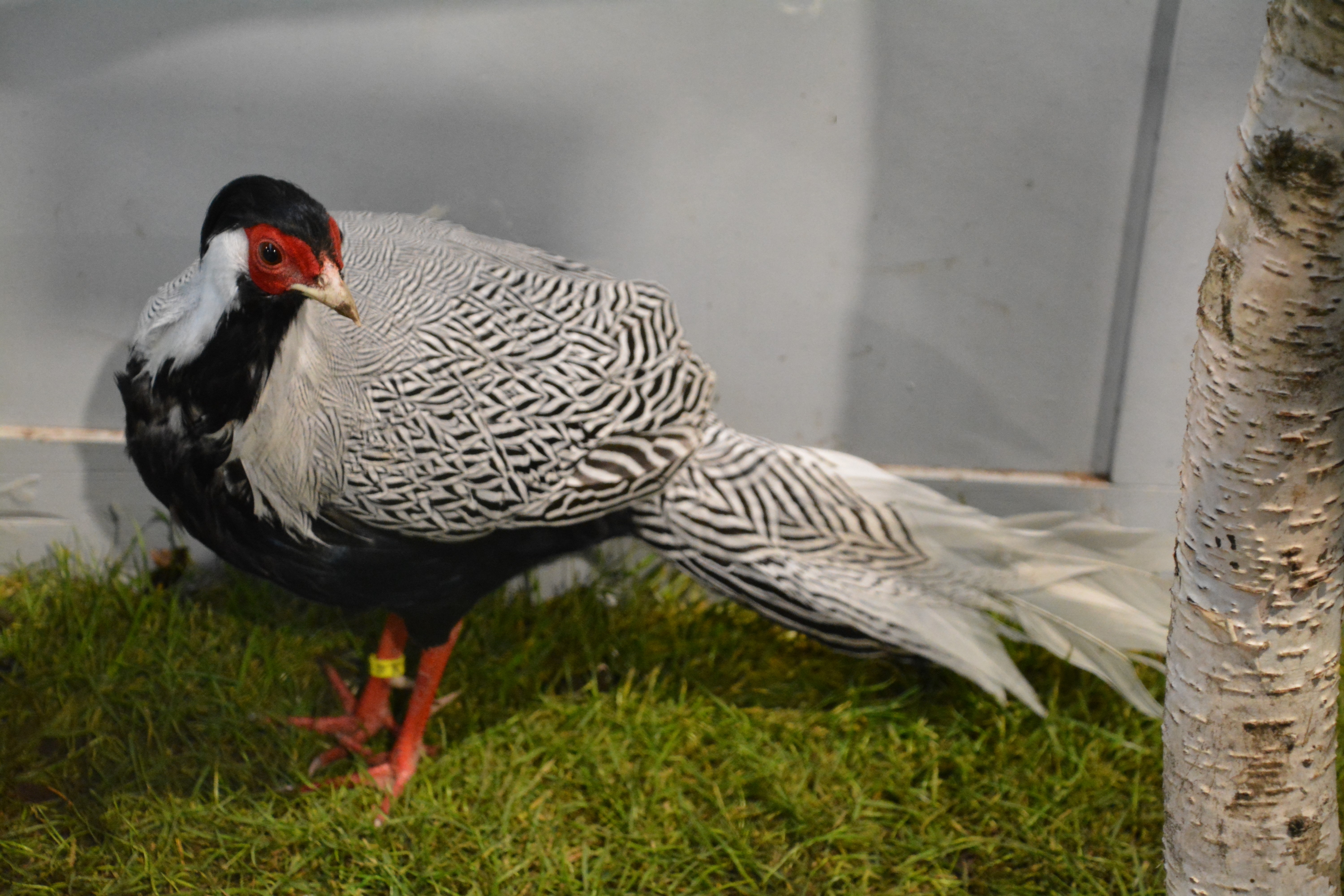
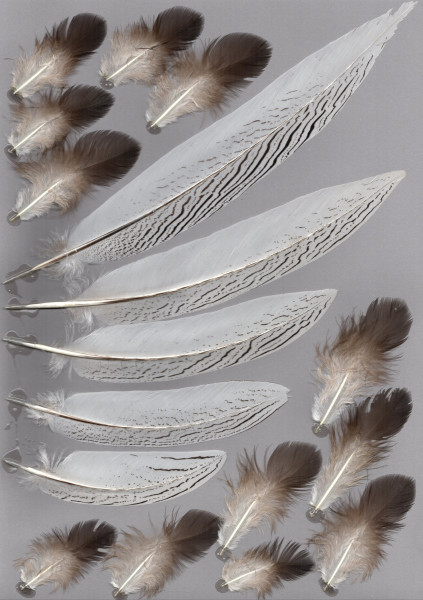
afb. 1256 mannelijk ssp. lewisi © Jo Kuyken

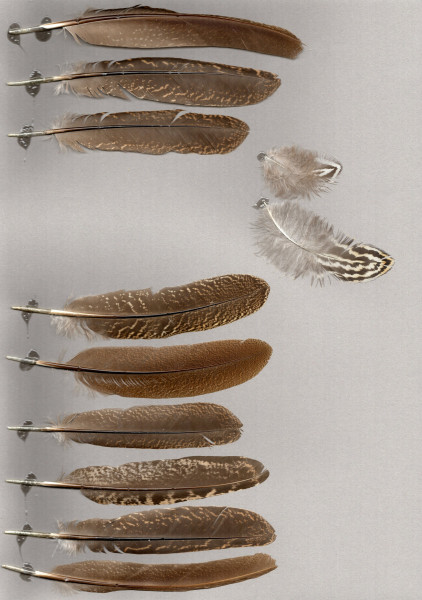
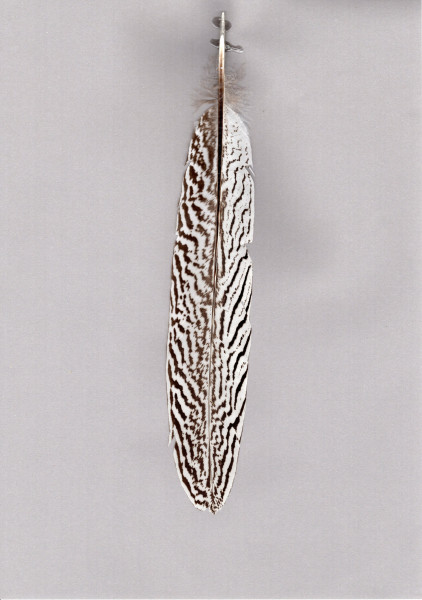
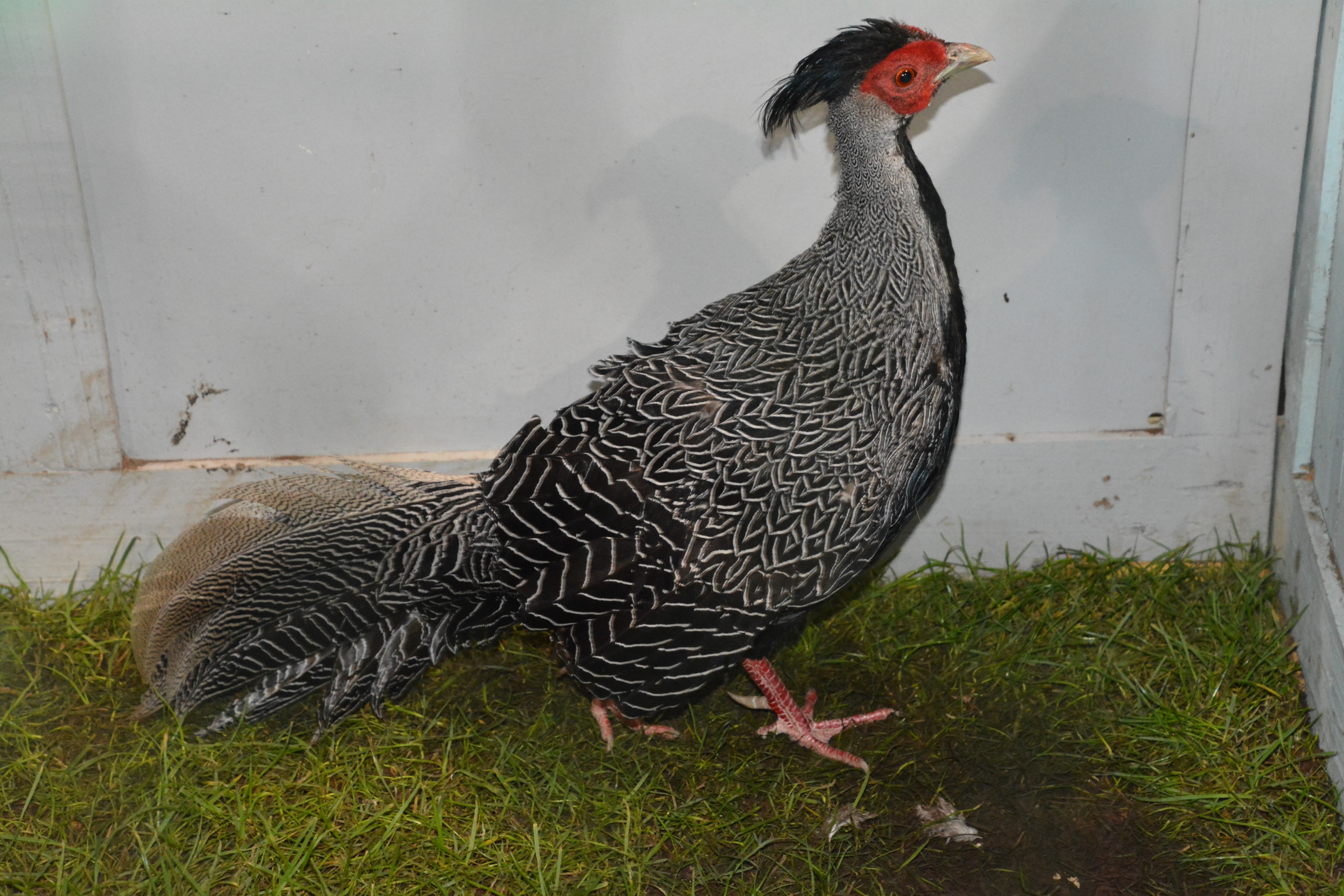
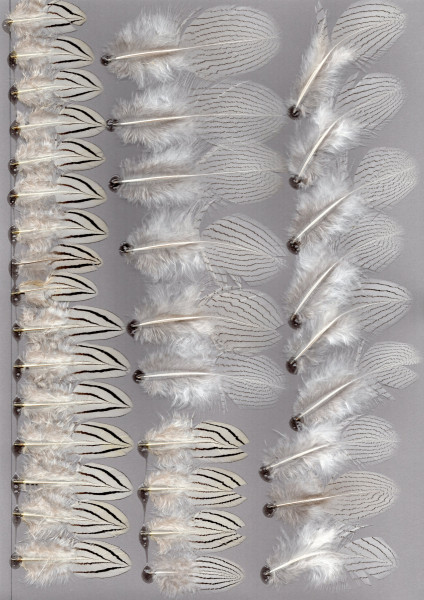
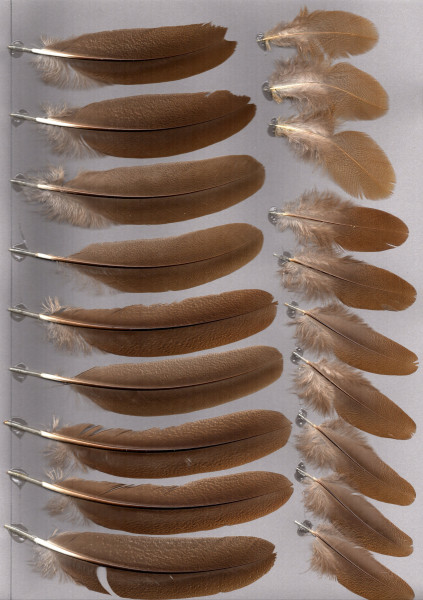
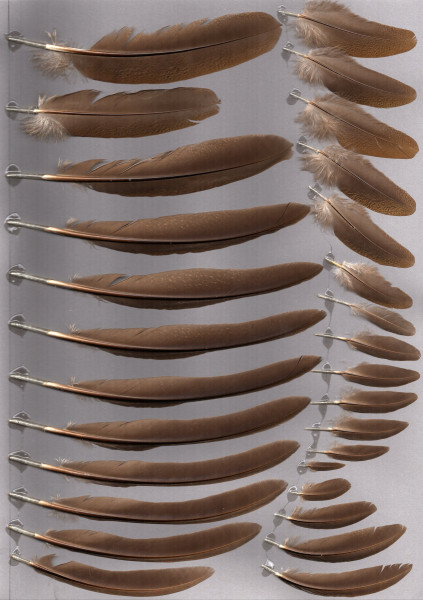
afb. 1746 vrouwelijk ssp. nycthemera © Markus Sobotka
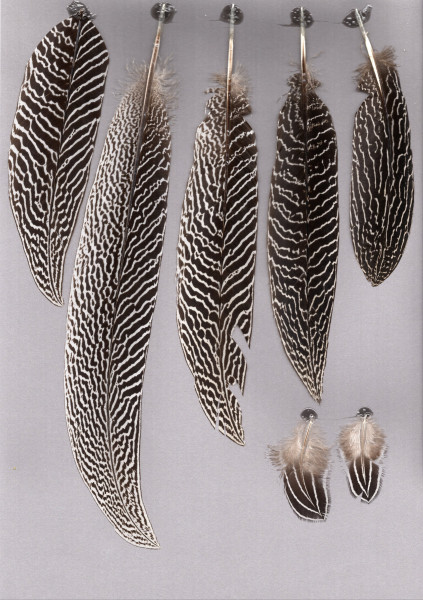
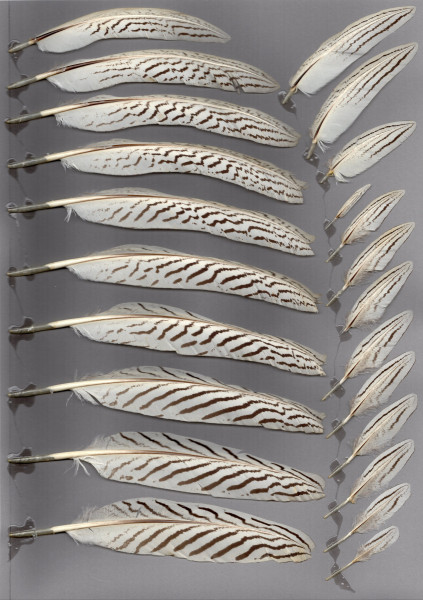
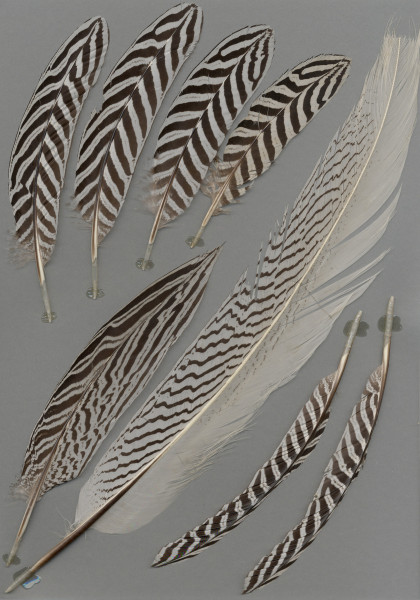
ad. mannelijk
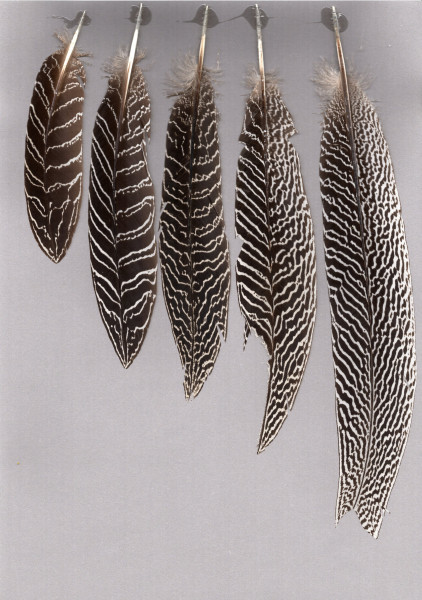
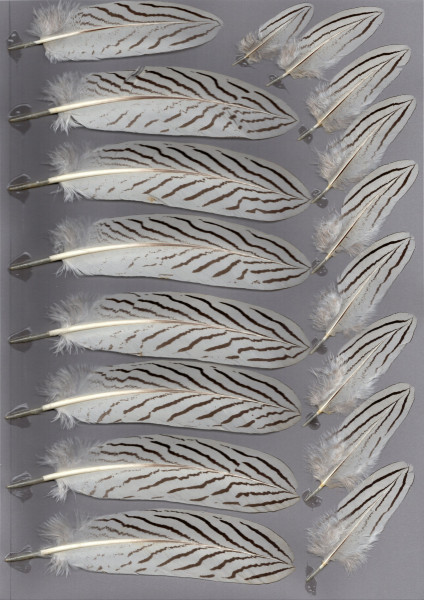
juv. mannelijk
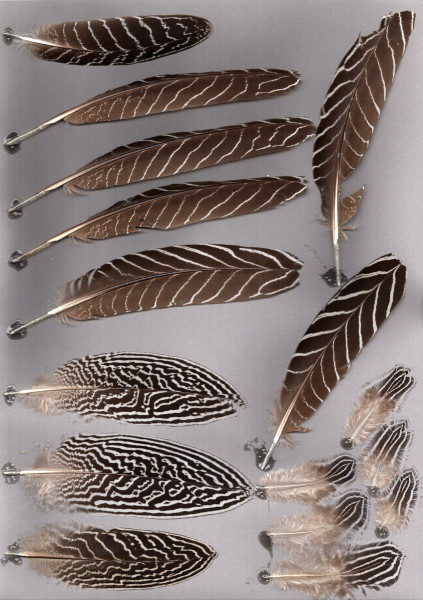
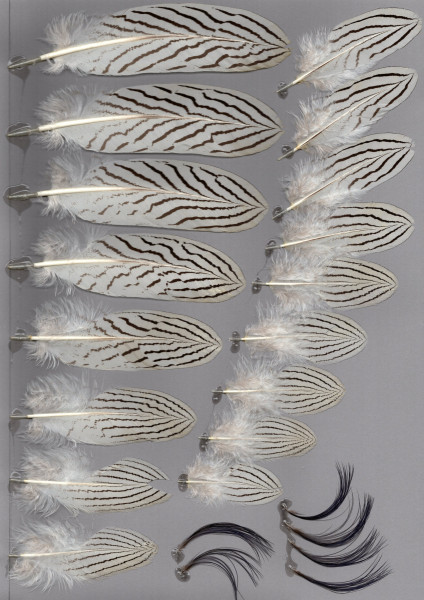
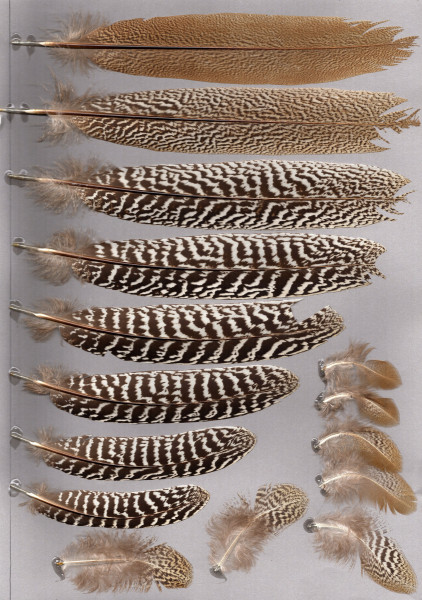
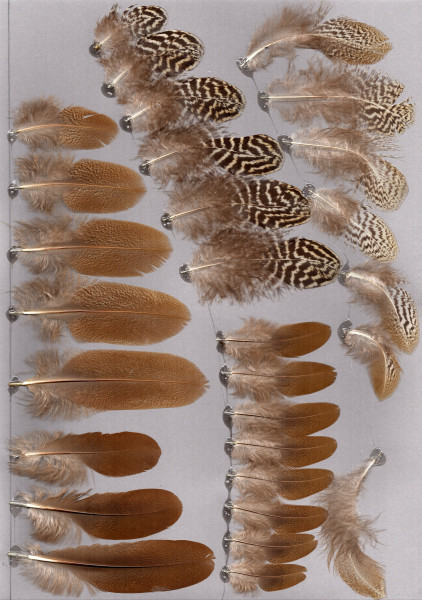
ad. vrouwelijk
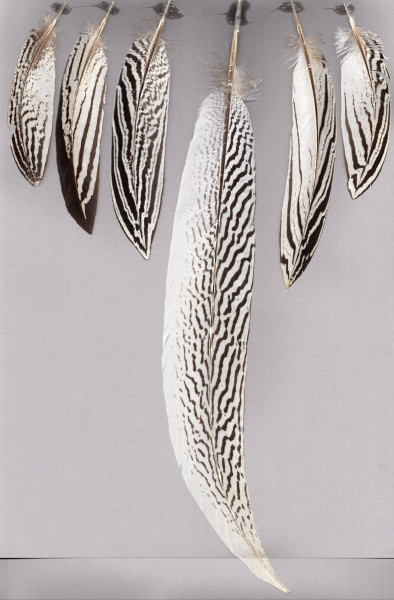
ad. mannelijk

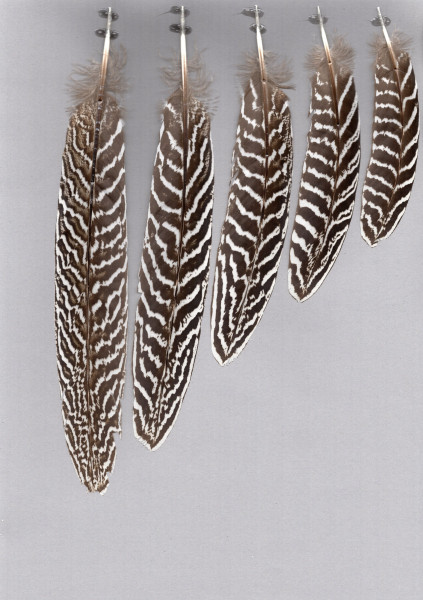
Der Silberfasan besitzt ein relativ charakteristisches Federkleid. Adulte Vögel der Nominatform haben weiße Hand- und Armschwingen mit feinen, verzerrten schwarzen Streifen. Auf den Armschwingen verläuft die Zeichnung meist symmetrisch zum Kiel. Die längste Handschwinge ist meist die H4, also sehr weit innen im Flügel. Die Handschwingen HH4 bis H9 sind in der Außenfahne partiell verengt. Die Steuerfedern sind ähnlich gefärbt, die Zeichnung ist jedoch längs verzerrt, die Streifen unterbrochen und größtenteils auf die Außenfahne beschränkt. Die S1 ist rein weiß gefärbt. Weibliche Silberfasane besitzen in den Steuerfedern deutlich mehr schwarz, das Muster wirkt mehr wie eine Marmorierung. Die mittleren Steuerfedern sind größtenteils sandbraun gefärbt. Die Hand- und Armschwingen sind ebenfalls sandbraun gefärbt.

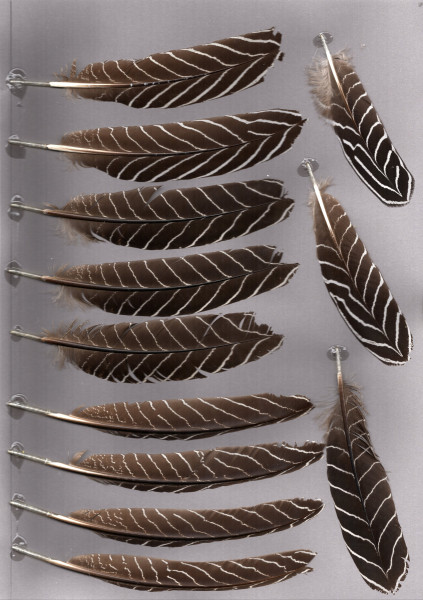
Der Lewis-Silberfasan (L. n. lewesi)

Der in Südwest-Kambodscha beheimatete Lewis-Silberfasan besitzt Hand- und Armschwingen, welche wie ein negativ der Nominatform wirken. Die Federn sind schwarzbraun gefärbt mit feinen weißen Querlinien. Die Steuerfedern sind ähnlich gefärbt, werden jedoch zur S1 hin weißer und feiner in der Zeichnung. Die Innenfahne kann dann auch sehr fein gesprenkelt sein.

veer aantal langste
handpen 10 per vleugel 223.0 - 227.5mm n=2
P4 (50%) P3 (50%)
armpen 16 per vleugel 193.0 - 215.0mm n=2
S2 (50%) S3 (50%)
staartpen 18
299.0 - 666.0mm n=2
R2 (50%) R1 (50%)
Annotations for measurement data

number of individuals n

For the statistics of the longest feather measurements, we only use data from birds having the largest feathers present. A broken, missing or growing feather, which could potentially be the longest, disqualifies the individual for measurement. Likewise, no hybrids are included in the statistics. However, birds of different ages (e.g. young and adult woodpeckers), sexes (e.g. male and female sparrowhawks) and subspecies are used equally in the diagram and can therefore lead to a very wide range of variation. The greater the number of individuals measured, the more accurate the range of variation. Very small data sets of one or only a few birds only lead to approximate results.

measurement method

The feathers are measured digitally via the scan. A ventral curvature of the feathers is straightened for the measurement, but a caudal curvature is not! Measurements are taken from the start of the calamus to the largest extension of the feather. This does not always have to be the rachis, but can also be the vanes (e.g. in the case of buntings). Special features, such as the wax platelets on the waxwing, are omitted from the measurement.

percentages

The percentages of the individual feathers, e.g. P5, indicate the proportion of individuals in which this feather is the longest of its kind. This information should always be considered in conjunction with the total number of birds measured. An indication of 100% for five individuals is no guarantee that this feather is really always the longest.

ad. mannelijk
juv. mannelijk
ad. mannelijk
ad. mannelijk
ad. vrouwelijk
ad. mannelijk
ad.

landtoewijzingen

extant

Argentina (origin uncertain) · Cambodia · China · Lao People's Democratic Republic · Myanmar · Thailand · Viet Nam ·
source: IUCN 2025. IUCN Red List of Threatened Species. Version 2025-1 <www.iucnredlist.org>
assessment data: |

Chicken, grouse and turkeys

verspreiding

beschermingsstatus

  • CITES
    niet vermeld
  • Verordening (EG) Nr. 865/2006
    niet vermeld
  • de Duitse Federale Natuurbeschermingsakte §44
    niet vermeld