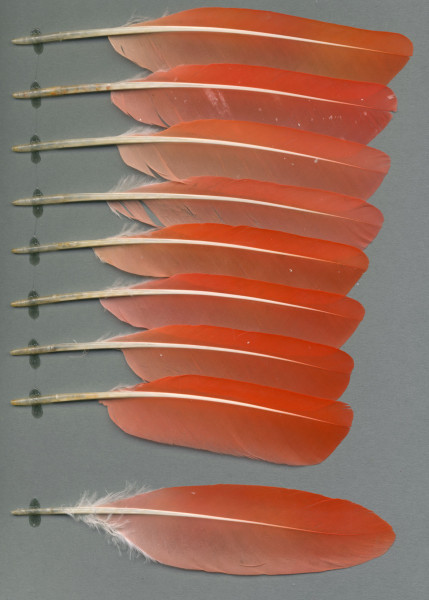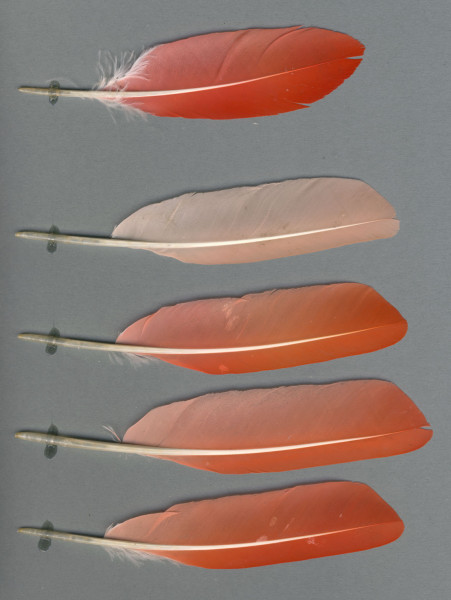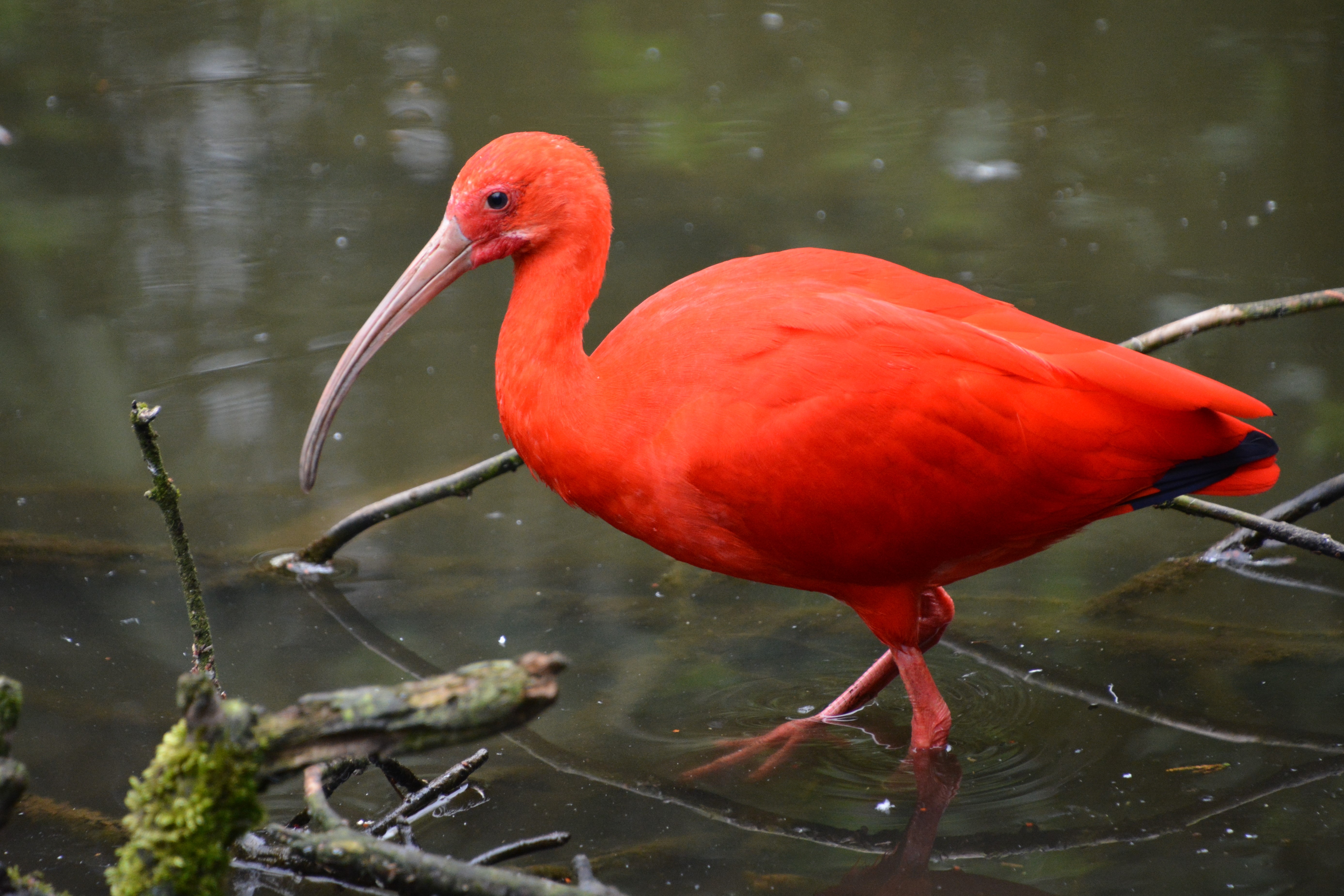
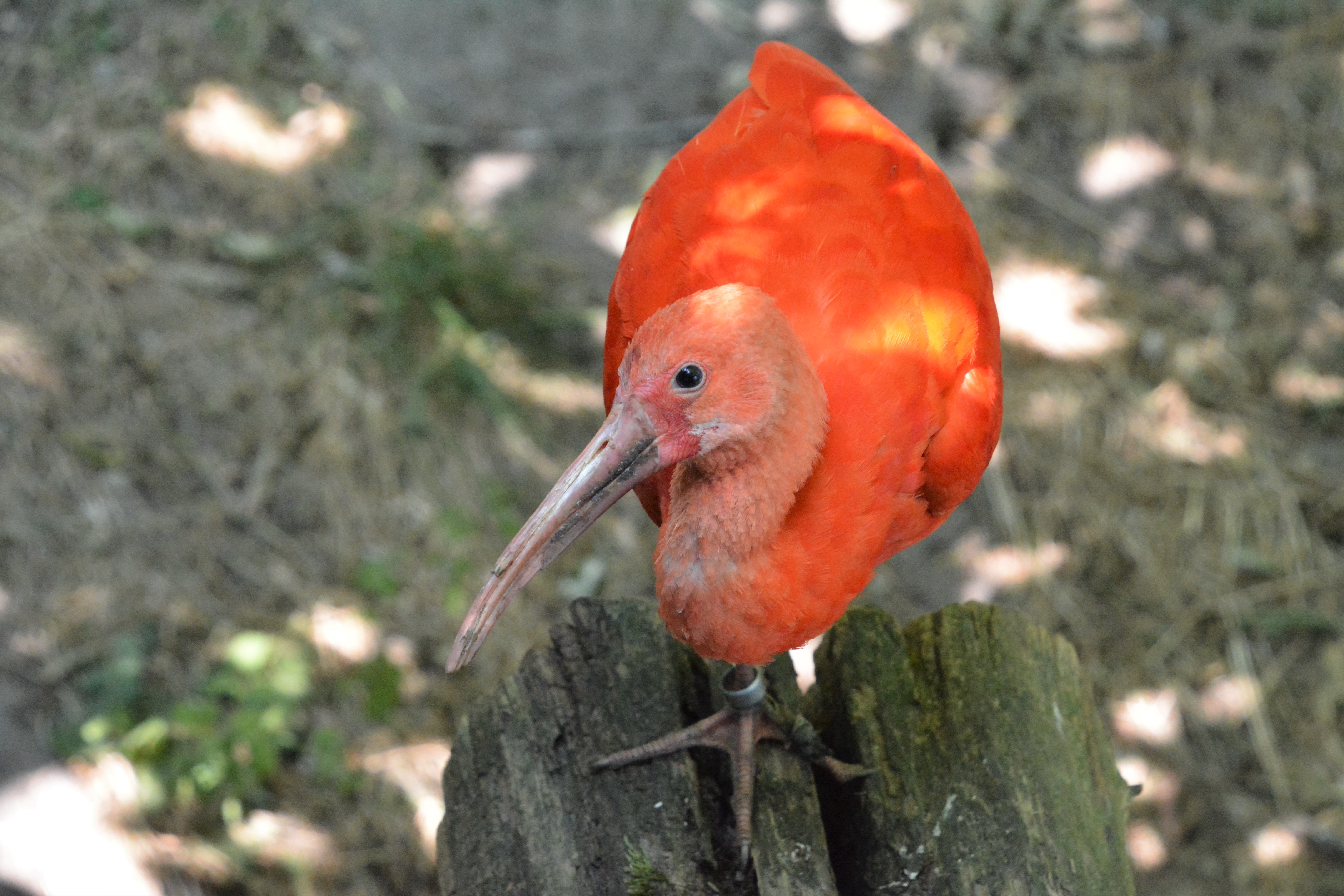
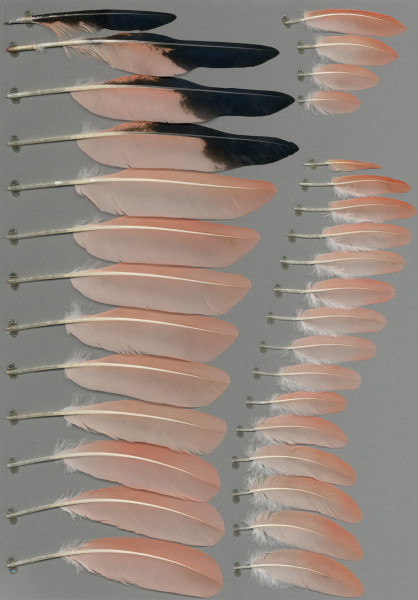
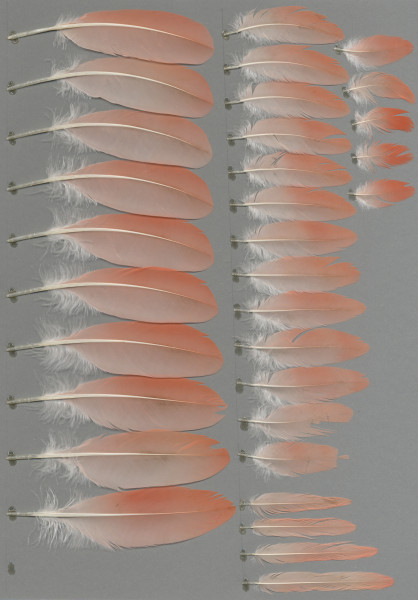
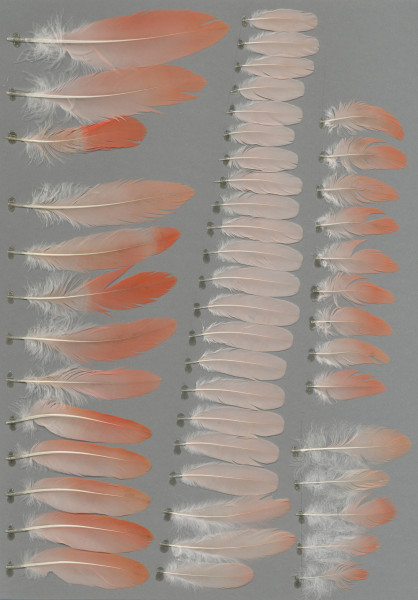
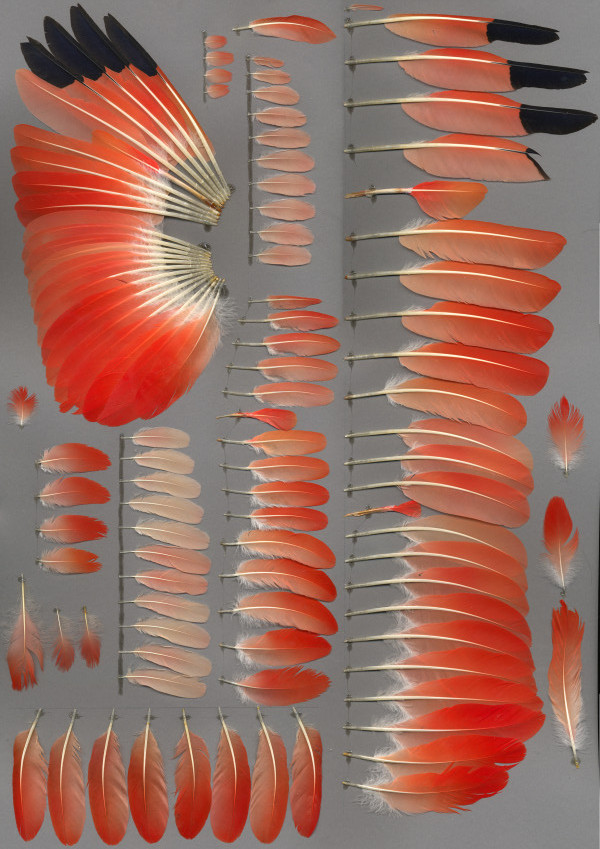
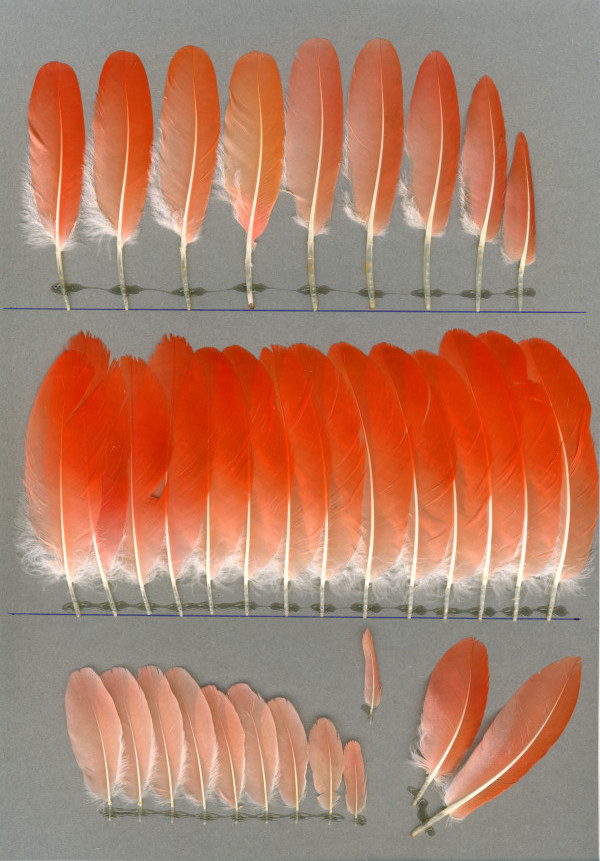


Die Federn des Scharlachsichlers sind durchweg charakteristisch. Die leuchtend orangerote bis rosane Färbung findet man unter Umständen in blasserer Form noch beim Rosalöffler, im Kleingefieder auch bei vielen Flamingoarten. Flamingos besitzen jedoch meist eine rötlichere und weniger orangefarbene Gefiederfärbung. Die Kiele sind zum größten Teil weiß. Die äußeren Handschwingen besitzen eine satt schwarze, definiert abgetrennte Spitze. Die Handschwingen H7-H9 sind in der Außenfahne teilweise, H10 vollständig verengt.
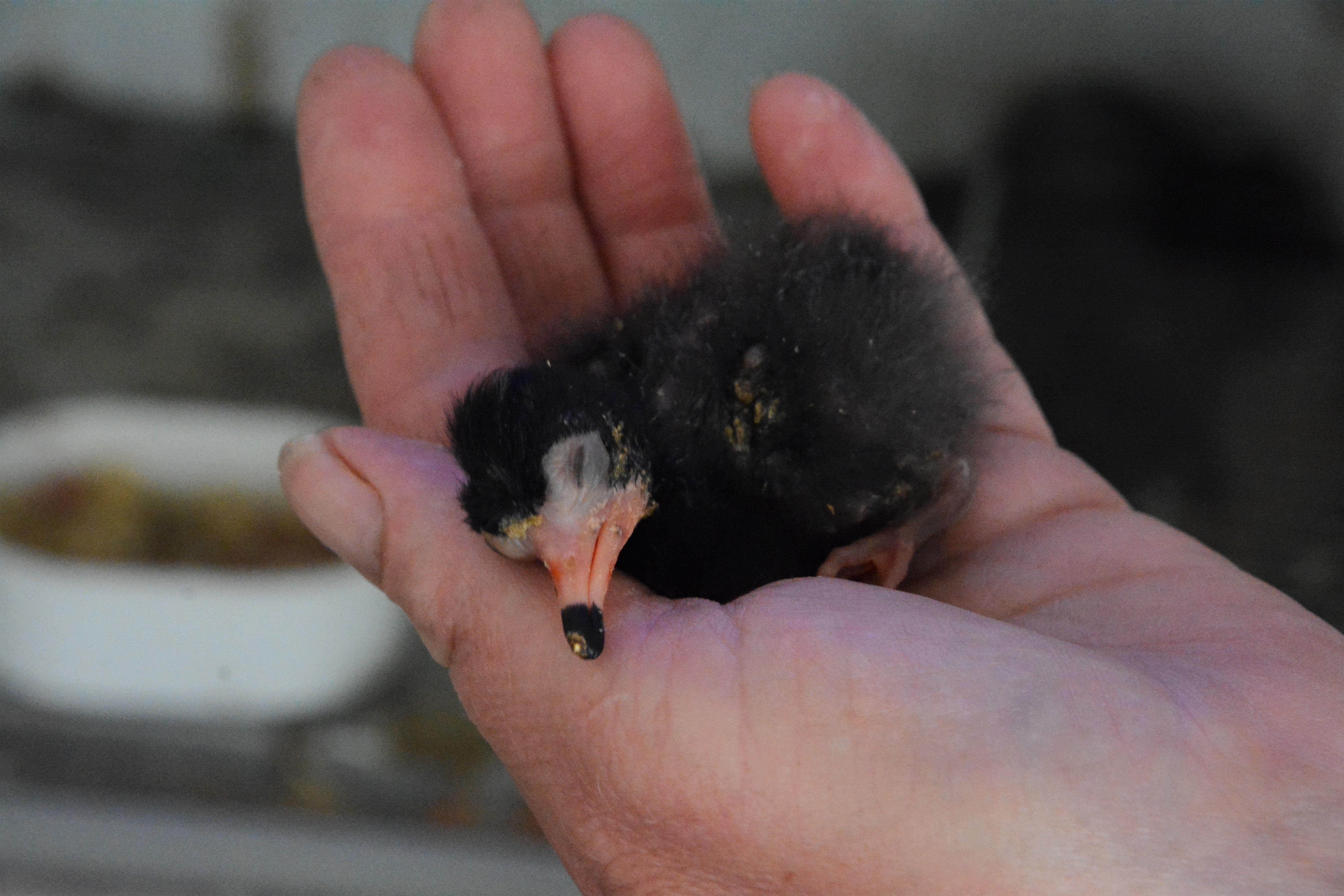
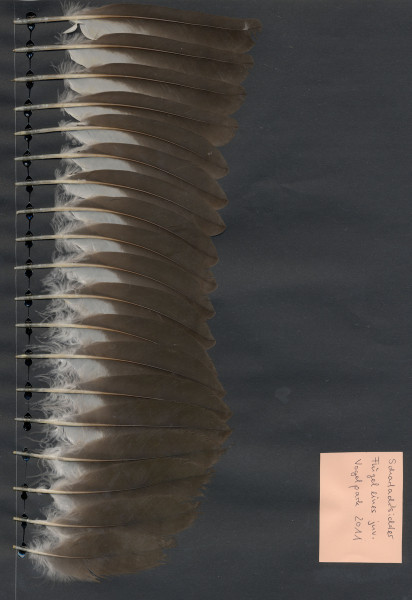
Im Jugendgefieder sind die Schwingen noch dunkelbraun gefärbt. Das Deckgefieder ist hell- bis mittelgrau und wechselt mit der Zeit in das leuchtende Orange des Adultkleids.
| feather | number | longest |
|---|---|---|
| primary | 10 per wing |
204.5 - 215.0mm
n=2 P7 (100%) |
| secondary | 15-16 per wing |
146.5 - 167.5mm
n=3 S13 (67%) S10 (33%) |
| retrix |
12
|
no data available |
|
do_not_translate_yet:measurements_remarks.title
do_not_translate_yet:measurements_remarks.number_of_individuals ndo_not_translate_yet:measurements_remarks.selection_of_individuals do_not_translate_yet:measurements_remarks.method_titledo_not_translate_yet:measurements_remarks.method do_not_translate_yet:measurements_remarks.percentage_titledo_not_translate_yet:measurements_remarks.percentage |
||