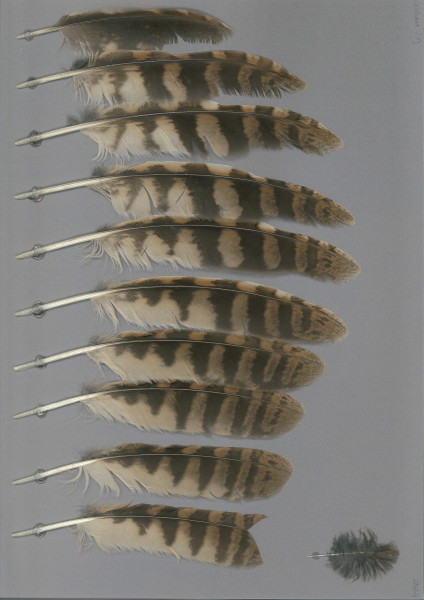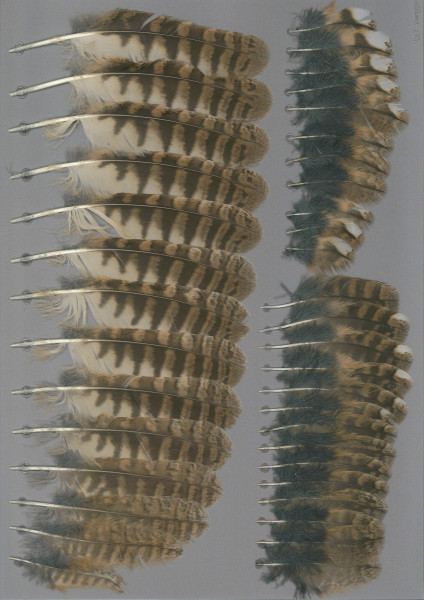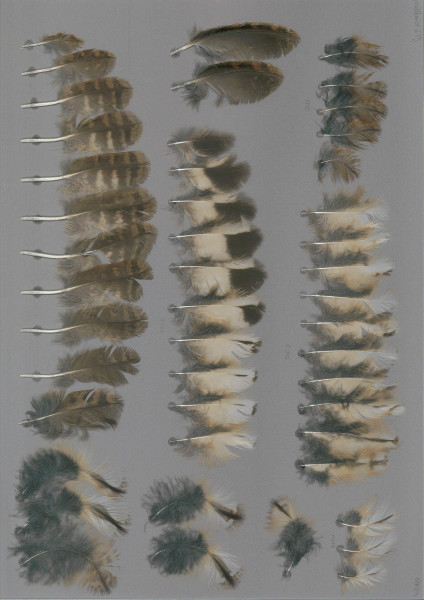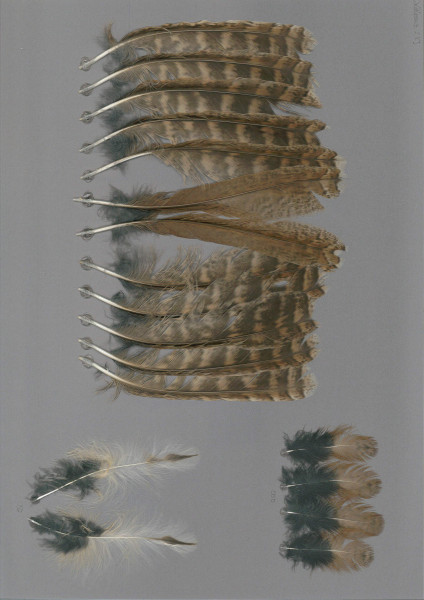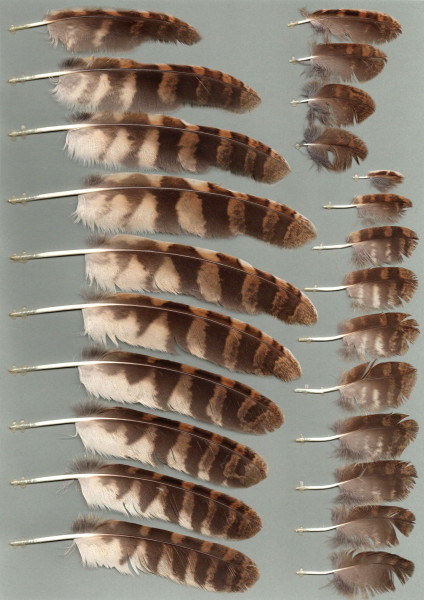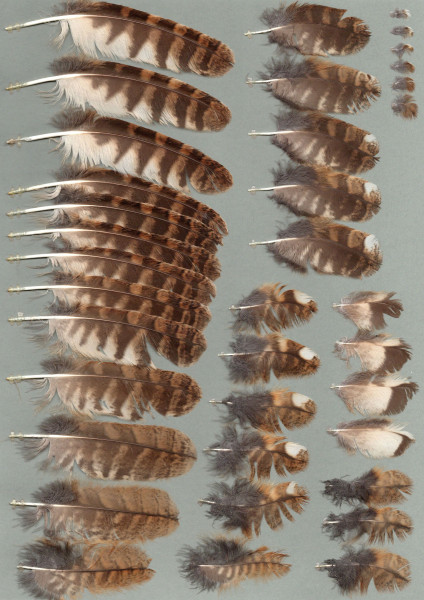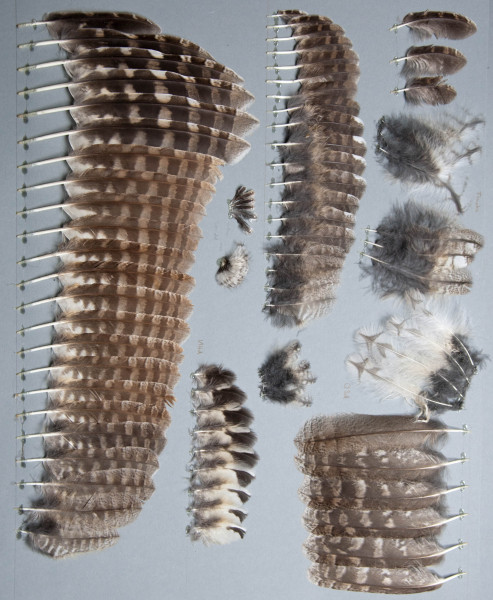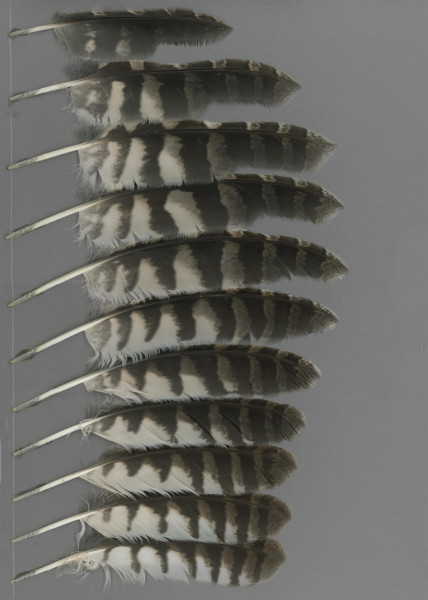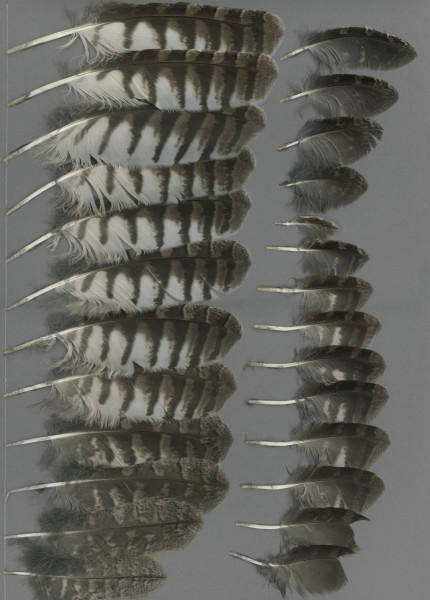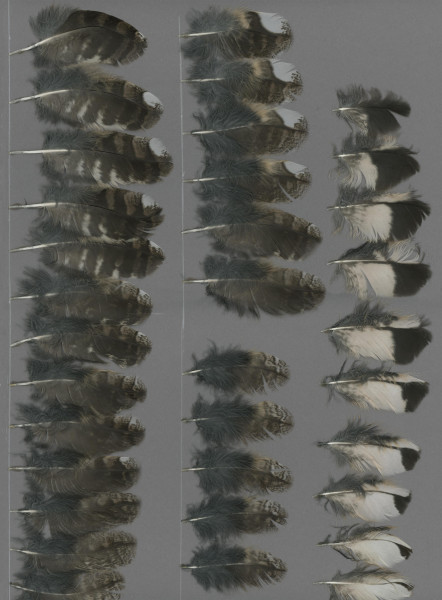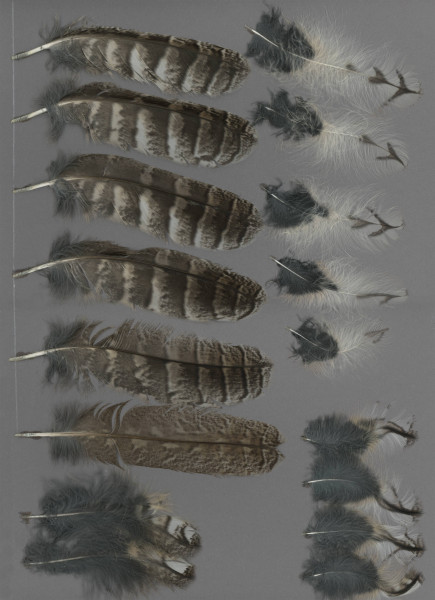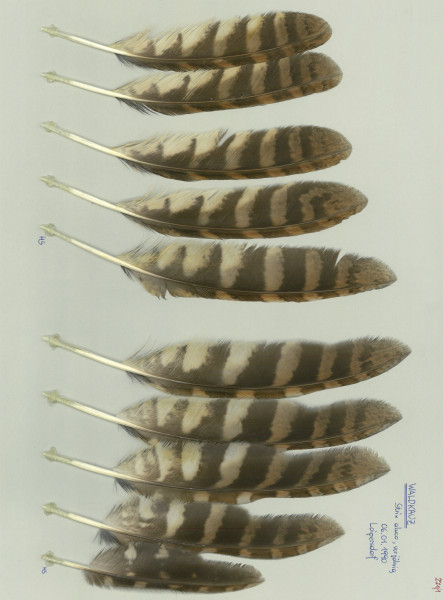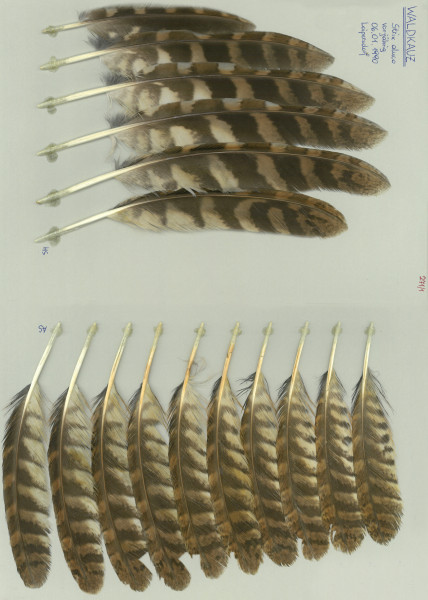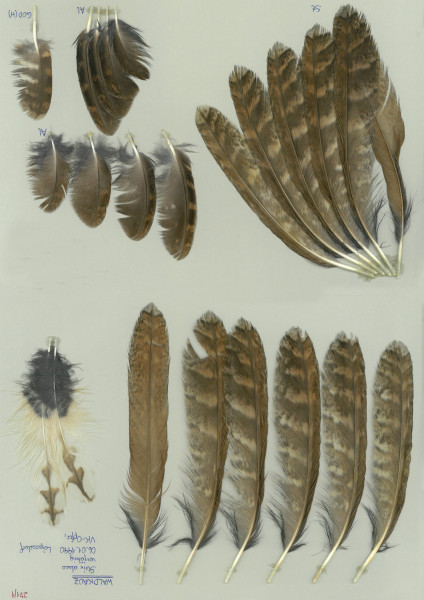
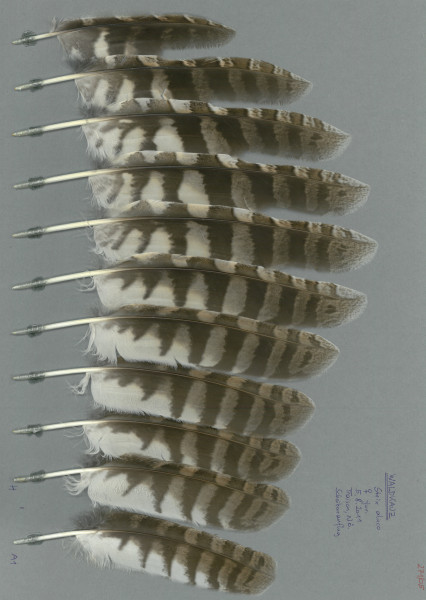
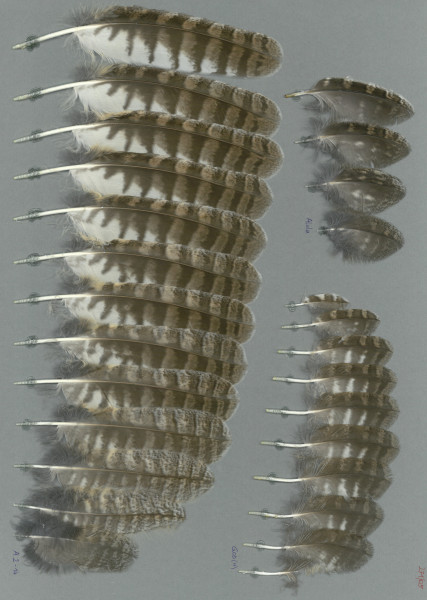
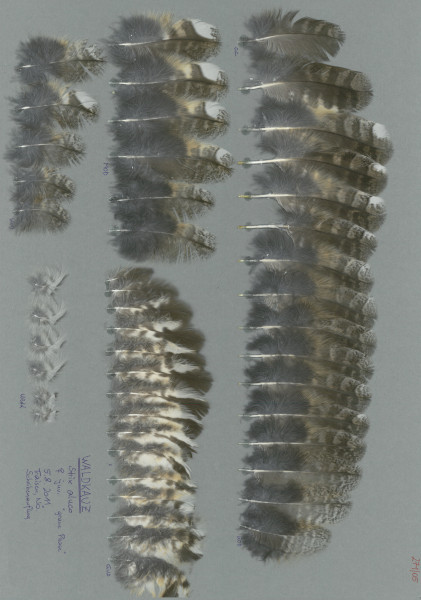
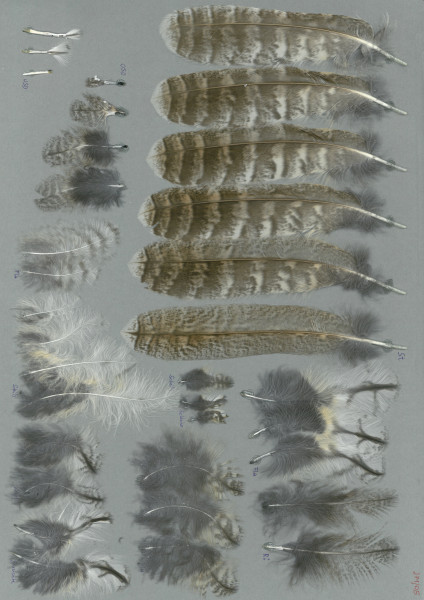
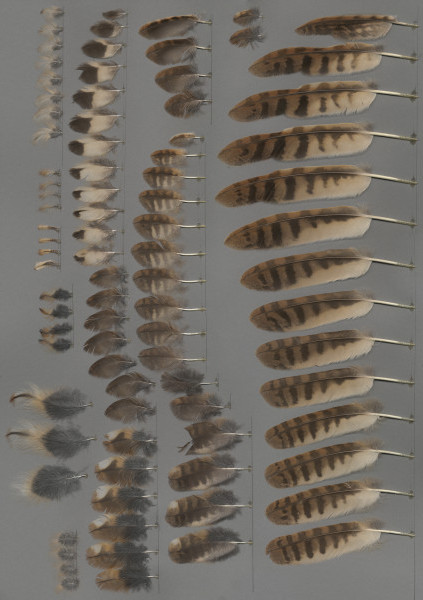
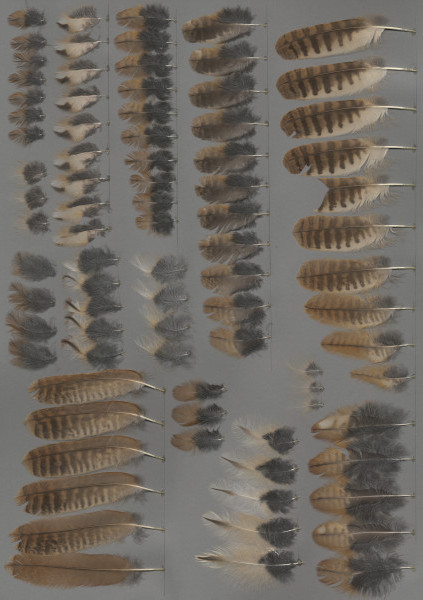


Der Waldkauz besitzt eine relativ große Variationsbreite sowohl in Grundfärbung als auch in der Zeichnung. Die Handschwingen sind hell graubraun bis rötlich hellbraun gefärbt mit einer feinen dunklen Marmorierung. Die Außenfahnen der Handschwingen sind in ihrer Grundfärbung aufgehellt. Auf dieser Grundfärbung zeichnen sich breite Querbinden ab, welche proximal schmaler werden und sich auf Innen- und Außenfahne verschieben können, sodass sie nicht mehr symmetrisch angeordnet sind. Die Spitzen der Schwingen sind weißlich aufgehellt. H6-H9 sind im oberen Teil der Außenfahne verengt. Die Steuerfedern besitzen eine ähnliche Grundfärbung wie die Schwingen. Auch hier findet sich eine Bänderung, welche jedoch sehr unregelmäßig und verwaschen ausgeprägt sein kann. Teilweise sind keine Bänder mehr zu erkennen sondern lediglich helle Flecken und / oder eine gleichmäßige Marmorierung. Die S1 ist meistens am gleichmäßigsten, oft auch ohne Bänderung gezeichnet und untersheidet sich so von den anderen Steuerfedern.
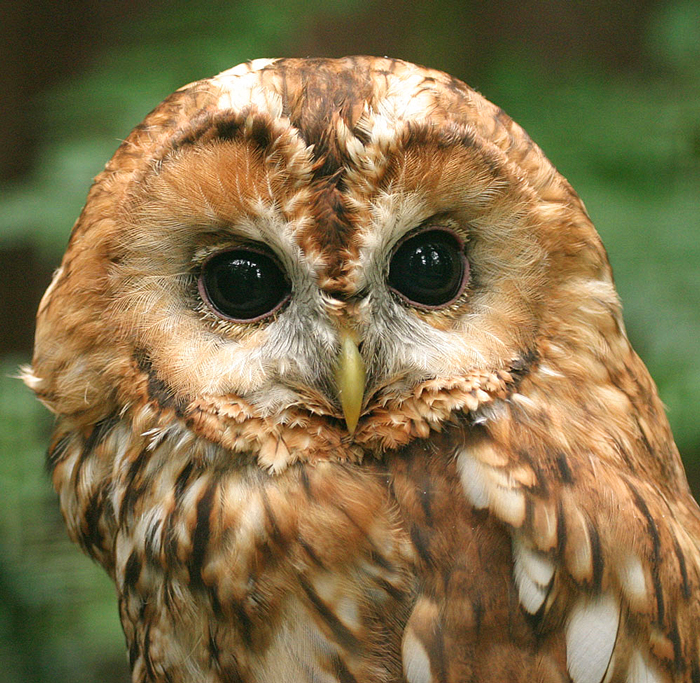
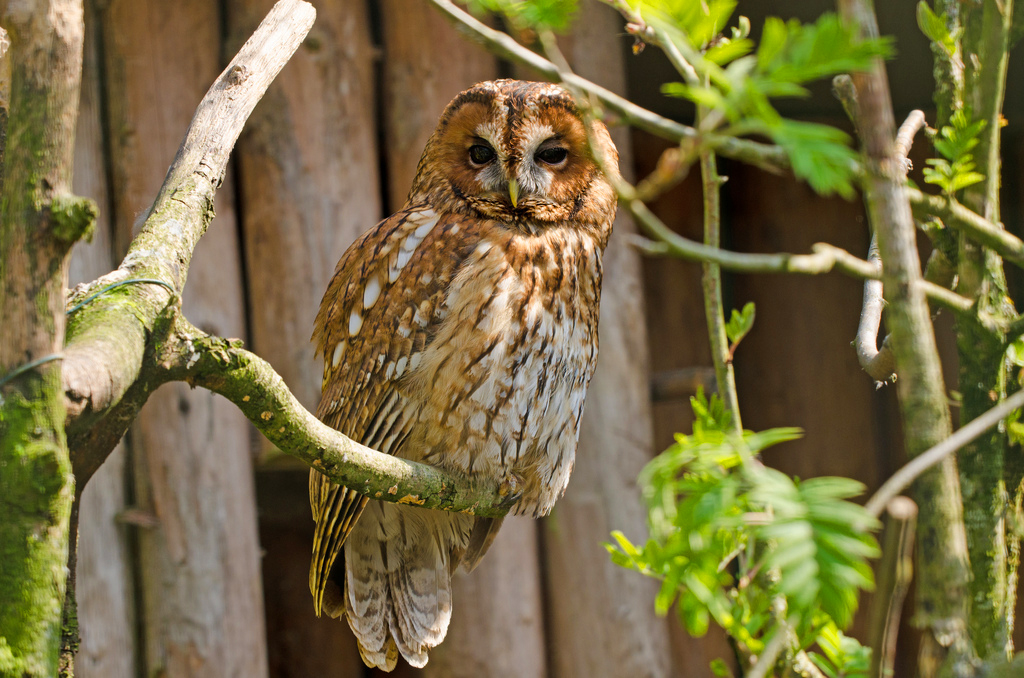
Die Variationen des Waldkauzes reichen von erdbraun über fast komplett grau bis hin zu rostrot.
| plume | nombre | plus longue |
|---|---|---|
| rémige primaire | 10 par aile |
219.5 - 279.0mm
n=13 P6 (100%) |
| rémige secondaire | 15 par aile |
163.0 - 207.0mm
n=12 S1 (50%) S2 (50%) |
| rectrice |
12
|
176.0 - 196.0mm
n=11 R1 (100%) |
|
do_not_translate_yet:measurements_remarks.title
do_not_translate_yet:measurements_remarks.number_of_individuals ndo_not_translate_yet:measurements_remarks.selection_of_individuals do_not_translate_yet:measurements_remarks.method_titledo_not_translate_yet:measurements_remarks.method do_not_translate_yet:measurements_remarks.percentage_titledo_not_translate_yet:measurements_remarks.percentage |
||