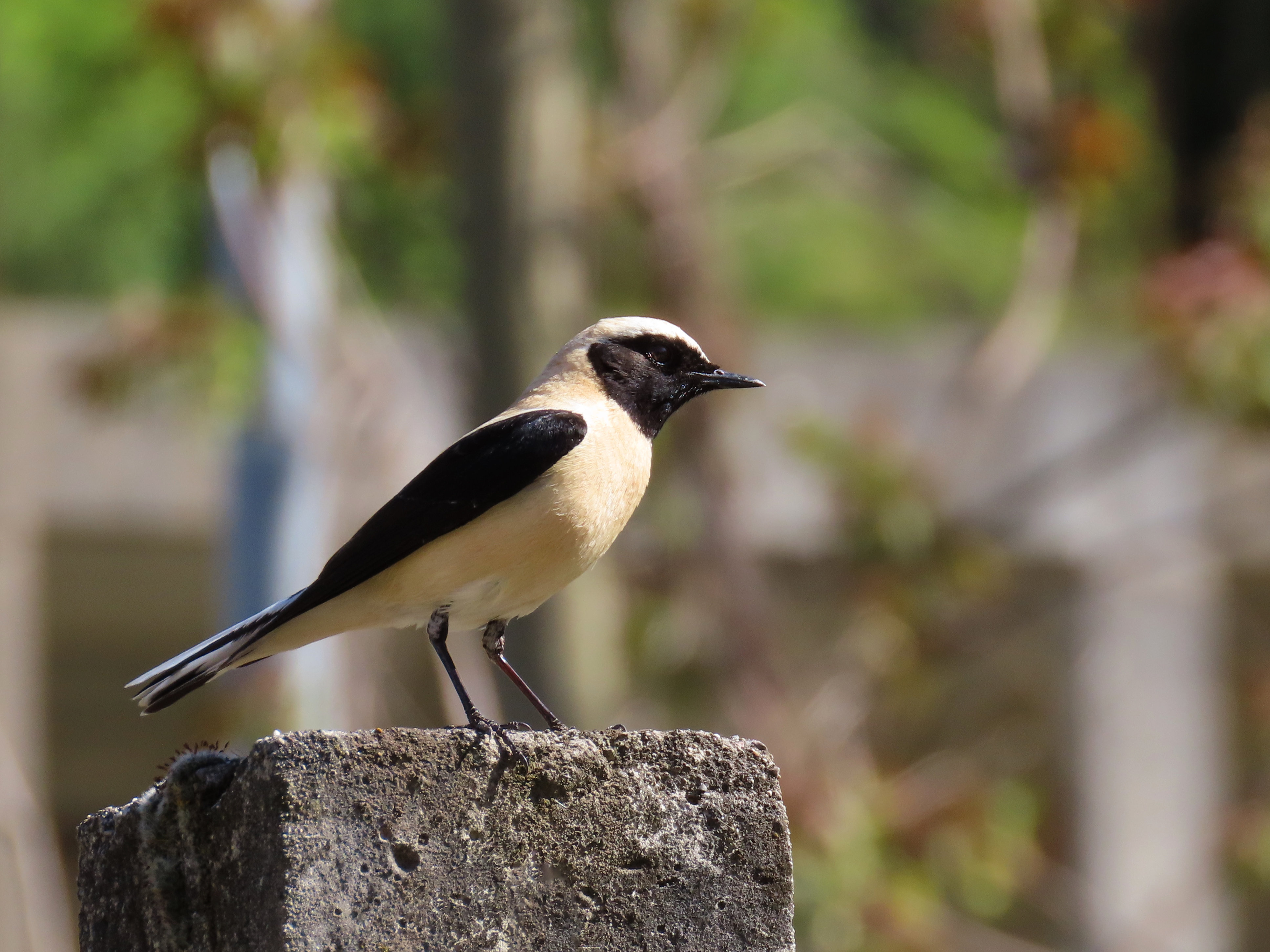
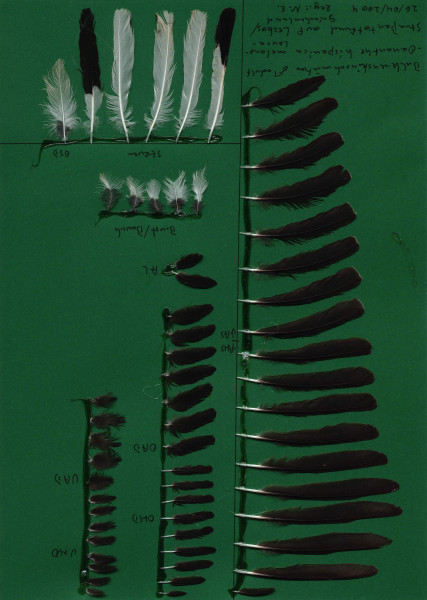
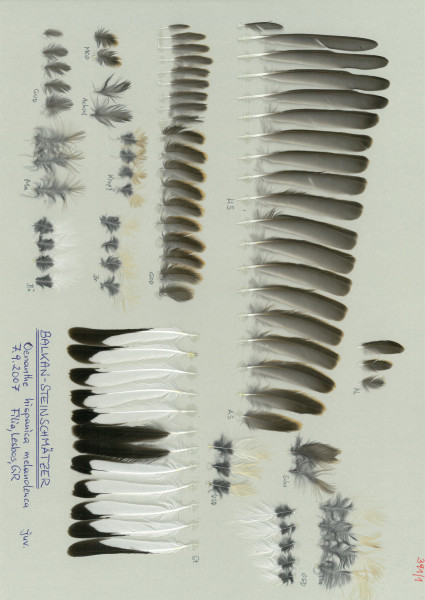


Die Handschwingen sind beim Männchen schwarzbraun gefärbt und somit deutlich dunkler als beim Gattungsnominativ dem Steinschmätzer (Oenanthe oenanthe). Der auch Balkansteinschmätzer genannte Oenanthe melanoleuca zeigt auf den dunklen Armschwingen nur eine schmale, jedoch recht helle Kontur der Spitze. Die Flügeldecken weisen ebenfalls diese dunkle Färbung auf.
Die Steuerfedern variieren meist mit einem höheren Weißanteil als beim Steinschmätzer. Zwar kann das Steuer ähnlich wie bei diesem aussehen, jedoch kann es auch vorkommen, dass im mittleren Steuer (zwischen S2 und S5) komplett weiße Federn das schwarze Endband unterbrechen.
Das Weibchen besitzt etwas bräunlichere Schwingen und etwas rahmfarbenes Steiß- und Brustgefieder. Juvenile Vögel besitzen noch nicht ein so kontrastreiches Gefieder. Die Flügel sind nicht einfarbig schwarzgrau sondern heller graubraun mit hellbraunen Säumen der Außenfahne auf den Handschwingen und auch der Innenfahne auf AS, GrHd, GrAd und MAd.
| plume | nombre | plus longue |
|---|---|---|
| rémige primaire | 10 par aile |
75.0 - 83.0mm
n=2 P7 (100%) |
| rémige secondaire | 9 par aile |
60.0 - 63.5mm
n=2 S1 (100%) |
| rectrice |
12
|
approx. 64.5mm
n=1 R6 (100%) |
|
do_not_translate_yet:measurements_remarks.title
do_not_translate_yet:measurements_remarks.number_of_individuals ndo_not_translate_yet:measurements_remarks.selection_of_individuals do_not_translate_yet:measurements_remarks.method_titledo_not_translate_yet:measurements_remarks.method do_not_translate_yet:measurements_remarks.percentage_titledo_not_translate_yet:measurements_remarks.percentage |
||