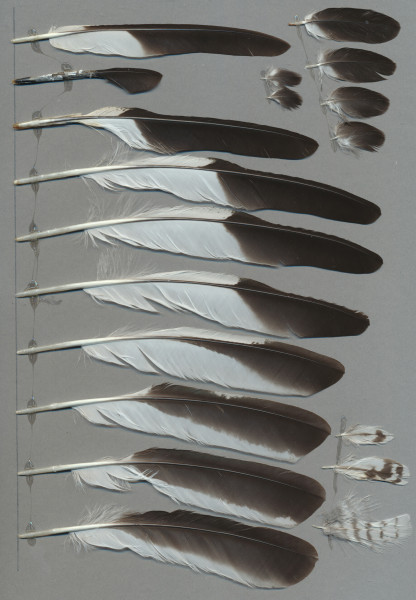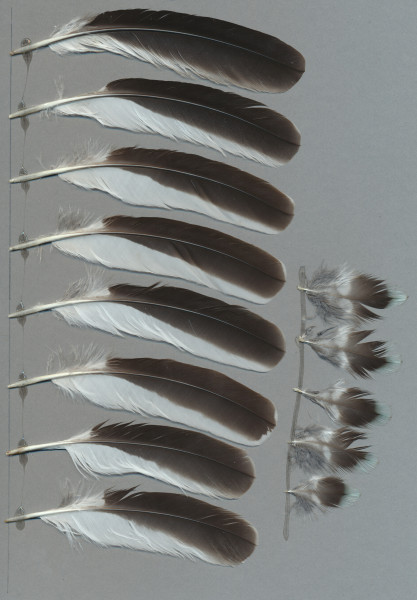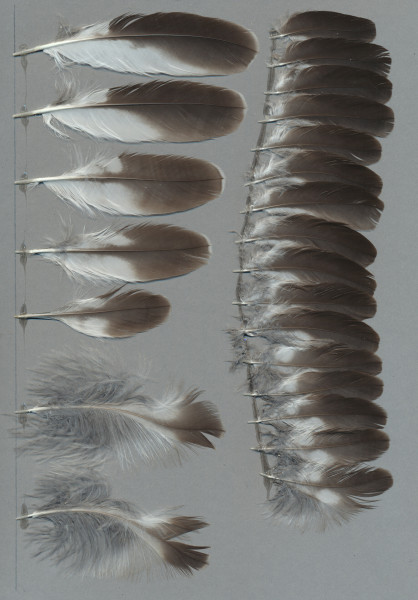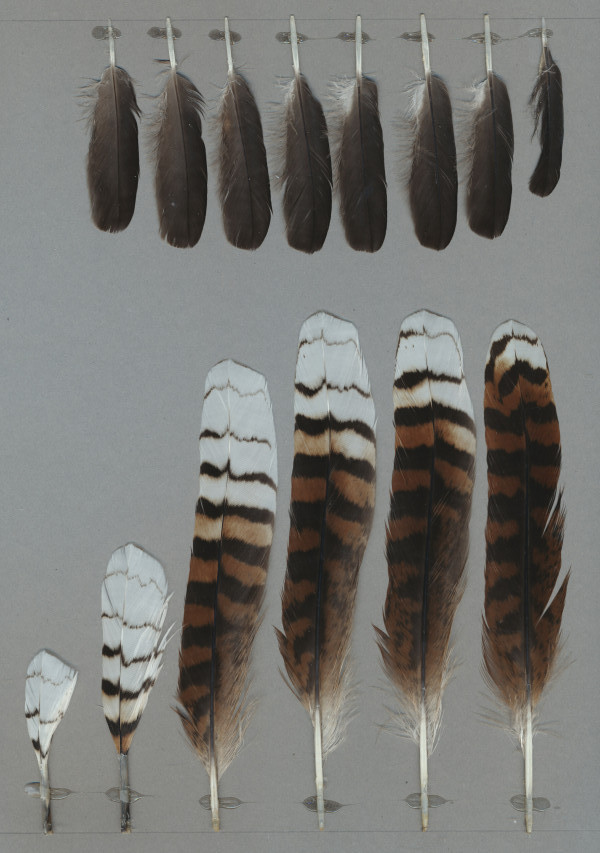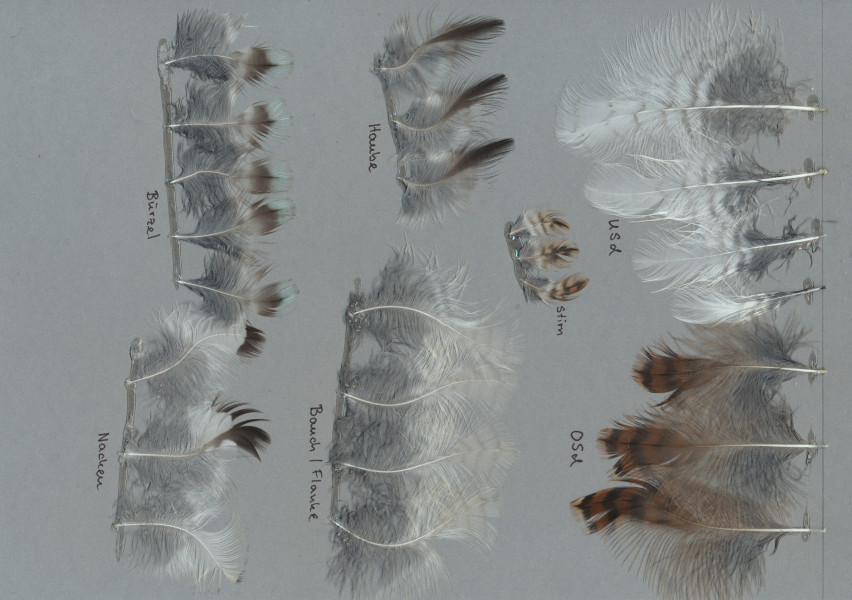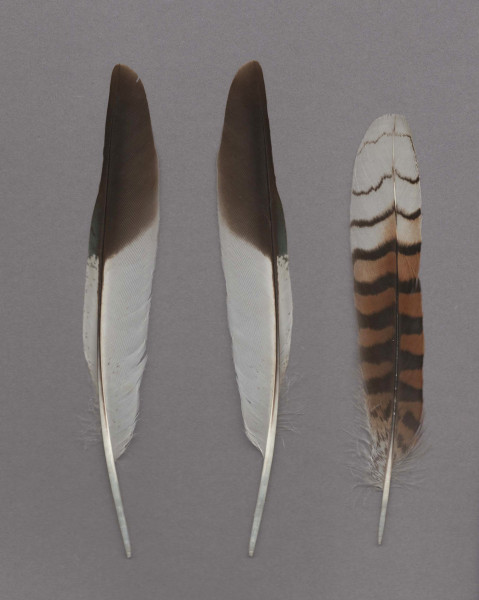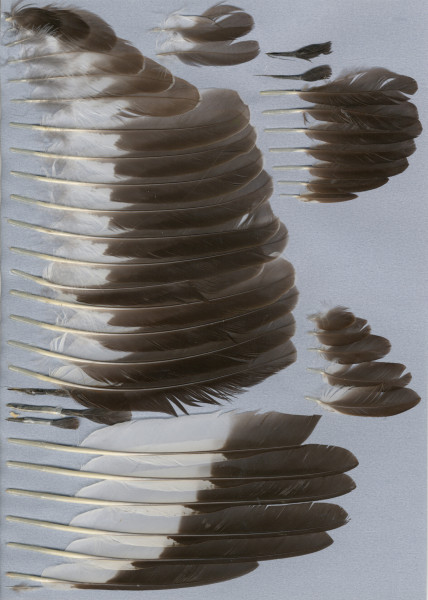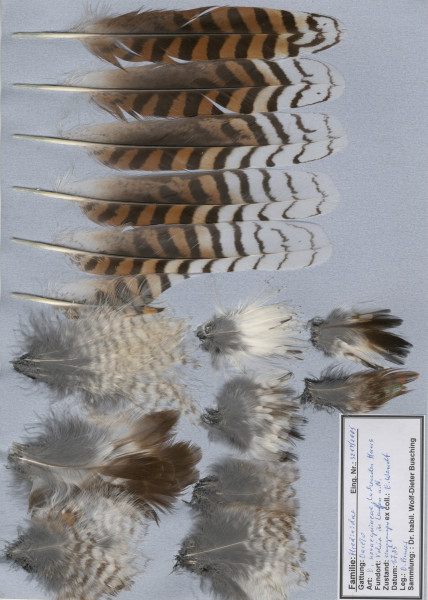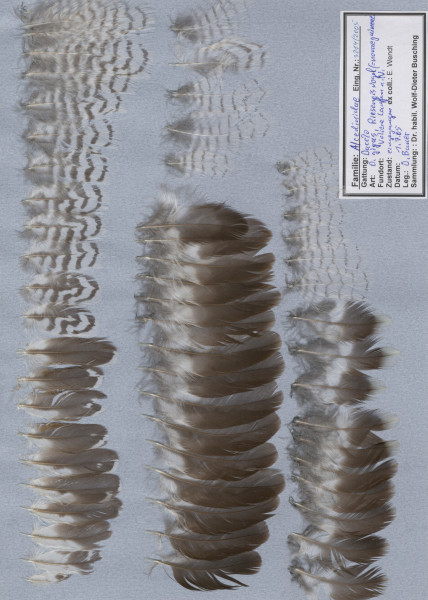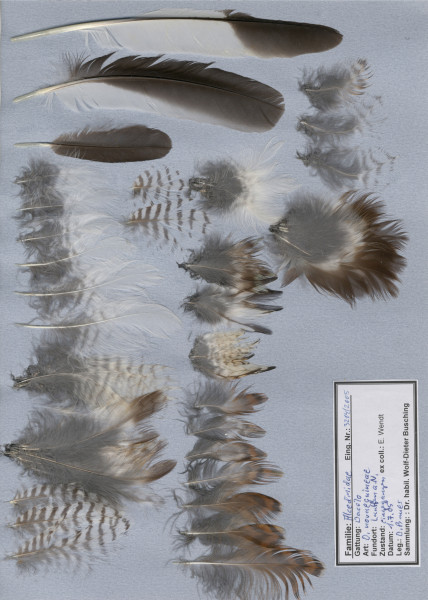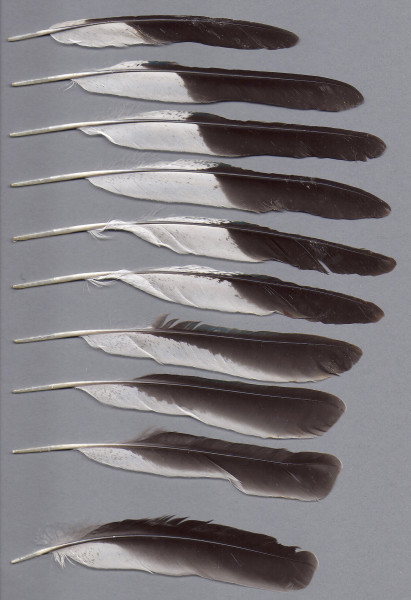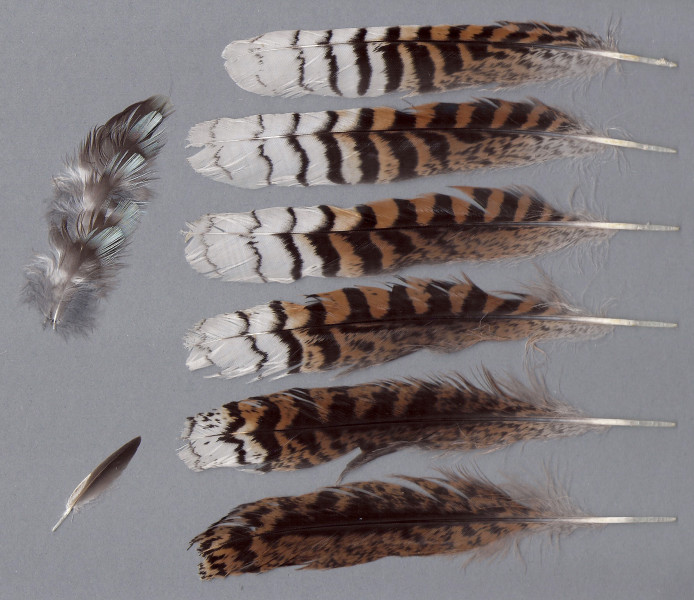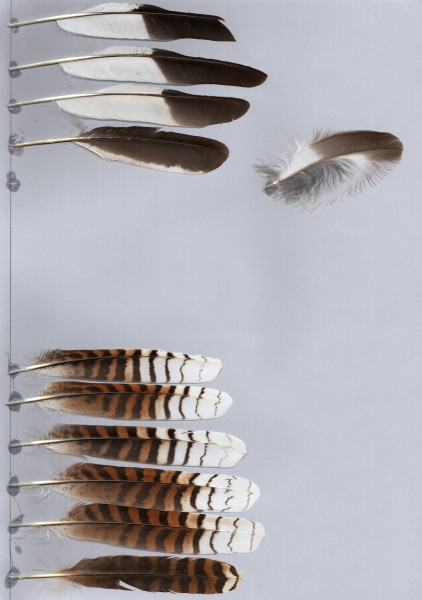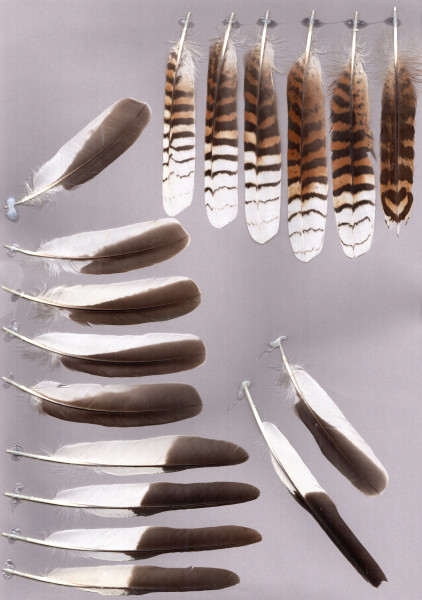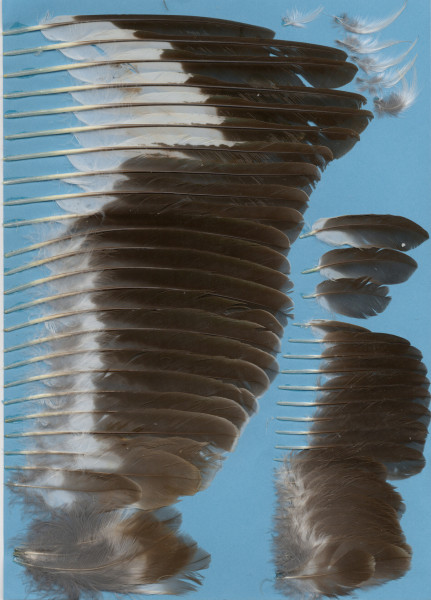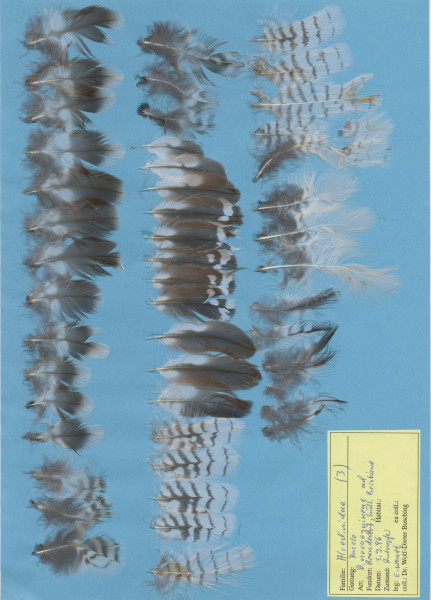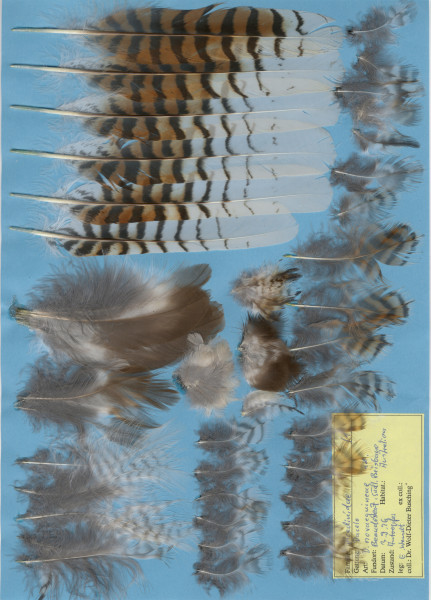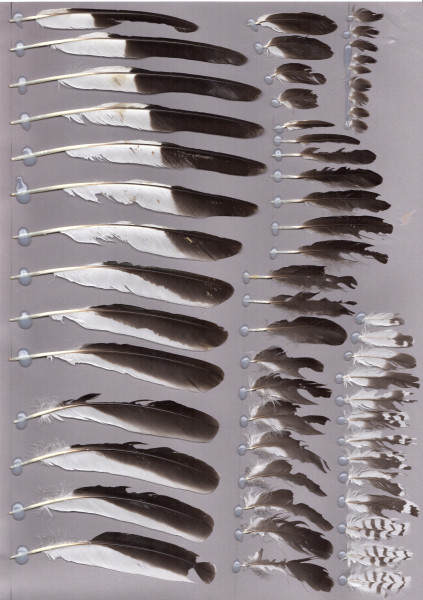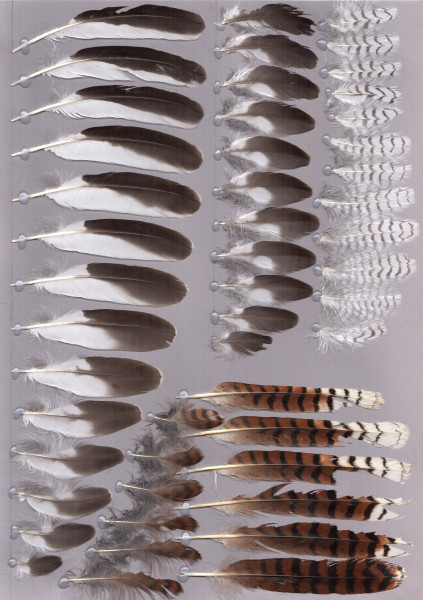

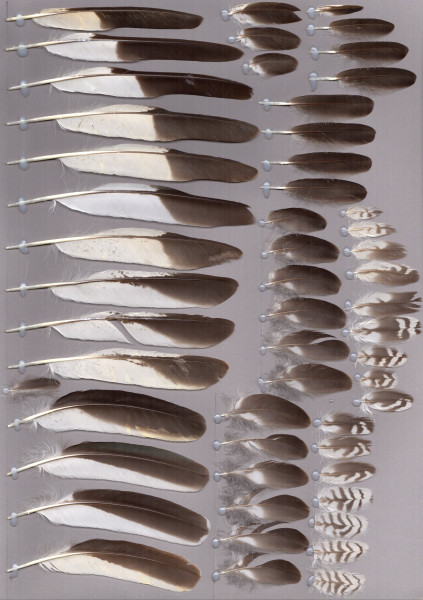
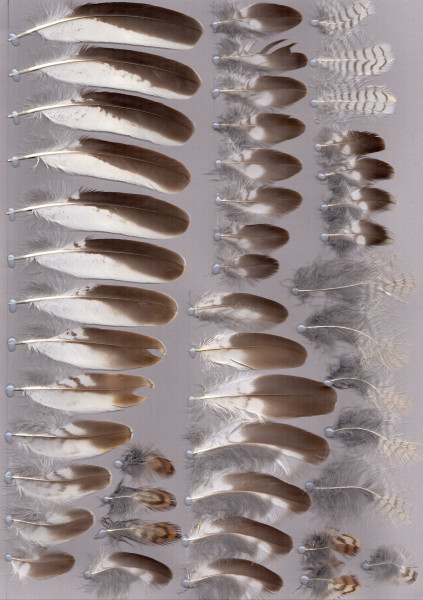
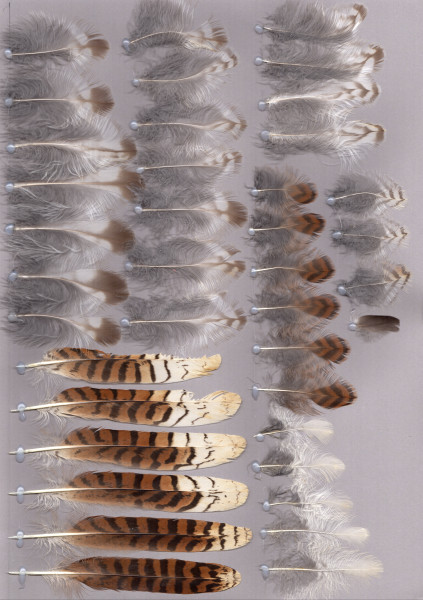
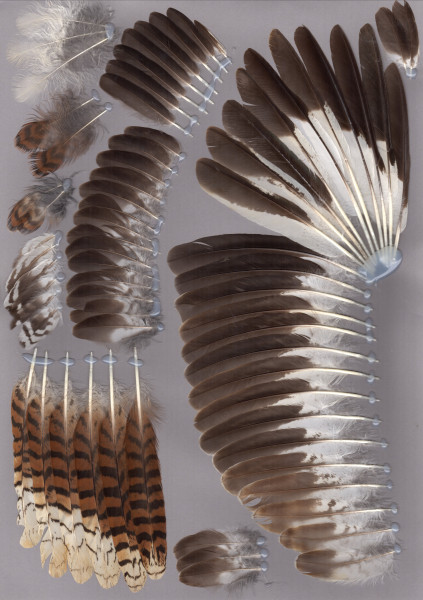



Der Jägerliest ist eine bekannte, große Art aus der Familie der Eisvögel. Die Handschwingen sind basal bis ungefähr zu Hälfte rein weiß gefärbt, die obere Hälfte besitzt eine dunkelbraune Färbung. Der Kiel ist bis zur Spule dunkel gefärbt. In den inneren Handschwingen verzerrt das Muster etwas und der Übergang zwischen Weiß und Braun wechselt von quer zu längs. Die Spitzen können fleckig weiß sein. Die Armschwingen sind ebenfalls dunkelbraun gefärbt mit einer größtenteils rein weiß gefärbten Innenfahne. Die Spitze kann weiß gerandet oder gefleckt sein, nutzt sich dadurch aber auch schnell ab. Die Schirmfedern sind etwas blasser gefärbt und der Übergang von braun und weiß ist verschwommener. Die Steuerfedern sind sehr charakteristisch für die Gattung Dacelo. Der basale Teil der Federn ist bis über die Hälfte beigebraun gefärbt und geht zur Spitze hin in ein reines Weiß über. Darüber finden sich deutliche, schwarz Querbinden, welche im Steuer nach außen etwas schmaler werden. Der basale Teil ist etwas fleckiger, an der Spitze sind die Querstreifen feiner und undeutlicher. Ein Vergleich der Arten Dacelo novaeguineae und weiblichen Dacelo leachii folgt an dieser Stelle.
| feather | number | longest |
|---|---|---|
| primary | 10 per wing |
173.5 - 183.5mm
n=6 P7 (33%) P6 (50%) P5 (17%) |
| secondary | 17-18 per wing |
133.5 - 147.0mm
n=6 S1 (17%) S3 (33%) S2 (50%) |
| retrix |
12
|
165.0 - 170.0mm
n=4 R1 (25%) R2 (75%) |
|
do_not_translate_yet:measurements_remarks.title
do_not_translate_yet:measurements_remarks.number_of_individuals ndo_not_translate_yet:measurements_remarks.selection_of_individuals do_not_translate_yet:measurements_remarks.method_titledo_not_translate_yet:measurements_remarks.method do_not_translate_yet:measurements_remarks.percentage_titledo_not_translate_yet:measurements_remarks.percentage |
||