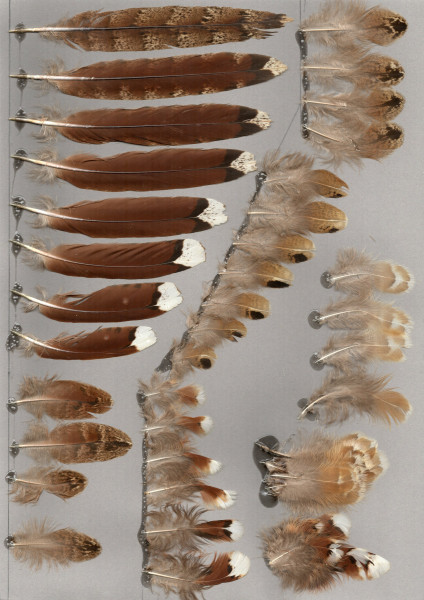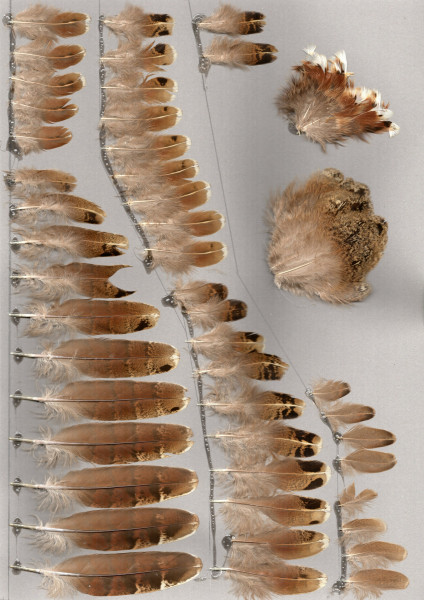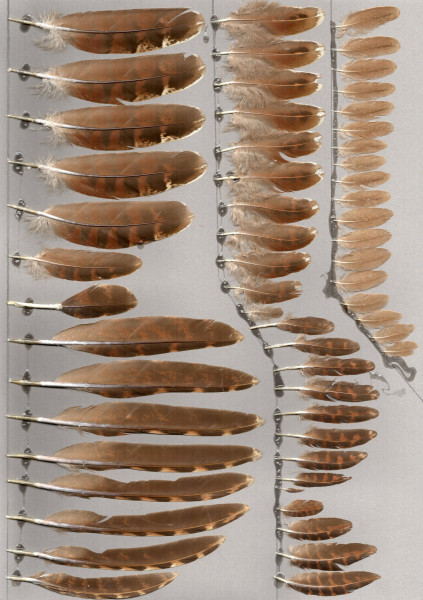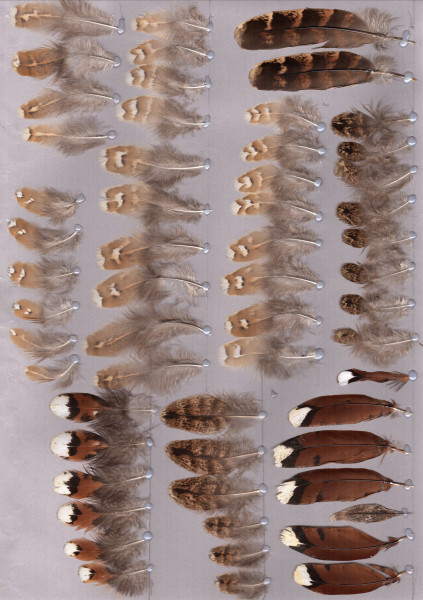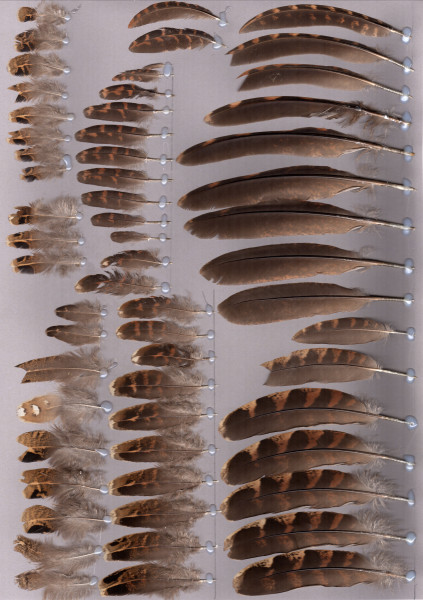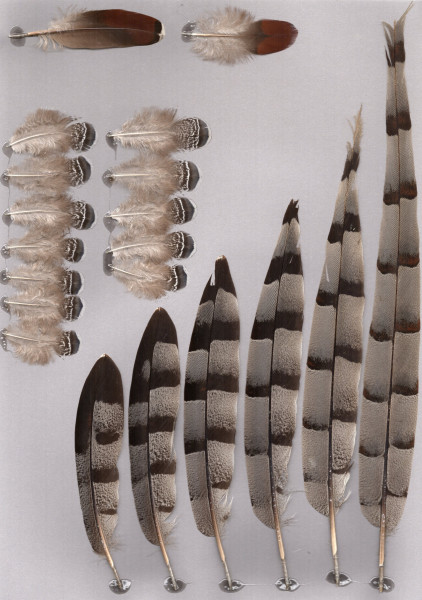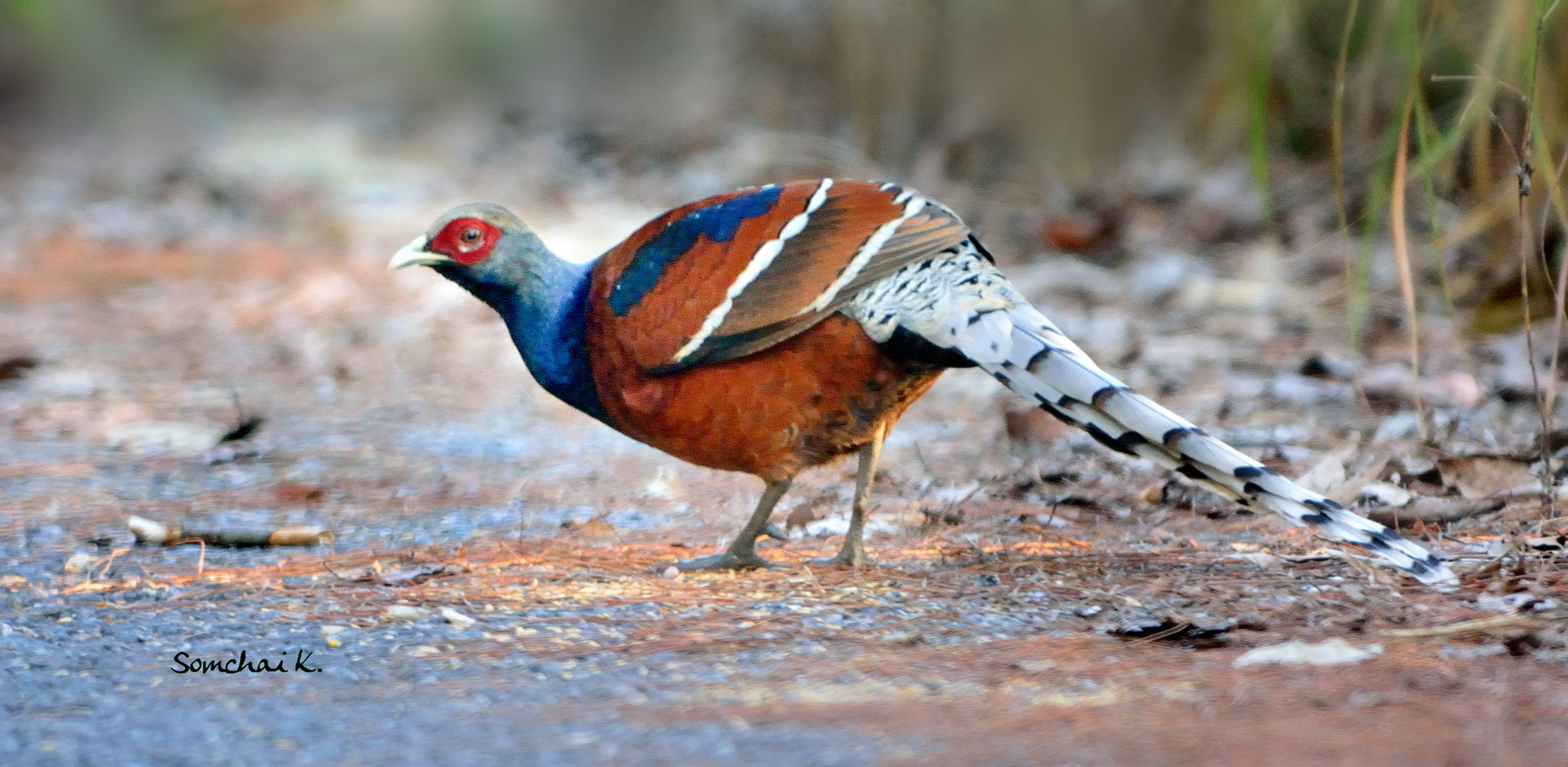
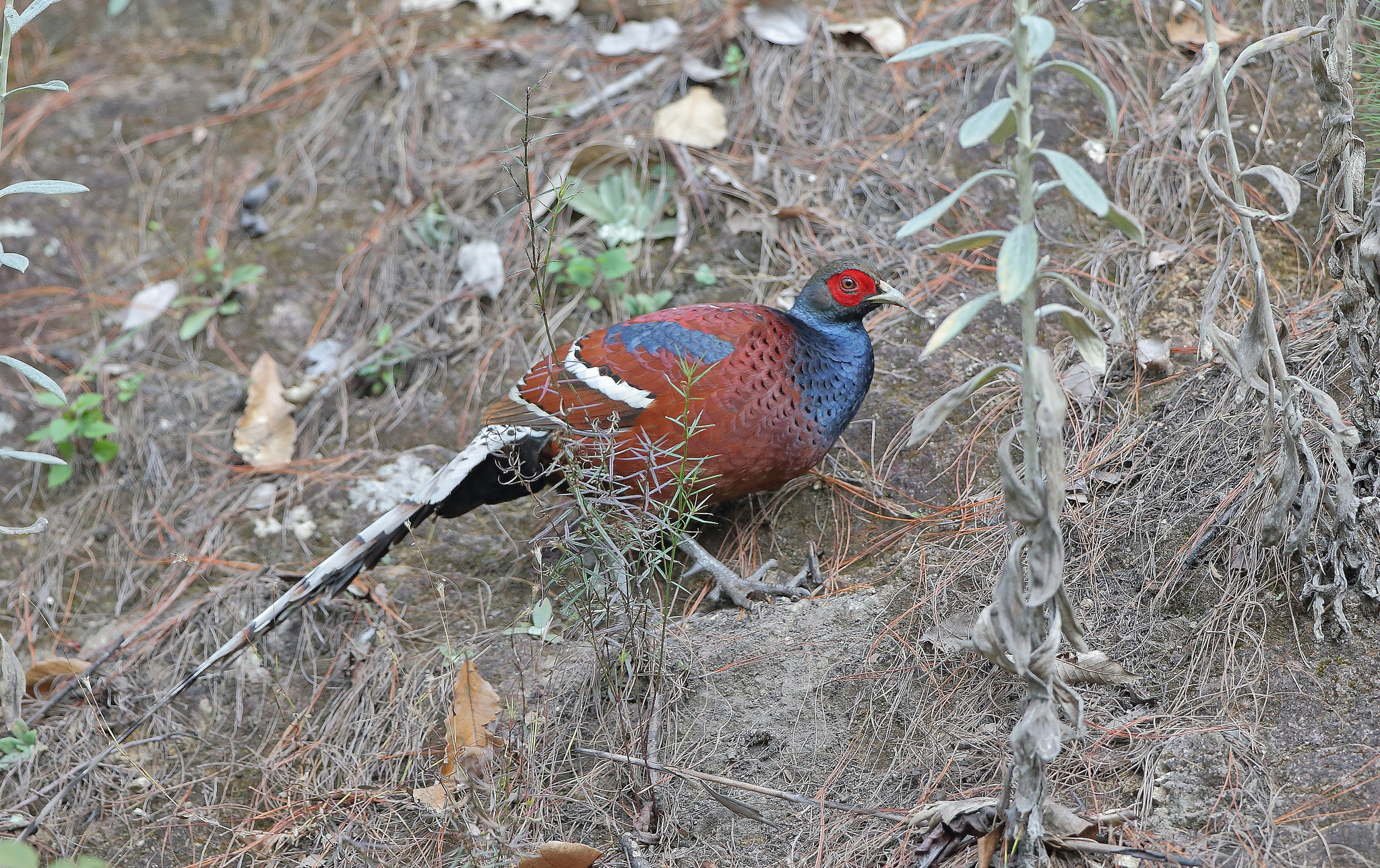
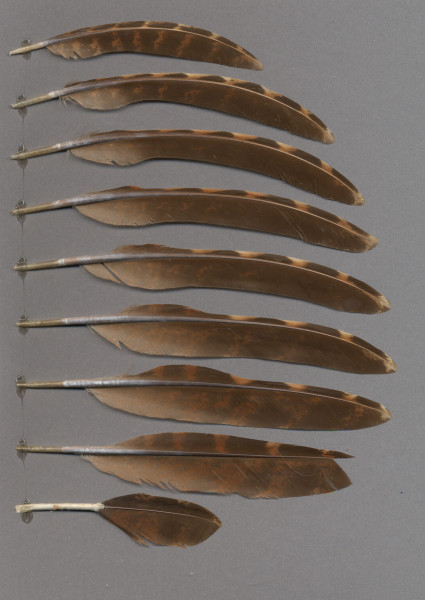
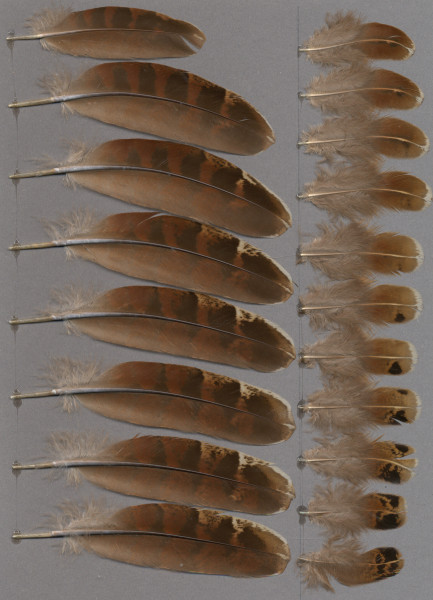
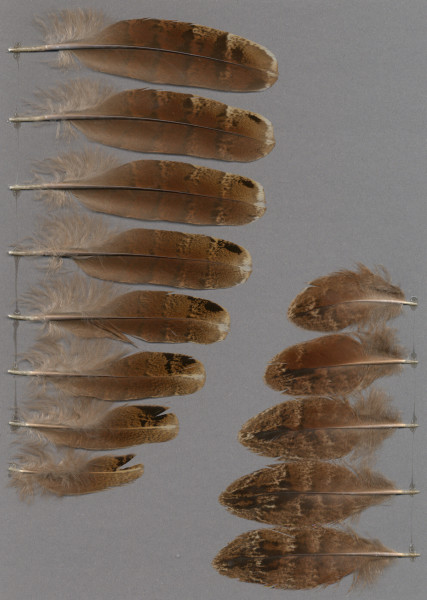
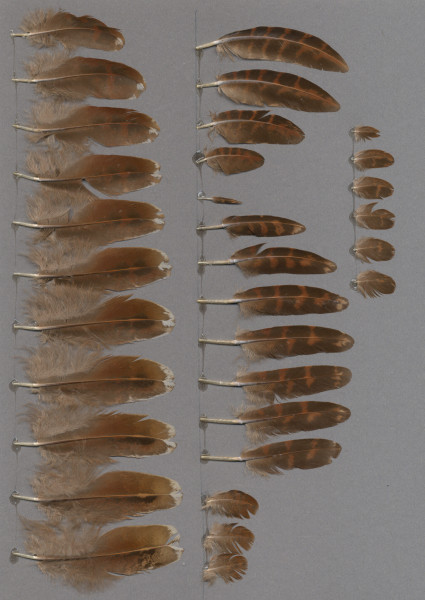
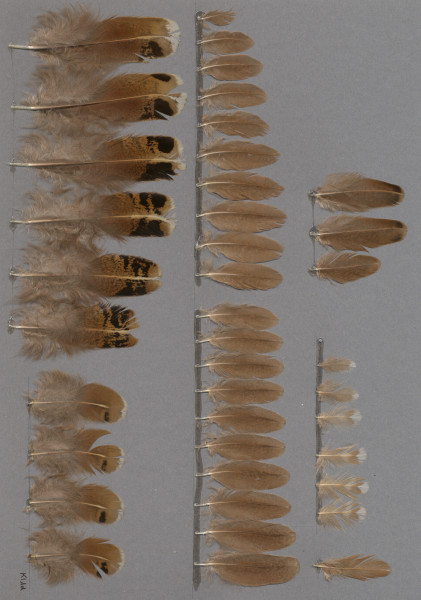
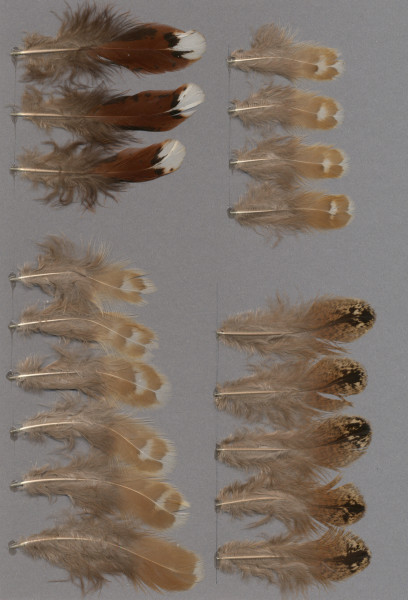
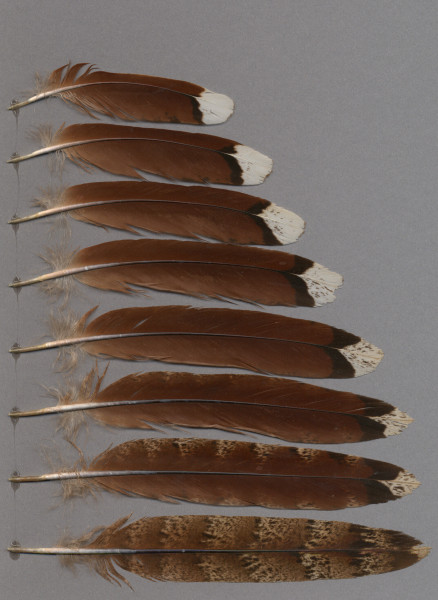
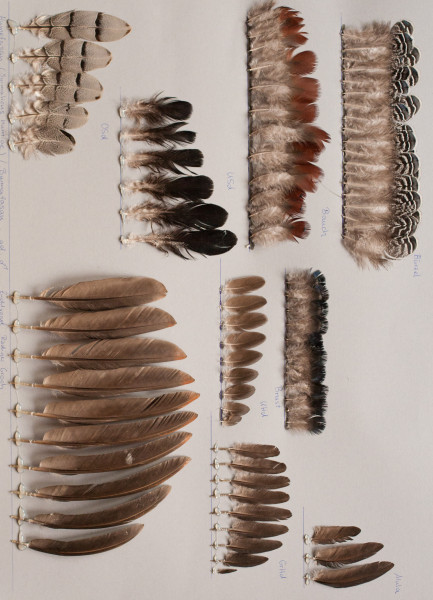
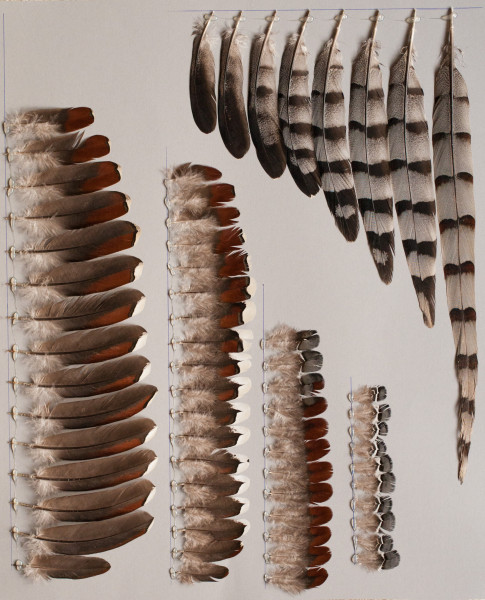


Der Hume- oder auch Burmafasan zeigt eine große Ähnlichkeit mit dem Elliotfasan (Syrmaticus ellioti) und ist von diesem anhand der Schwingen nur schwer zu unterscheiden. Die Handschwingen des Hahns sind einfarbig mittelbraun gefärbt mit einer für Fasane typischen tiefen Verengung von Innen- als auch Außenfahne. Die Innenfahne ist basal aufgehellt. Die Armschwingen besitzen eine ähnliche Grundfärbung mit einem rotstroten Außenfahnensaum. Dieser geht zur Spitze in einer dunkelbraune Binde über und endet in einer weißen Spitzenkontur. Die Spitze der Armschwingen ist aufgehellt und fein gesprenkelt. Auf den Schirmfedern erstreckt sich das Rostrot über beide Fahnen. Die Großen Armdecken bilden durch ihre weiße Spitze ein helles Band im Flügel. Die Steuerfedern der Hähne sind sehr leicht zu bestimmen. Die Grundfärbung ist mittelgrau mit gleichmäßigen, breiten rostroten bis lehmfarbenen Querbinden. Um die Binden herum findet sich eine im Steuer nach außen stärker werdende schwarze Sprenkelung. Die Bänderung ist deutlich dunkler als beim Elliotfasan und die äußeren Steuerfedern sind nicht klar gebändert sondern größtenteils in der Spitze dunkel verfärbt und zur Basis hin fein gesprenkelt. Die S1 ist wie bei fast allen Fasanen die längste Steuerfeder, nach außen werden die Steuerfedern immer kürzer. Die Handschwingen H4 bis H6 sind in der Außenfahne teilweise verengt (Elliotfasan bereits in der H3). Die äußeren Handschwingen sind vollständig, bis undeutlich partiell verengt. Die inneren Steuerfedern der Weibchen sind deutlich kontrastärmer. Die Querbinden sind recht verwaschen, teilweise weiß-braun gesprenkelt mit einer hellen Spitze. Nach außen im Steuer werden die Federn zunehmen rotbraun und verlieren die Querbinden. Sie besitzen eine weiße, teilweise schwarz abgegrenzte Spitze. Die Hand- und Armschwingen sind weniger rötlich und besitzen eine andere Musterung. Ein Beleg muss an dieser Stelle noch nachgereicht werden.
| feather | number | longest |
|---|---|---|
| primary | 10 per wing |
approx. 178.0mm
n=1 P5 (100%) |
| secondary | 16 per wing |
approx. 138.0mm
n=1 S5 (100%) |
| retrix |
16-18
|
approx. 201.5mm
n=1 R1 (100%) |
|
do_not_translate_yet:measurements_remarks.title
do_not_translate_yet:measurements_remarks.number_of_individuals ndo_not_translate_yet:measurements_remarks.selection_of_individuals do_not_translate_yet:measurements_remarks.method_titledo_not_translate_yet:measurements_remarks.method do_not_translate_yet:measurements_remarks.percentage_titledo_not_translate_yet:measurements_remarks.percentage |
||