

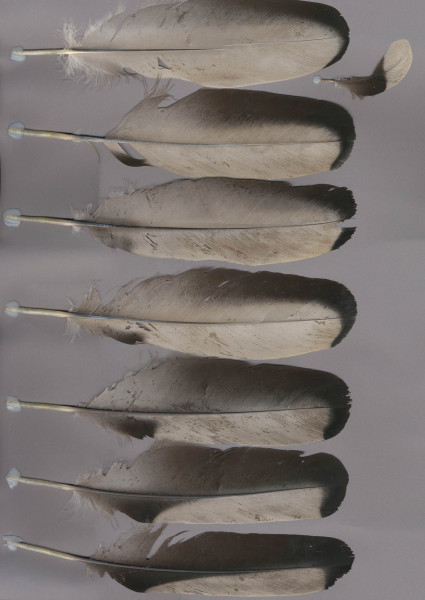


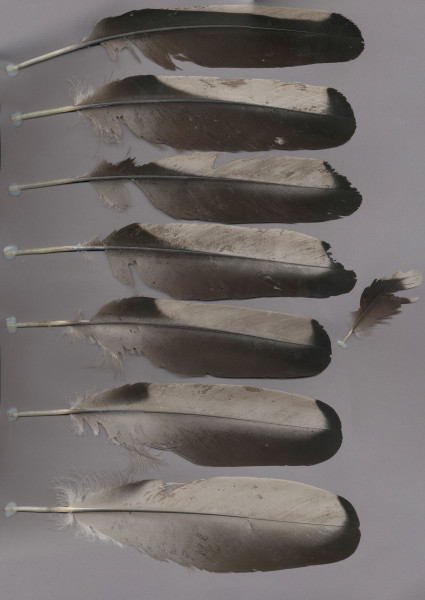
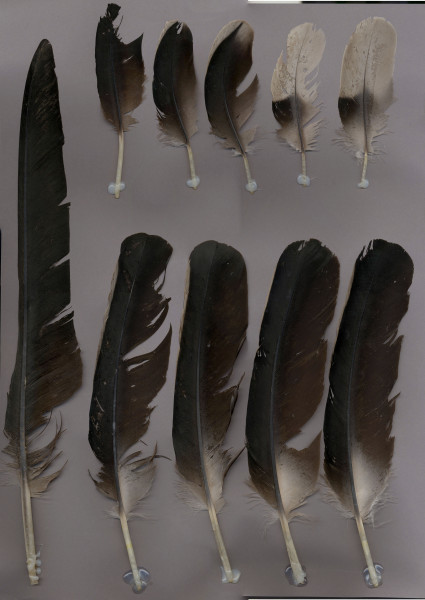

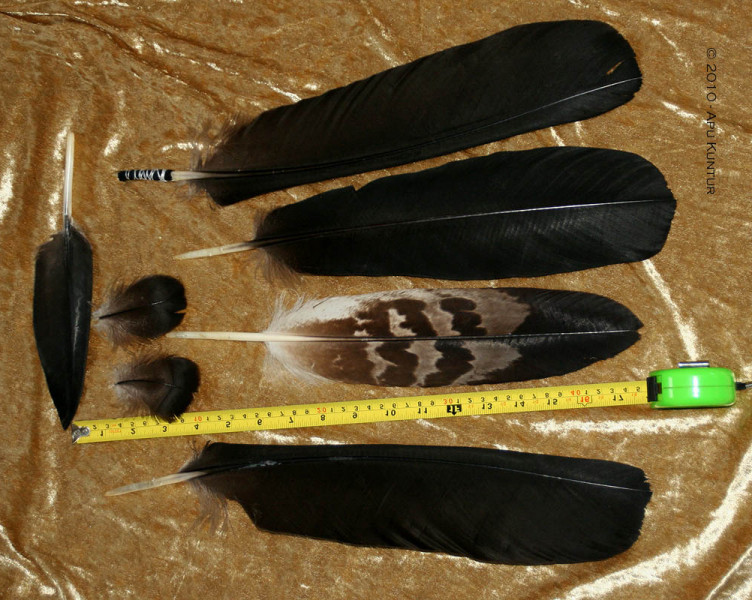
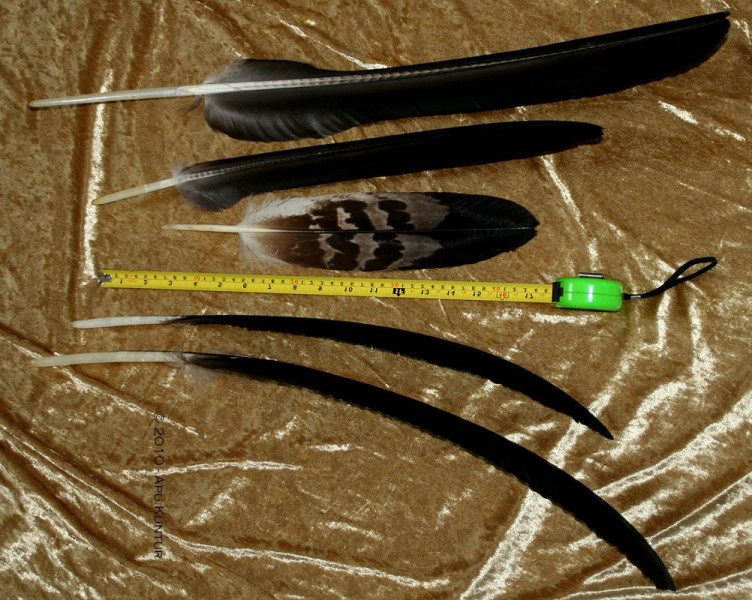
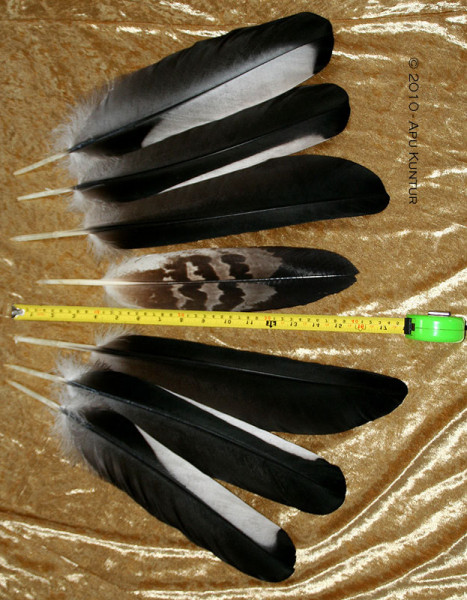

Das Großgefieders des Andenkondors fällt allein schon durch seine enorme Größe auf. Wie diverse Altweltgeier ist auch der Andenkondor durch seine enormen Schwingen auf den Gleitflug spezialisiert. Die längsten Handschwingen messen um die 65cm, Die Handschwingen sind tiefschwarz gefärbt mit einer leichten Aufhellung der Innenfahne. Die Innenfahne der inneren Handschwinge ist meist auch etwas bräunlich gesäumt. Die Verengung der Außenfahne und auch der Innenfahne reicht extrem weit herunter bis zur Basis. Dadurch ergibt sich eine extrem stark ausgeprägte "Fingerung" des Flügels.
Die Armschwingen sind ähnlich den Handschwingen gefärbt. Sie sind zusätzlich zur länge auch noch recht breit und bilden so eine große Flügelfläche. Auf der Außenfahne findet sich eine reinweiße bis weißgraue Fläche, welche zur Basis hin verjüngt. Im Flügel nach innen weitet sich diese weiße Fläche immer weiter aus und reicht auch über den Kiel hinweg auf die Innenfahne. Die Schirmfedern sind fast gänzlich weißgrau gefärbt mit einer zur Hälfte schwarzen Kiel und einer schwarzen Umrandung.
Die Steuerfedern sind ebenfalls tiefschwarz gefärbt, großflächig und in der Basis der Innenfahne bräunlich gesäumt. Die inneren Steuerfedern sind oft im oberen Teil breiter. Durch die starke schwarze Färbung ergibt sich ein leichter Glanz der Federn.
| feather | number | longest |
|---|---|---|
| primary | 10 per wing | no data available |
| secondary | no data available | |
| retrix |
12
|
no data available |
|
do_not_translate_yet:measurements_remarks.title
do_not_translate_yet:measurements_remarks.number_of_individuals ndo_not_translate_yet:measurements_remarks.selection_of_individuals do_not_translate_yet:measurements_remarks.method_titledo_not_translate_yet:measurements_remarks.method do_not_translate_yet:measurements_remarks.percentage_titledo_not_translate_yet:measurements_remarks.percentage |
||