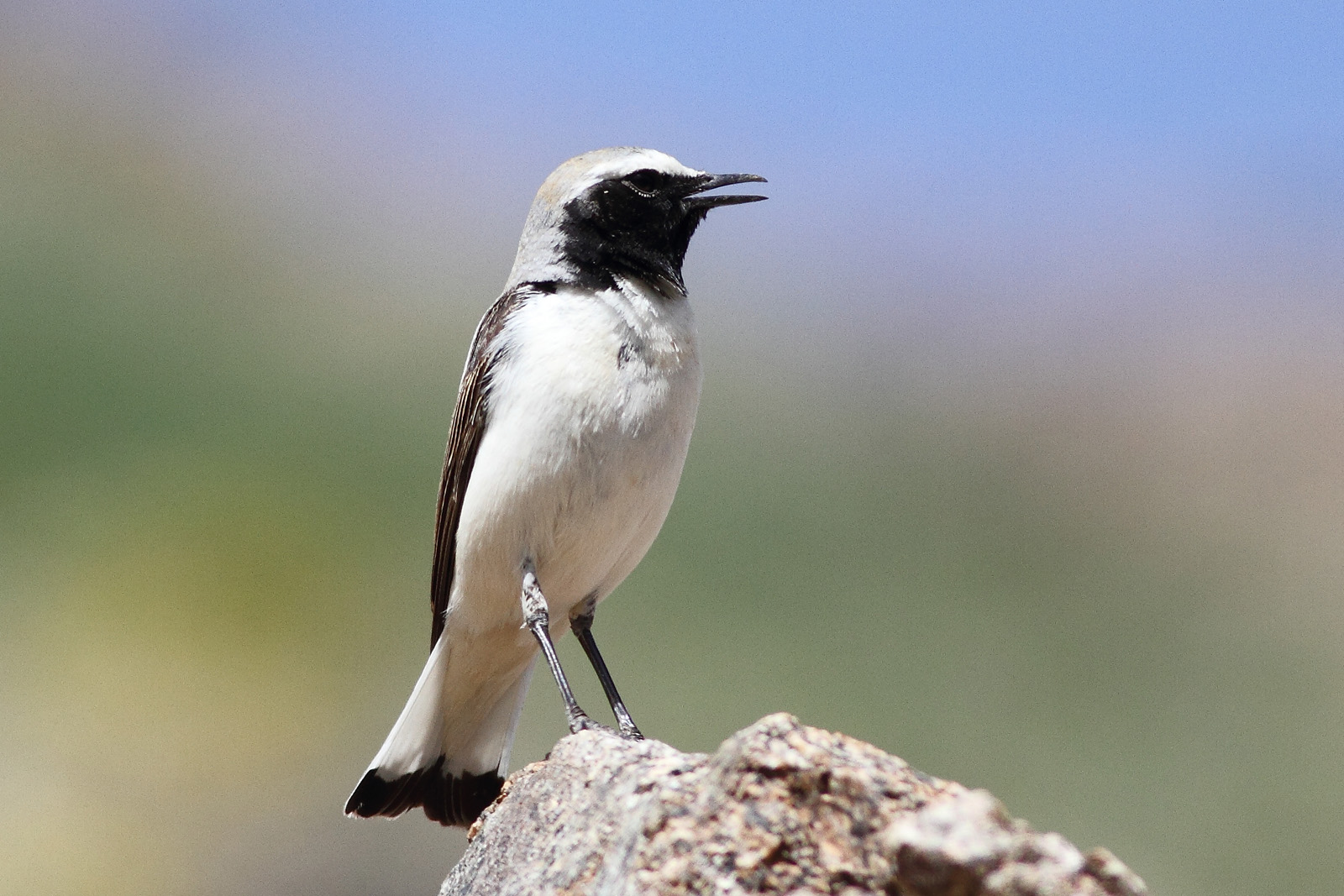
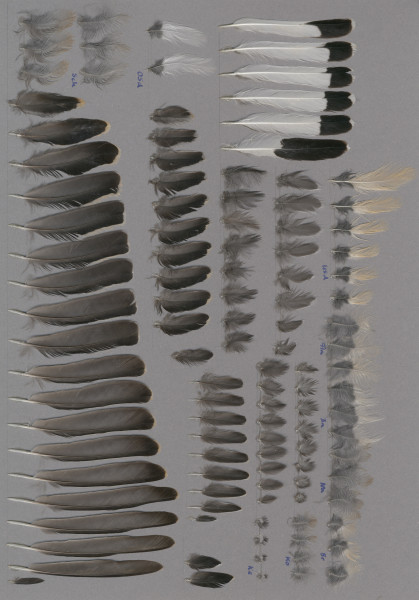
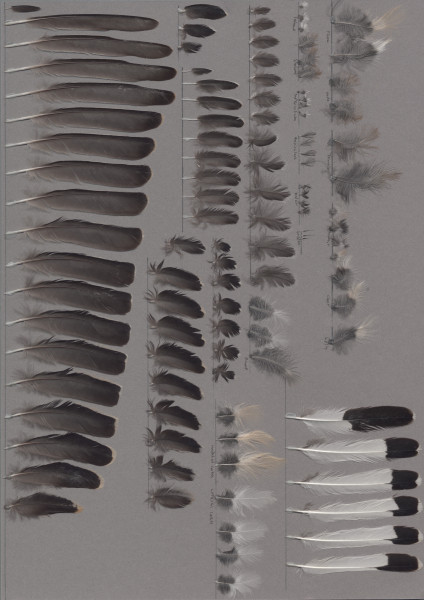
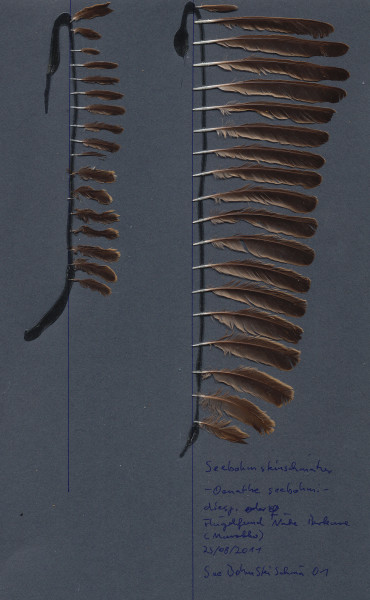

Das adulte Männchen des Seebohm-Steinschmätzers besitzt relativ dunkle, schwarzbraune Hand- und Armschwingen. Im Verlauf der Abnutzung des Gefieders können sich diese Federn ins dunkelbraune ausbleichen. Die Spitzen der Hand- und Armschwingen sind deutlich sandfarben bis cremeweiß gerandet. Die Außenfahnen der Schwingen besitzen eine ebenso gefärbte feine Kontur, welche sich jedoch auch abnutzt. Die Rückenfedern sind kräftig mittelgrau gefärbt und bilden einen hohen Kontrast zum Flügel.
Die Steuerfedern sind größtenteils weiß gefärbt mit der für Steinschmätzer typischen schwarzen Endbinde. Im Vergleich zum Steinschmätzer exisieren keine nennenswerten Unterschiede.
Durch die sehr nahe Verwandtschaft zum Steinschmätzer ist es sehr wahrscheinlich, dass die Weibchen auch etwas blasser braun gezeichnet sind.
| feather | number | longest |
|---|---|---|
| primary | 10 per wing |
approx. 85.5mm
n=1 P7 (100%) |
| secondary | 9 per wing |
approx. 65.0mm
n=1 S1 (100%) |
| retrix |
12
|
approx. 68.5mm
n=1 R4 (100%) |
|
do_not_translate_yet:measurements_remarks.title
do_not_translate_yet:measurements_remarks.number_of_individuals ndo_not_translate_yet:measurements_remarks.selection_of_individuals do_not_translate_yet:measurements_remarks.method_titledo_not_translate_yet:measurements_remarks.method do_not_translate_yet:measurements_remarks.percentage_titledo_not_translate_yet:measurements_remarks.percentage |
||