


menu

White-cheeked Turaco
Tauraco leucotis
species of Musophagidae


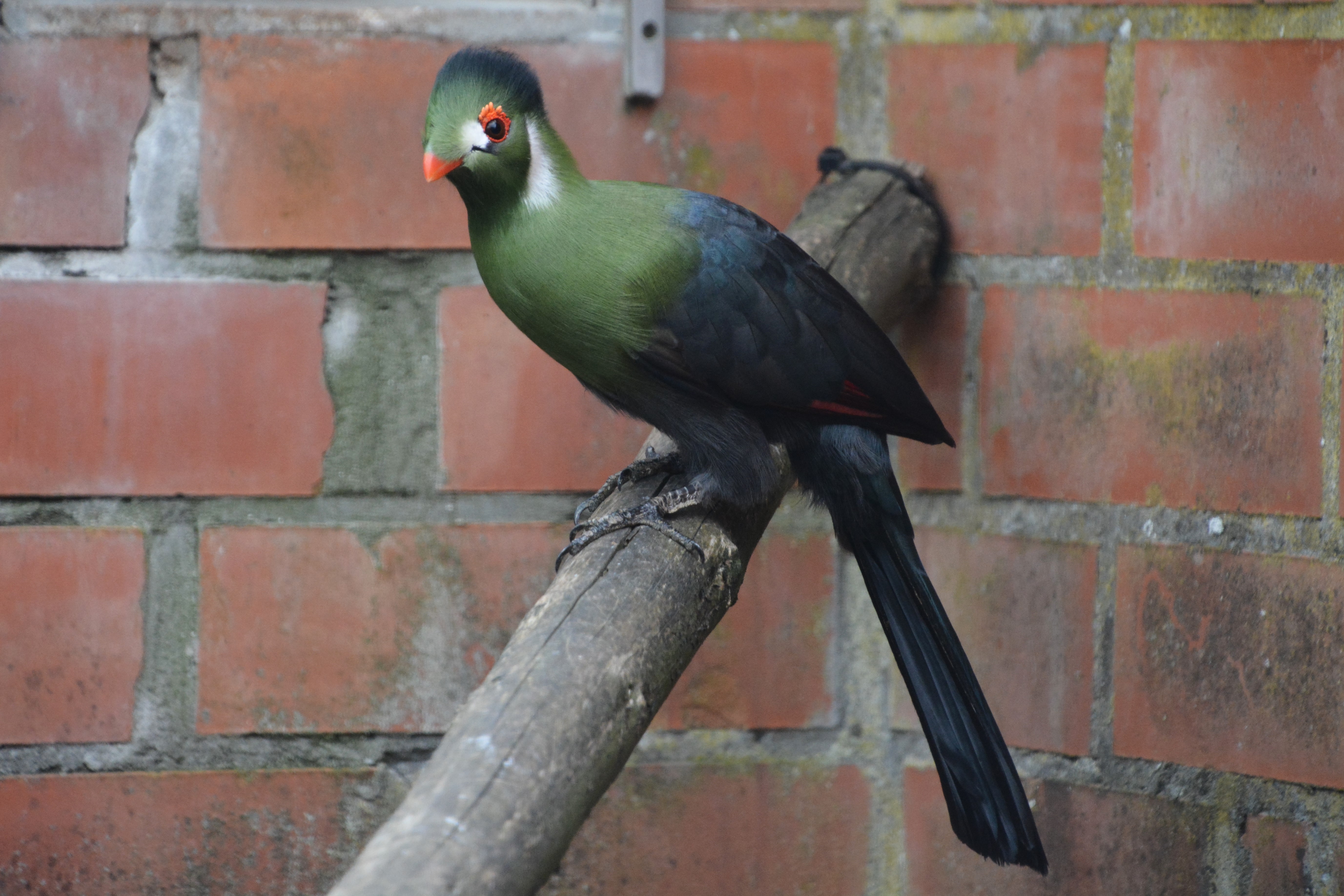
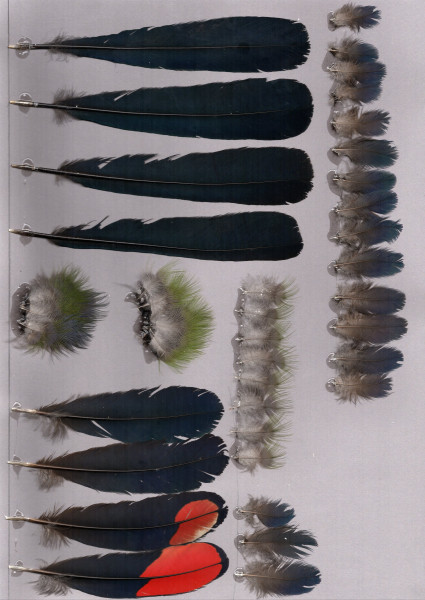
img. 1509 © Jo Kuyken

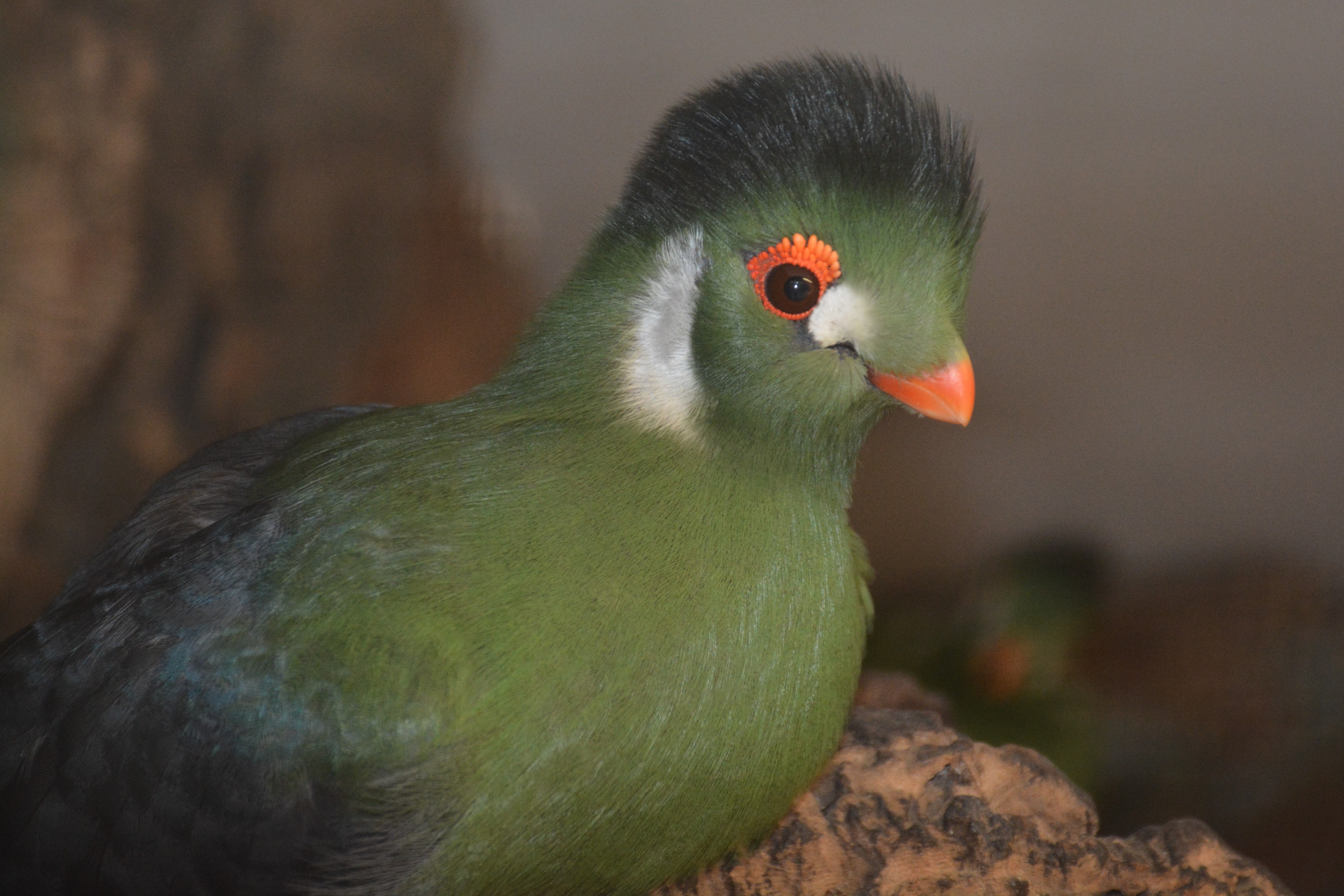
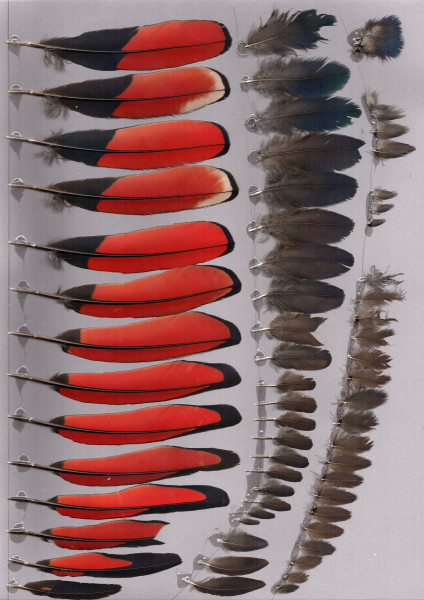
img. 1510 © Jo Kuyken

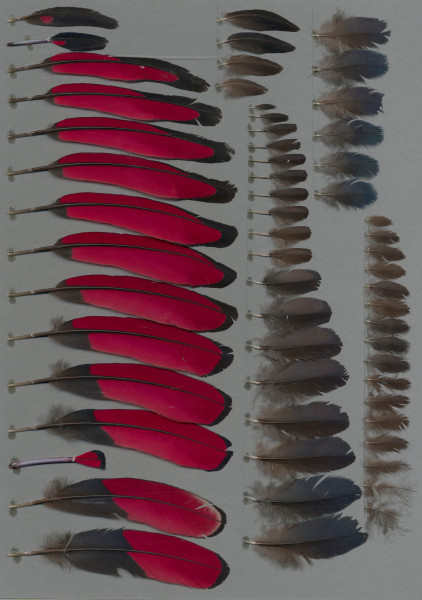
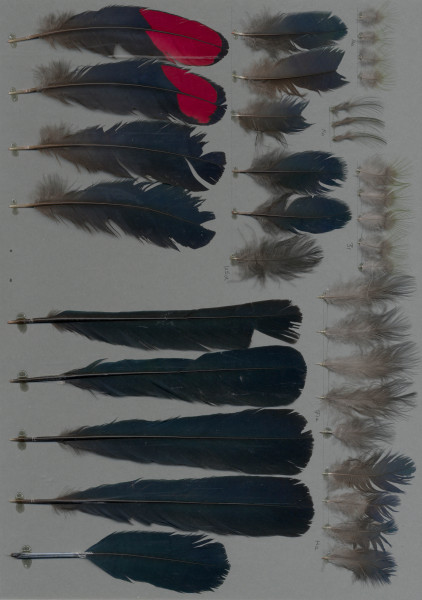
Die meisten Turakos besitzen sehr ähnliche Merkmale des Gefieders. Die Handschwingen sind leuchtend rot gefärbt mit einer distal breiter werdenden schwarzen Spitze. Die inneren Handschwingen besitzen ebenfalls einen dunklen Innenfahnensaum oder eine dunkle Basis. Die Schirmfedern sind einfarbig metallisch blauschwarz gefärbt (ähnlich mancher Rabenvögel jedoch farbiger). Die Steuerfedern des Weißohrturakos sind metallisch dunkelblau gefärbt. Das Brustgefieder und der obere Rücken sind mai- bis olivgrün, der untere Bauch und der hintere Rücken und Bürzel grau bis blaugrau. Durch den weißen Strich hinter dem Auge erhielt der Weißohrturako seinen Namen. Die Handschwingen H6-H8 sind in der Außenfahne deutlich verengt. H5, manchmal sogar H4 undeutlich. H9 und H10 sind vollständig verengt.

number longest
primary 10 per wing approx. 162.5mm n=1
P5=P4=P2 (100%)
secondary 10 per wing no data available
retrix 10
no data available
wing length1 hand-wing-index1,2 (HWI) primaries-index wing length/longest primary ratio hand-wing-index/primaries-index ratio
167 - 180mm n=5 5 - 11% n=4 no data available no data available no data available
detailed information

The wing length is measured on the flattened and straightened wing ("maximum chord") from the carpal joint to the tip of the longest primary feather, the so-called "Kleinschmidt-method".

combined data from:
Avonet1: 167 - 180mm n=5

The hand-wing-index, introduced by Kipp 1959, is calculated as the ratio of the hand length (difference between the length of the longest primary and the first secondary) to the wing length.

combined data from:
Avonet1: 5 - 11% n=4,
The primaries-index is calculated as the ratio of the longest primary feather length to the first (outermost) secondary. It is the equivalent of the hand-wing index for feather measurements. The wing length/longest primary ratio is calculated as the ratio of the wing length to the length of the longest primary feather. The hand-wing-index/primaries-index ratio is calculated as the ratio of the hand-wing index to the primaries-index.
1 Tobias, J. A., et al. (2022). AVONET: morphological, ecological and geographical data for all birds.
2 Kipp, Friedrich A.: "Der Handflügel-Index als flugbiologisches Maß", erschienen in "Vogelwarte - Zeitschrift für Vogelkunde", 1959, Band 20, Heft 1


country allocations

extant

Eritrea · Ethiopia · South Sudan · Sudan ·
source: IUCN 2025. IUCN Red List of Threatened Species. Version 2025-1 <www.iucnredlist.org>
assessment data: |

Turacos

conservation status

  • CITES
    appendix 2
  • Regulation (EG) Nr. 865/2006
    appendix B
  • German Federal Nature Conservation Act §44
    protected