

menu

Black Stork
Ciconia nigra
species of Ciconiidae


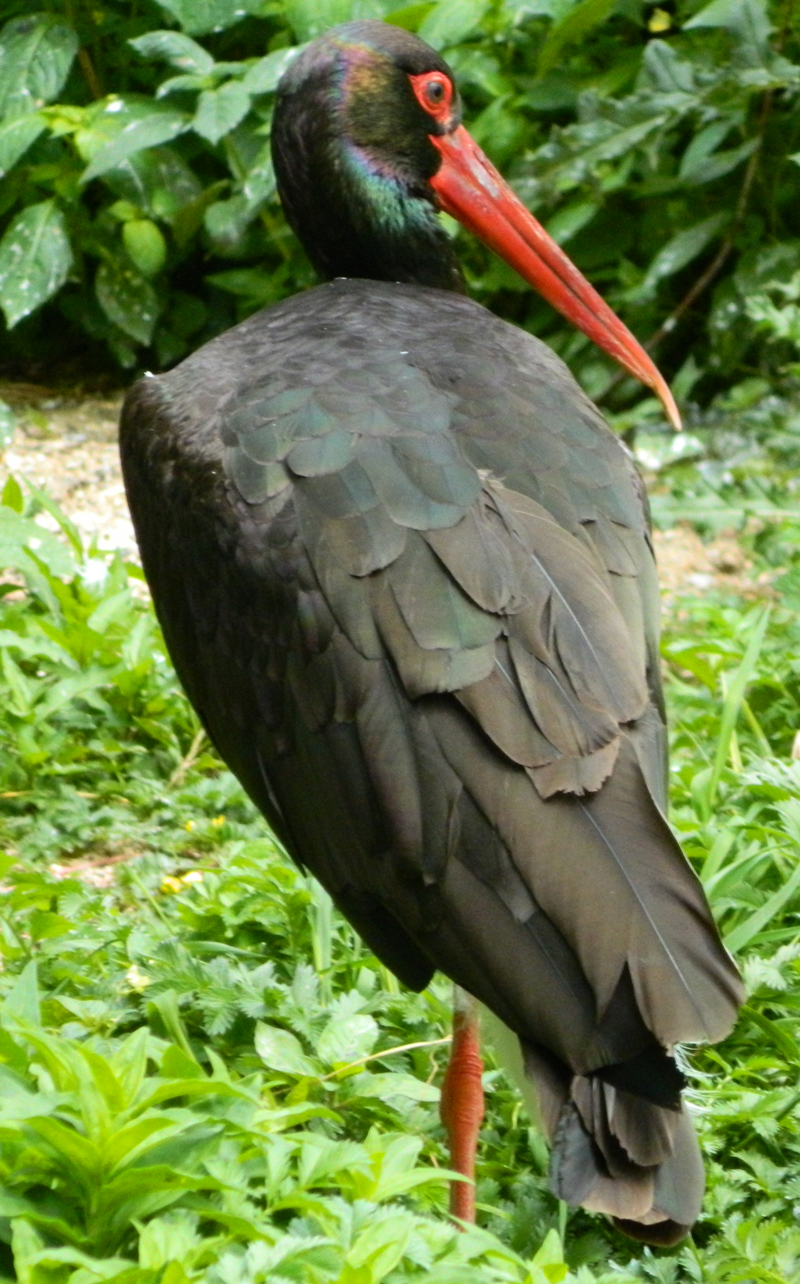
img. 1946 © Vogelnarr

img. 353 © Jörg Schlusen
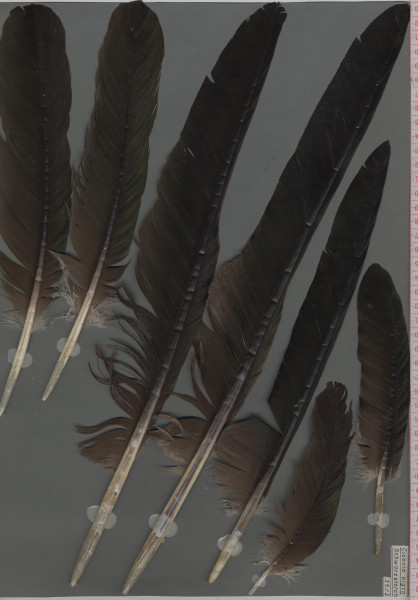
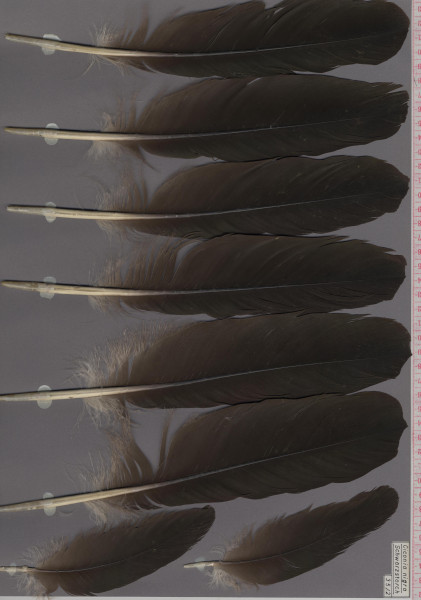
ad. female

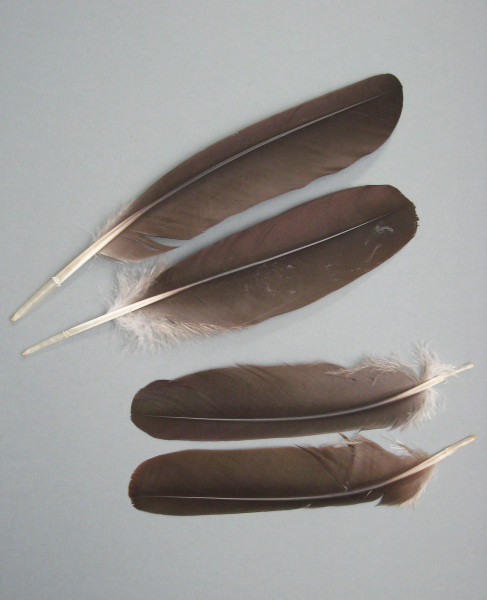
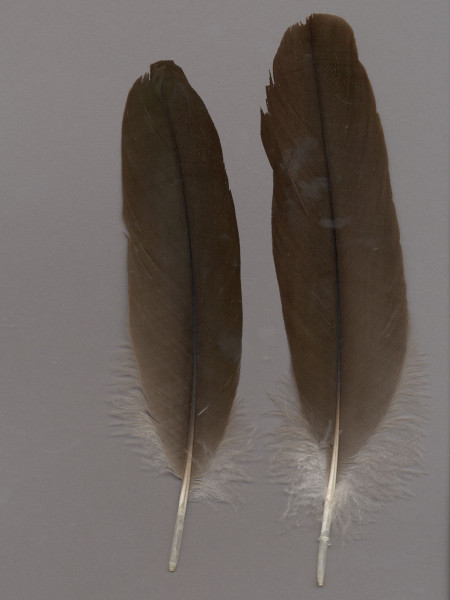
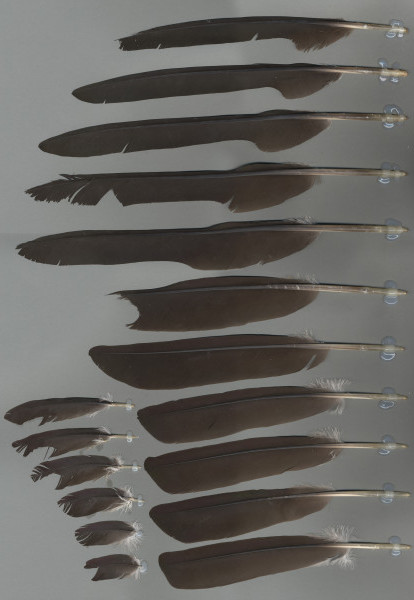
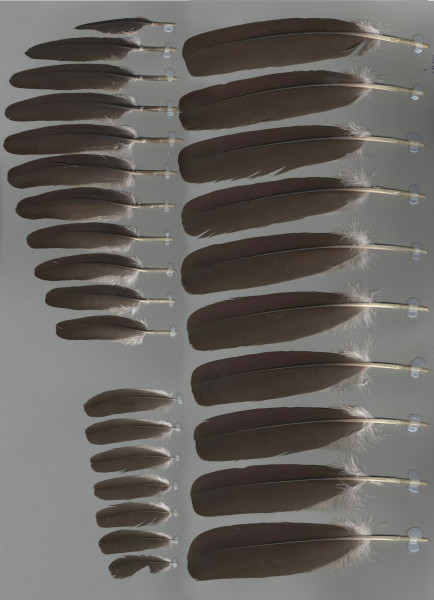
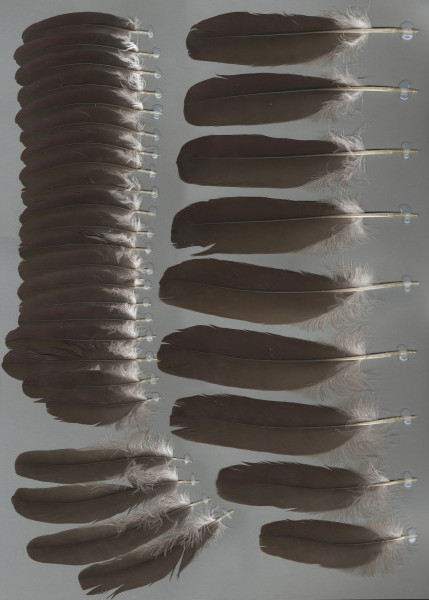
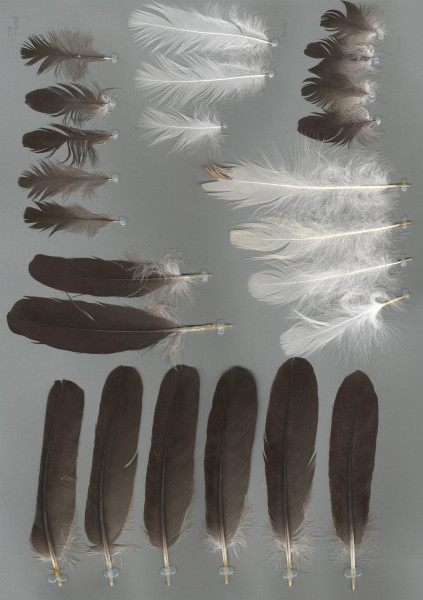
Die Handschwingen des Schwarzstorchs sind tief schwarzbraun gefärbt mit einem kupfernen Glanz und einem satt schwarzen Kiel. Die Innenfahne ist kaum aufgehellt und auch die Federbasis ist nur leicht gräulich gesäumt. Die Armschwingen besitzen die selbe Färbung und sind besitzen eine recht eckige Form. Die Schirmfedern sind etwas vergrößert. Die Steuerfedern sind tiefschwarz gefärbt - meist noch dunkler als die Schwingen - und nur die äußeren Steuerfedern besitzen eine leichte Aufhellung der Innenfahne. Die Handschwingen H6 bis H10 (wenn diese manchmal auch nur noch undeutlich im unteren Teil breiter verläuft) sind in der Außenfahne teilweise verengt. H11 ist vollständig verengt. Die Innenfahne von H7 bis H11 sind ebenso verengt. Im Habitat des Schwarzstorchs kann es unter Umständen zu Verwechslungen mit Federn des Weißstorchs oder des Europäischen Kranichs kommen. Der Weißstorch besitzt eine etwas bräunlichere Innenfahne, eine deutlich weiße Innenfahnenbasis und eine weißliche Bereifung der Außenfahne. Die Schwingen des Kranichs sind insgesamt etwas heller, also gräulicher und die Innenfahne ist merklich aufgehellt. Außerdem sind die Federn von Weißstorch und Kranich deutlich stumpfer, besitzen also keinen metallischen Glanz.

number longest
primary 11 per wing approx. 450.5mm n=1
P7 (100%)
secondary 20 per wing approx. 300.5mm n=1
S17 (100%)
retrix 12
approx. 269.0mm n=1
R2 (100%)
wing length1 hand-wing-index1,2 (HWI) primaries-index wing length/longest primary ratio hand-wing-index/primaries-index ratio
490 - 564mm n=7 37 - 48% n=6 38 - 38% n=1 no data available no data available
detailed information

The wing length is measured on the flattened and straightened wing ("maximum chord") from the carpal joint to the tip of the longest primary feather, the so-called "Kleinschmidt-method".

combined data from:
Avonet1: 490 - 564mm n=7

The hand-wing-index, introduced by Kipp 1959, is calculated as the ratio of the hand length (difference between the length of the longest primary and the first secondary) to the wing length.

combined data from:
Avonet1: 37 - 48% n=6,
The primaries-index is calculated as the ratio of the longest primary feather length to the first (outermost) secondary. It is the equivalent of the hand-wing index for feather measurements. The wing length/longest primary ratio is calculated as the ratio of the wing length to the length of the longest primary feather. The hand-wing-index/primaries-index ratio is calculated as the ratio of the hand-wing index to the primaries-index.
1 Tobias, J. A., et al. (2022). AVONET: morphological, ecological and geographical data for all birds.
2 Kipp, Friedrich A.: "Der Handflügel-Index als flugbiologisches Maß", erschienen in "Vogelwarte - Zeitschrift für Vogelkunde", 1959, Band 20, Heft 1


ad. male
ad.

country allocations

extant

Afghanistan · Albania · Algeria · Angola · Armenia · Austria · Azerbaijan · Belarus · Belgium · Benin · Bhutan · Bosnia and Herzegovina · Botswana · Bulgaria · Burkina Faso (vagrant) · Cameroon (vagrant) · Central African Republic · Chad (vagrant) · China · Congo, The Democratic Republic of the (vagrant) · Côte d'Ivoire · Croatia · Cyprus · Czechia · Denmark · Djibouti · Egypt · Eritrea · Estonia · Eswatini · Ethiopia · Finland (vagrant) · France · Gambia (vagrant) · Georgia · Germany · Ghana (vagrant) · Gibraltar · Greece · Guinea · Guinea-Bissau · Hong Kong · Hungary · India · Iran, Islamic Republic of · Iraq · Ireland (vagrant) · Israel · Italy · Japan · Jordan · Kazakhstan · Kenya · Korea, Democratic People's Republic of · Korea, Republic of · Kuwait (vagrant) · Kyrgyzstan · Lao People's Democratic Republic · Latvia · Lebanon · Lesotho · Libya · Liechtenstein (vagrant) · Lithuania · Luxembourg · Malawi · Mali (vagrant) · Malta · Mauritania · Moldova, Republic of · Mongolia · Montenegro · Morocco · Mozambique · Myanmar · Namibia · Nepal · Netherlands · Niger (vagrant) · Nigeria · North Macedonia · Norway (vagrant) · Oman (vagrant) · Pakistan · Palestine, State of · Poland · Portugal · Qatar (vagrant) · Romania · Russian Federation · Rwanda (vagrant) · Saudi Arabia · Senegal · Serbia · Slovakia · Slovenia · Somalia (vagrant) · South Africa · South Sudan · Spain · Sri Lanka · Sudan · Sweden · Switzerland · Syrian Arab Republic · Taiwan, Province of China · Tajikistan · Tanzania, United Republic of · Thailand · Togo · Tunisia · Türkiye · Turkmenistan · Uganda · Ukraine · United Arab Emirates (vagrant) · United Kingdom of Great Britain and Northern Ireland (vagrant) · Uzbekistan · Viet Nam · Yemen · Zambia · Zimbabwe ·
source: IUCN 2025. IUCN Red List of Threatened Species. Version 2025-1 <www.iucnredlist.org>
assessment data: |

Storks, herons, egrets, ibises and spoonbills

distribution

conservation status

  • CITES
    appendix 2
  • Regulation (EG) Nr. 865/2006
    appendix A
  • German Federal Nature Conservation Act §44
    strictly protected