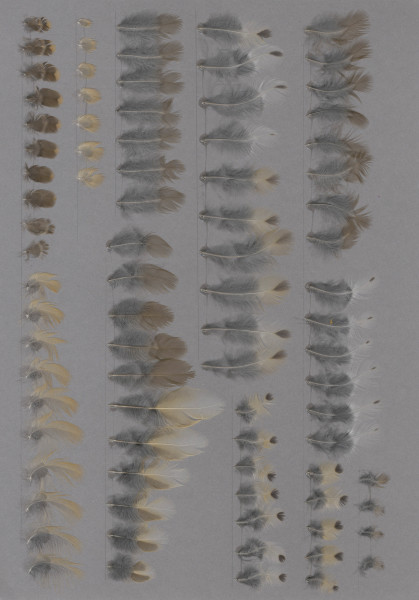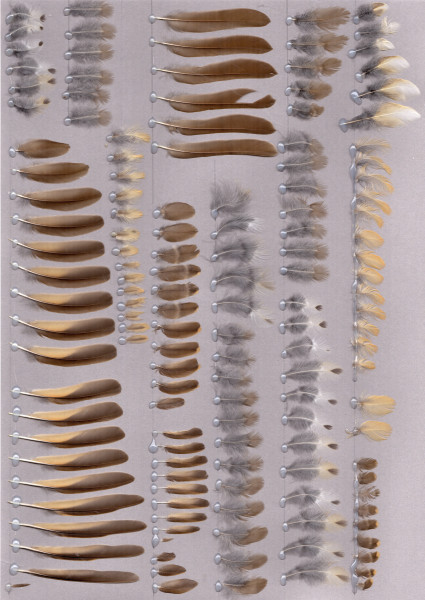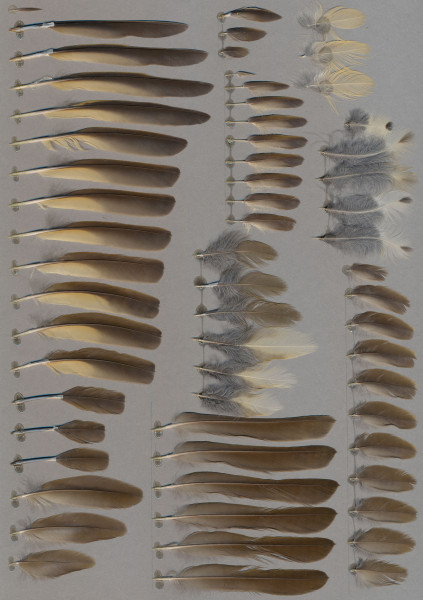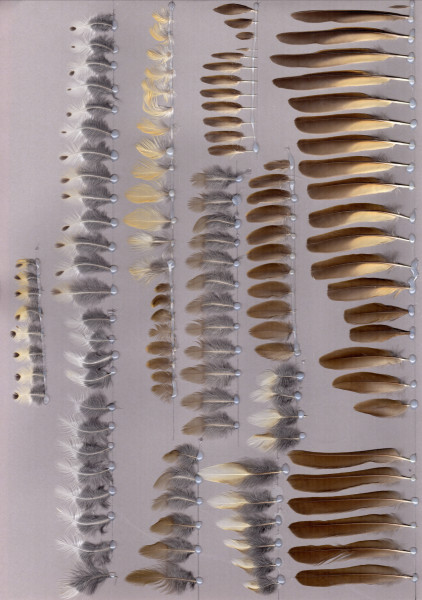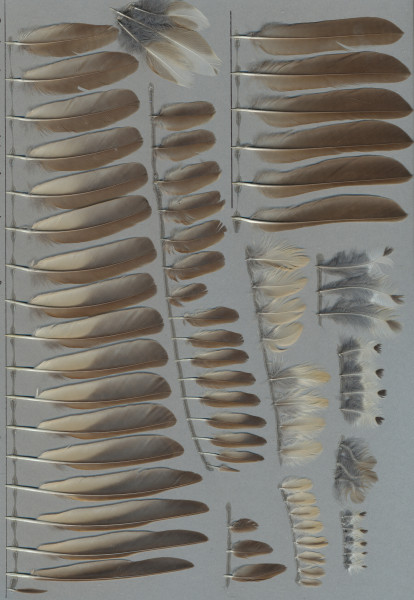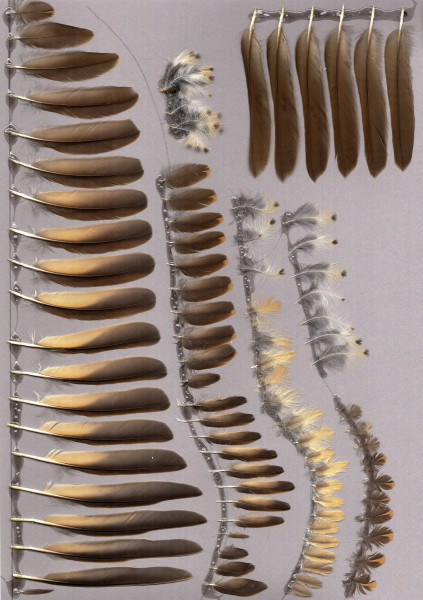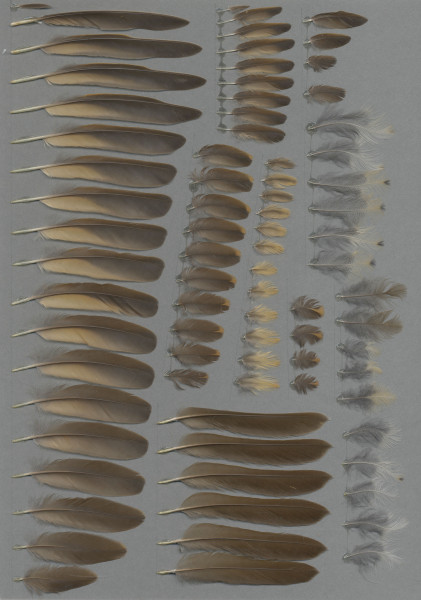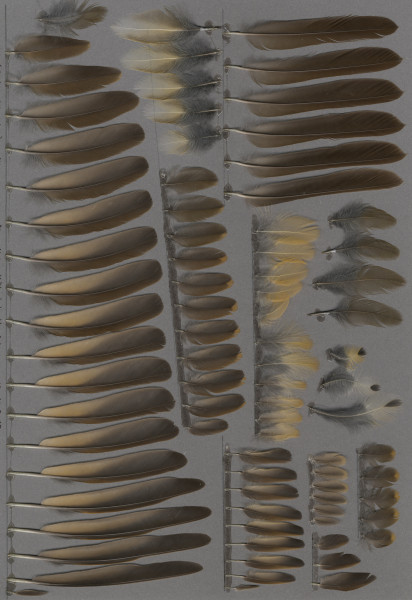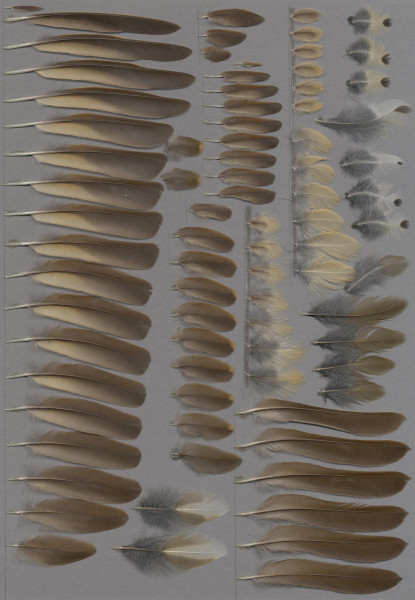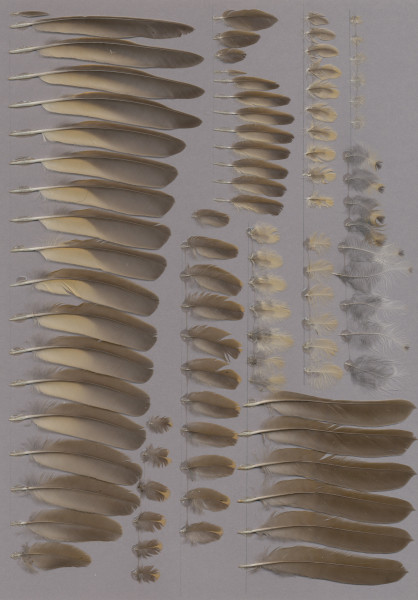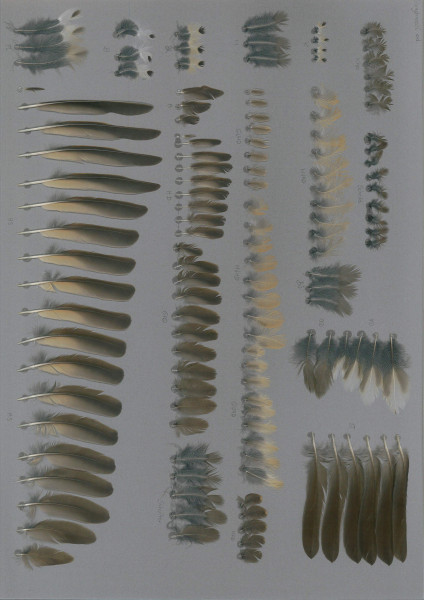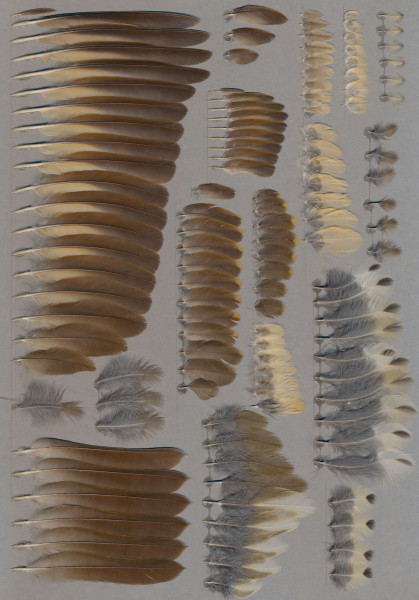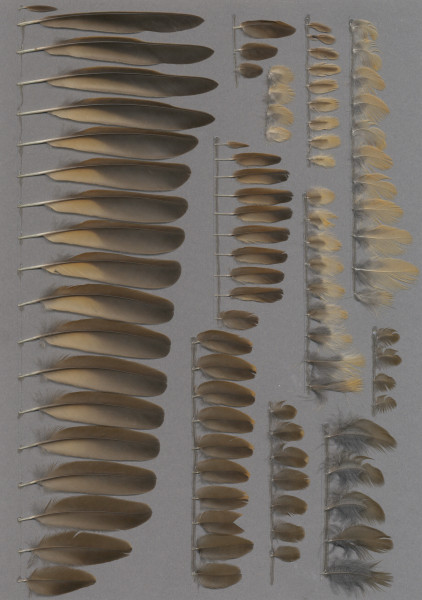
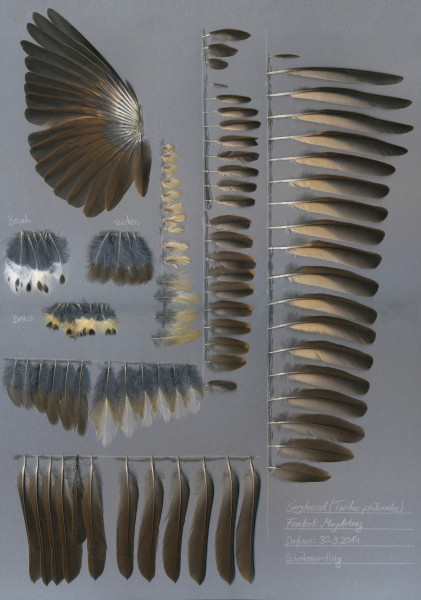


Die Handschwingen sind graubraun gefärbt. Die Außenfahne ist braun, leicht olivgrün aufgehellt. Auf der Innenfahne findet sich ein meist kräftiger cremefarbener Saum, durch welchen die Singdrossel in den meisten Fällen schon eindeutig bestimmbar ist. Auf den äußeren Handschwingen findet sich eine helle Kontur um die Außenfahne. Die H10 ist stark verkleinert, H6-H8 besitzen eine partiell verengte Außenfahne. Die Außenfahne von H9 und H10 sind vollständig verengt.
Die Armschwingen besitzen eine ähnliche Färbung wie die Handschwingen. Proximal verschwindet der cremefarbene Innenfahnensaum langsam. Die Schirmfedern sind einfarbig oliv graubraun mit einem leichten grauen Saum der Innenfahne.
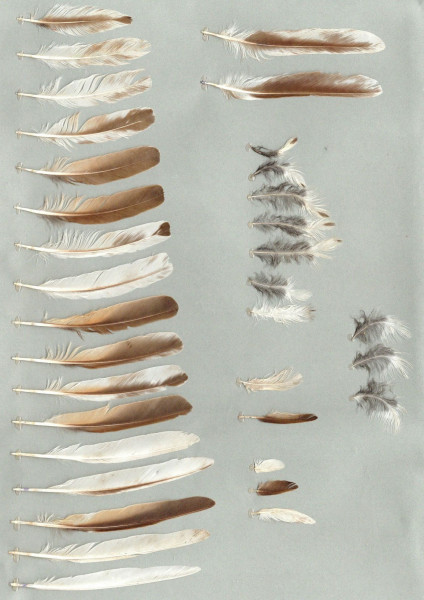
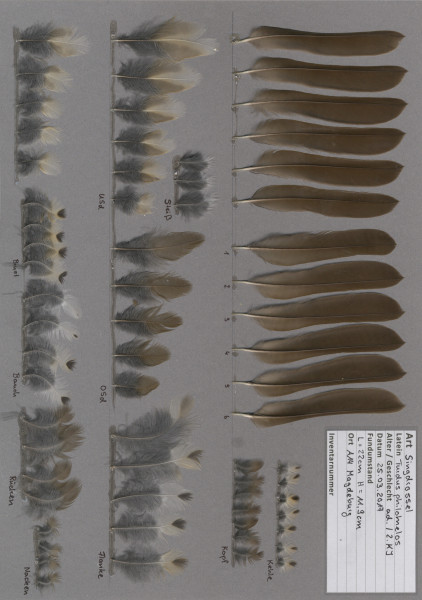
Die Steuerfedern sind ebenfalls braun, leicht oliv gefärbt. Die Innenfahne besitzt einen hellgrauen bis weißen Basissaum. Die Spitzenkontur ist leicht aufgehellt. Im Gegensatz zu Drosseln wie der Amsel ist die Spitze stark, teil konkav zugespitzt. Anhand dieses Merkmals lassen sich auch oft juvenile Vögel identifizieren, bei denen diese Zuspitzung noch stärker ausgeprägt ist (siehe dazu die abgebildeten Belege im Direktvergleich).
Die Oberschwanzdecken sind grauoliv gefärbt, die Unterschwanzdecken sind braun mit einer zentralen, weißen Fläche, abgegrenzt durch eine leichte cremefarbene Kontur. DIe GrHd sind ähnlich den Handschwingen gefärbt. Auf den GrAd findet sich an der Spitze der Außenfahne eine cremefarbene Fläche. Dadurch ergibt sich im Flügel ein geflecktes Muster. Hervorzuheben sind außerdem die weißen, teils cremefarbenen Brustfedern mit einer schwarzen Spitze. Diese erzeugen das gefleckte Muster auf der Brust des Vogels (siehe auch Misteldrossel).
| 羽根 | 数 | 最長 |
|---|---|---|
| 初列風切 | 10 /翼 |
94.5 - 103.5mm
n=26 P7 (92%) P8 (8%) |
| 次列風切 | 9 /翼 |
73.0 - 80.5mm
n=26 S1 (92%) S2 (8%) |
| 尾羽 |
12
|
86.0 - 96.0mm
n=23 T4 (48%) T5 (39%) T3 (9%) T2 (4%) |
|
do_not_translate_yet:measurements_remarks.title
do_not_translate_yet:measurements_remarks.number_of_individuals ndo_not_translate_yet:measurements_remarks.selection_of_individuals do_not_translate_yet:measurements_remarks.method_titledo_not_translate_yet:measurements_remarks.method do_not_translate_yet:measurements_remarks.percentage_titledo_not_translate_yet:measurements_remarks.percentage |
||