


menu

White-capped Redstart
Phoenicurus leucocephalus
species of Muscicapidae

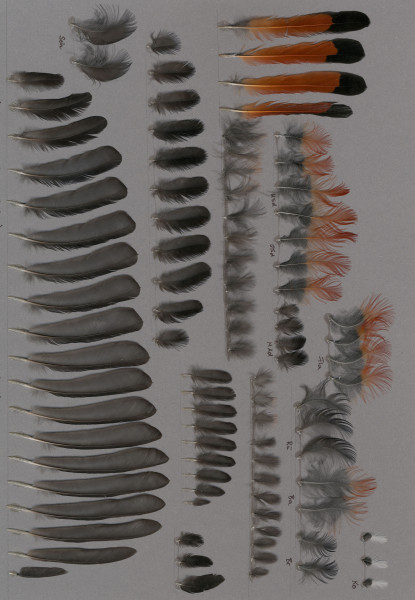
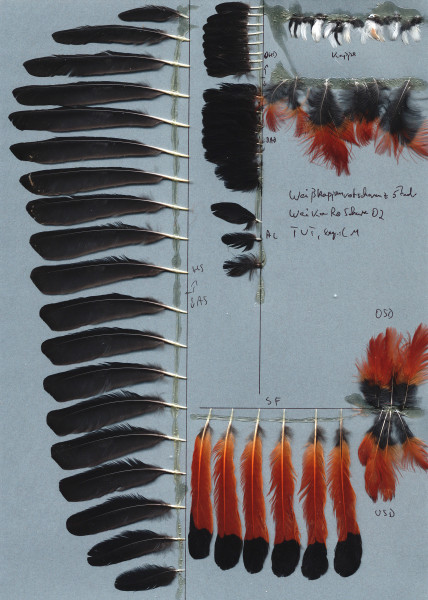
ad. male
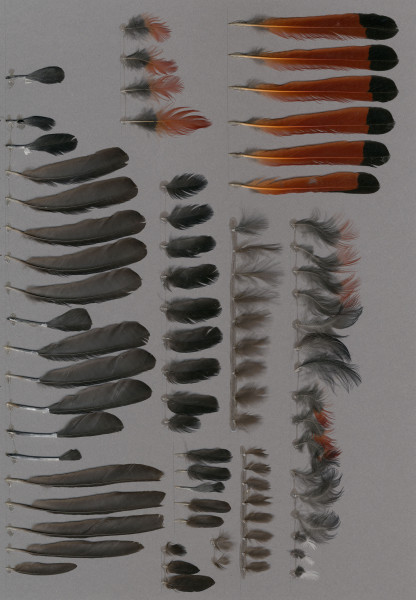
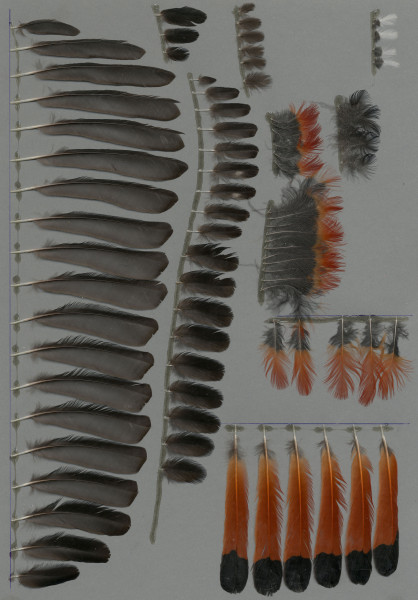
ad. male

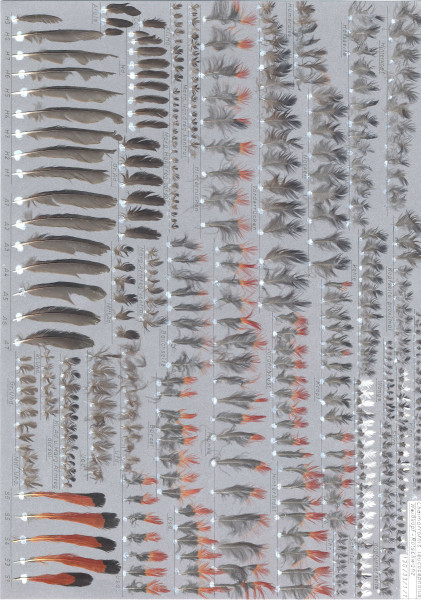
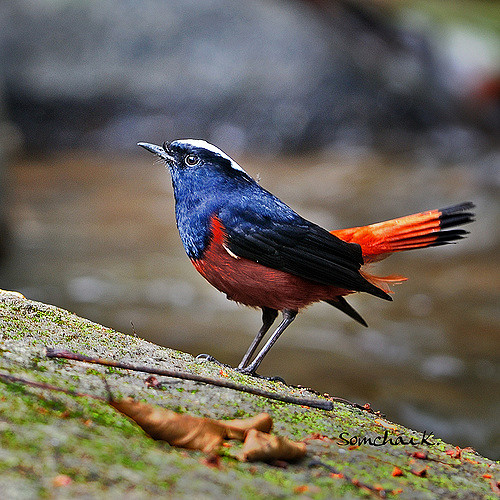
Der Weißkappenrotschwanz besitzt ein sehr kontrastreiches Gefieder. Die Hand- und Armschwingen sind gleichmäßig schwarzbraun gefärbt. Die basale Aufhellung in der Innenfahne ist nur minimal. Der Flügel ist sehr rund aufgebaut, dadurch ist die längste Handschwinge relativ weit innen (meist H5 oder H6). Die Handschwingen H5-H8 sind in der Außenfahne partiell verengt - H9 und H10 vollständig. Im Gegensatz zu manch anderen Rotschwänzen ist auch die H9 schon relativ kurz. Die Steuerfedern sind leuchtend dunkelrot gefärbt mit einer schwarzen Terminalbinde. Die Geschlechter lassen sich anhand des Gefieders nicht unterscheiden. Weibchen besitzen lediglich eine etwas kleinere weiße Kappe. Juvenile Vögel sind im Gefieder etwas blasser gefärbt und bräunlicher. Jedoch ist auch dies lediglich anhand von Federn schwer zu bestimmen. An dieser Stelle helfen eher Entwicklungsstand und Abnutzungsgrad der Federn.

number longest
primary 10 per wing 80.0 - 88.5mm n=3
P6 (67%) P7 (33%)
secondary 9 per wing 66.5 - 72.0mm n=3
S1 (100%)
retrix 12
82.5 - 84.5mm n=3
R2 (33%) R1 (33%) R2=R3 (33%)
wing length1 hand-wing-index1,2 (HWI) primaries-index wing length/longest primary ratio hand-wing-index/primaries-index ratio
83 - 100mm n=5 15 - 23% n=4 15 - 19% n=3 no data available no data available
detailed information

The wing length is measured on the flattened and straightened wing ("maximum chord") from the carpal joint to the tip of the longest primary feather, the so-called "Kleinschmidt-method".

combined data from:
Avonet1: 83 - 100mm n=5

The hand-wing-index, introduced by Kipp 1959, is calculated as the ratio of the hand length (difference between the length of the longest primary and the first secondary) to the wing length.

combined data from:
Avonet1: 15 - 23% n=4,
The primaries-index is calculated as the ratio of the longest primary feather length to the first (outermost) secondary. It is the equivalent of the hand-wing index for feather measurements. The wing length/longest primary ratio is calculated as the ratio of the wing length to the length of the longest primary feather. The hand-wing-index/primaries-index ratio is calculated as the ratio of the hand-wing index to the primaries-index.
1 Tobias, J. A., et al. (2022). AVONET: morphological, ecological and geographical data for all birds.
2 Kipp, Friedrich A.: "Der Handflügel-Index als flugbiologisches Maß", erschienen in "Vogelwarte - Zeitschrift für Vogelkunde", 1959, Band 20, Heft 1


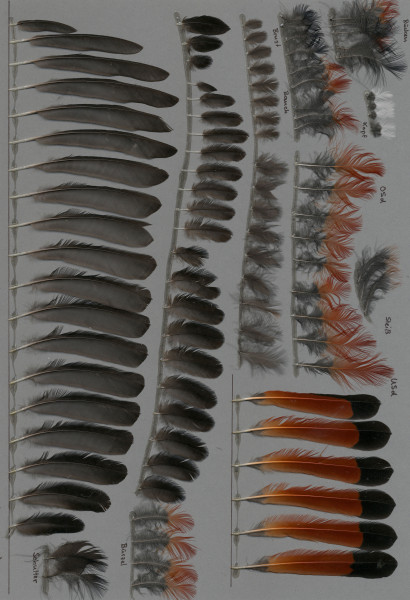
ad.
ad. male

country allocations

extant

Afghanistan · Bhutan · China · India · Kyrgyzstan · Lao People's Democratic Republic · Myanmar · Nepal · Pakistan · Tajikistan · Thailand · Uzbekistan · Viet Nam ·
source: IUCN 2025. IUCN Red List of Threatened Species. Version 2025-1 <www.iucnredlist.org>
assessment data: |

Songbirds and kin

distribution

conservation status

  • CITES
    not listed
  • Regulation (EG) Nr. 865/2006
    not listed
  • German Federal Nature Conservation Act §44
    not listed