


menü

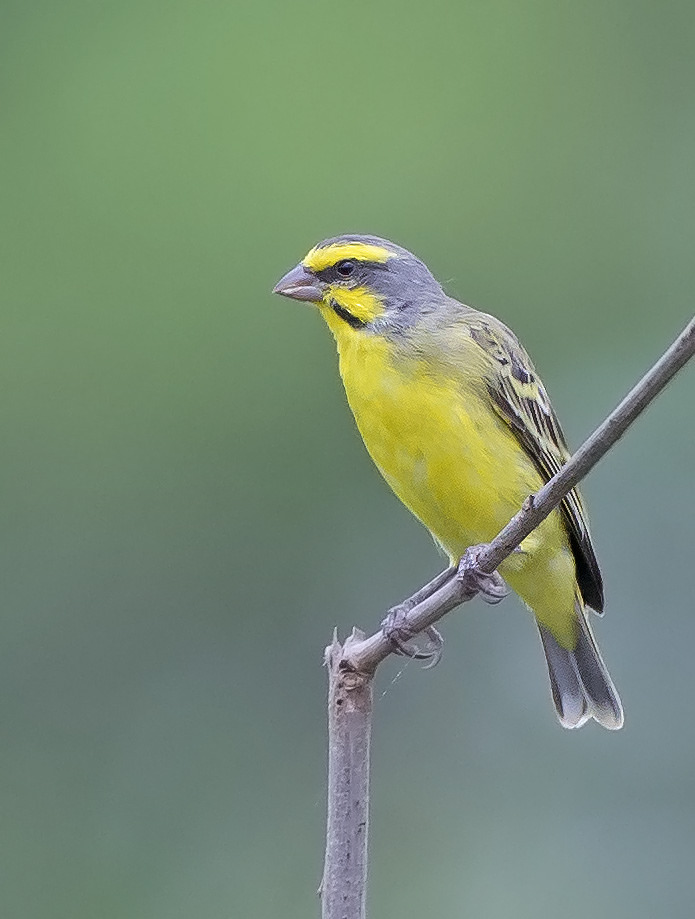
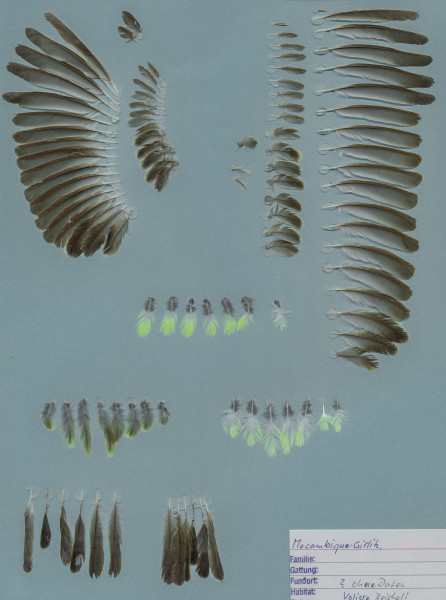
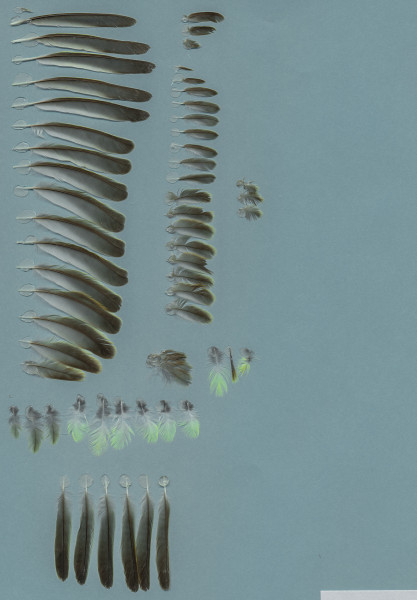
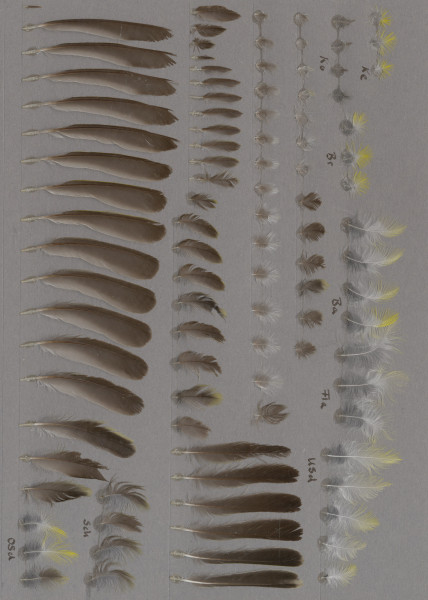
Yellow-fronted canary
Crithagra mozambica
Fringillidae család fajai

hím
száma leghosszabb
elsődleges 10 szárnyanként 55.5 - 59.0mm n=2
E7=E6=E5 (50%) E7 (50%)
másodlagos 9 szárnyanként 45.5 - 49.0mm n=2
M1=M3 (50%) M1 (50%)
repülés 12
47.0 - 48.5mm n=2
R4 (50%) R5 (50%)
wing length1 hand-wing-index1,2 (HWI) primaries-index wing length/longest primary ratio hand-wing-index/primaries-index ratio
65 - 72mm n=17 18 - 26% n=14 17 - 18% n=2 nincs elérhető adat nincs elérhető adat
detailed information

The wing length is measured on the flattened and straightened wing ("maximum chord") from the carpal joint to the tip of the longest primary feather, the so-called "Kleinschmidt-method".

combined data from:
Avonet1: 65 - 72mm n=17

The hand-wing-index, introduced by Kipp 1959, is calculated as the ratio of the hand length (difference between the length of the longest primary and the first secondary) to the wing length.

combined data from:
Avonet1: 18 - 26% n=14,
The primaries-index is calculated as the ratio of the longest primary feather length to the first (outermost) secondary. It is the equivalent of the hand-wing index for feather measurements. The wing length/longest primary ratio is calculated as the ratio of the wing length to the length of the longest primary feather. The hand-wing-index/primaries-index ratio is calculated as the ratio of the hand-wing index to the primaries-index.
1 Tobias, J. A., et al. (2022). AVONET: morphological, ecological and geographical data for all birds.
2 Kipp, Friedrich A.: "Der Handflügel-Index als flugbiologisches Maß", erschienen in "Vogelwarte - Zeitschrift für Vogelkunde", 1959, Band 20, Heft 1


ország allokációk

Songbirds and kin

védelmi státusz

  • CITES
    nincs listázva
  • Regulation (EG) Nr. 865/2006
    nincs listázva
  • Német Szövetségi Természetvédelmi Törvény §44
    nincs listázva