

menü

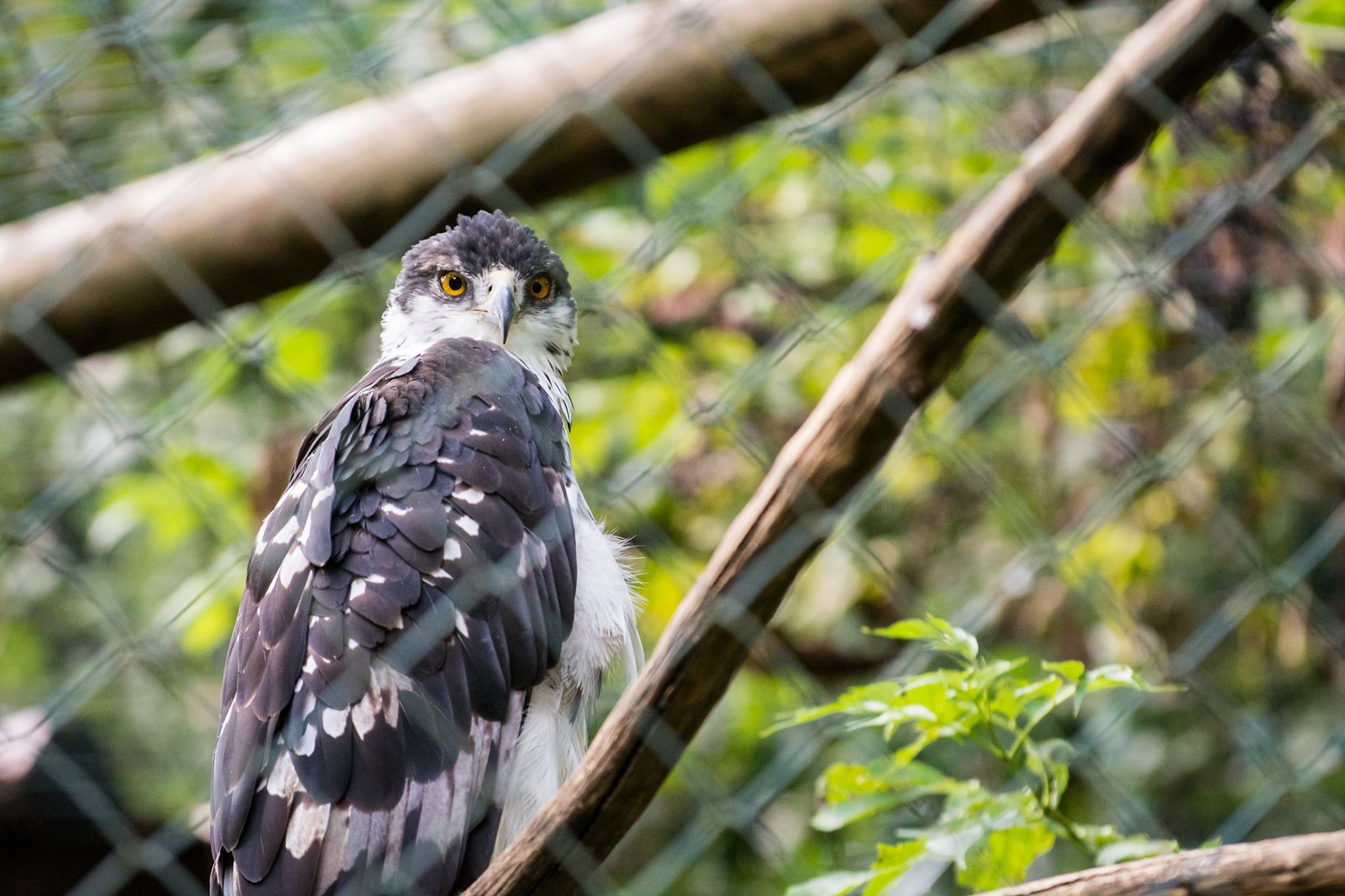
African Hawk-Eagle
Aquila spilogaster
Accipitridae család fajai


© Dieter Betz
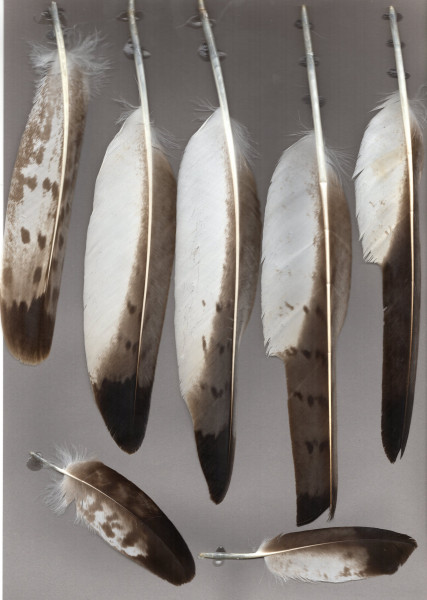
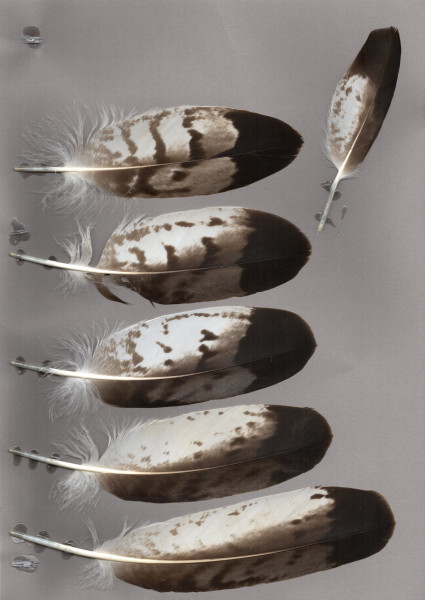
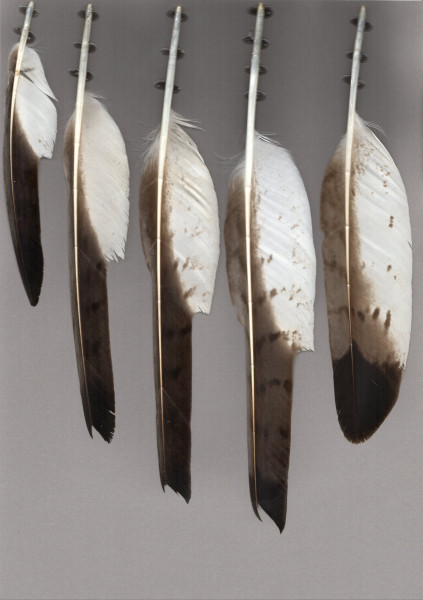
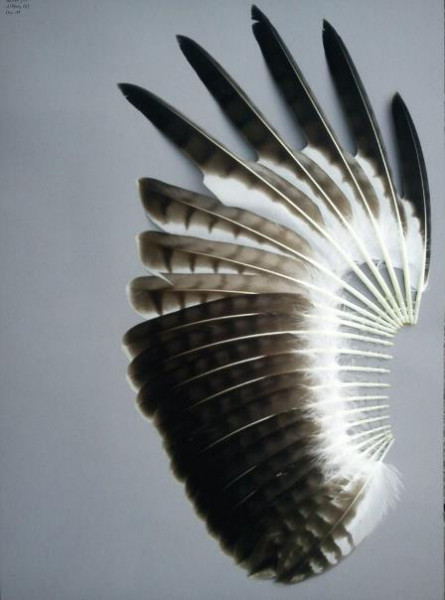
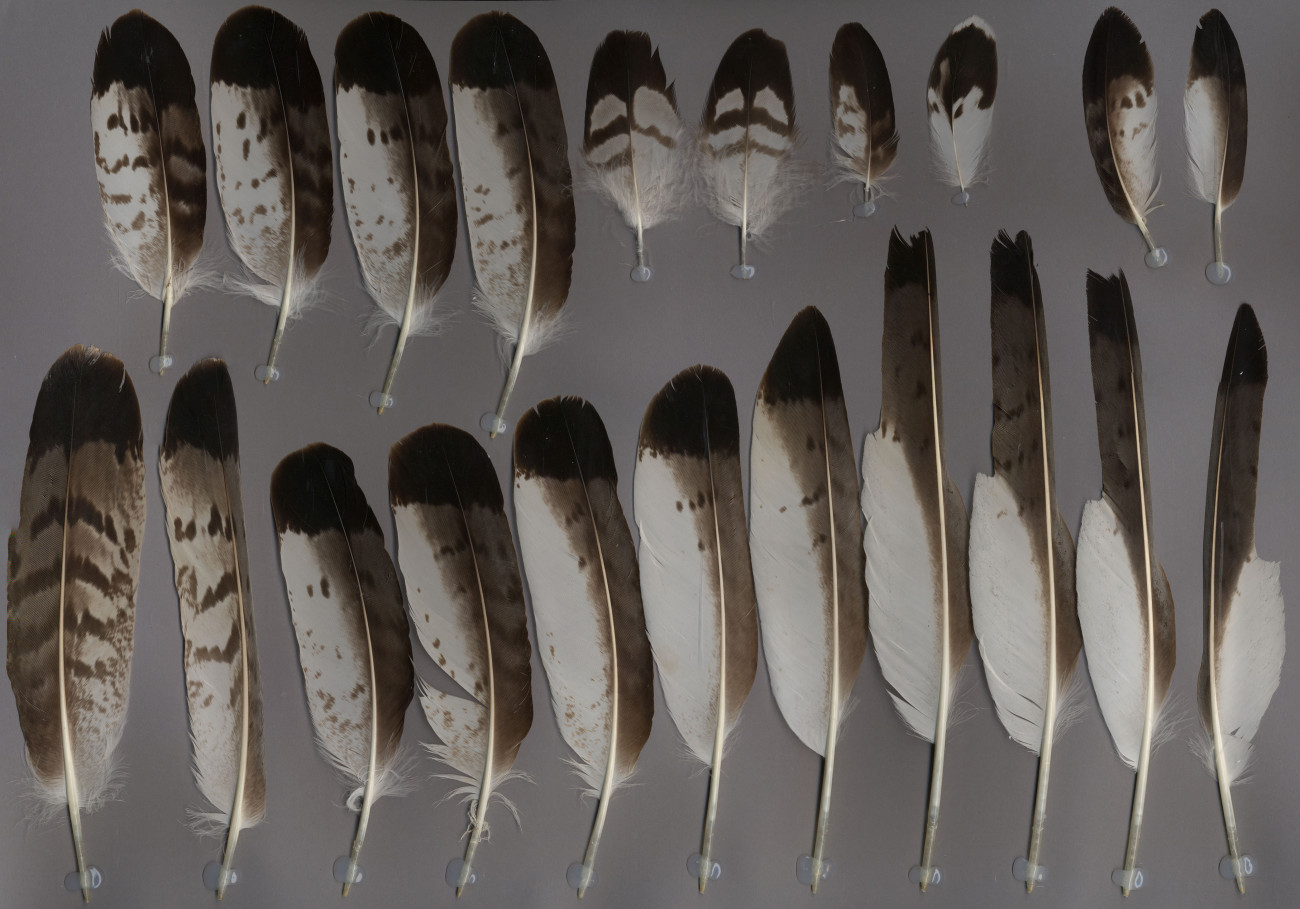
ad. nőstény

Der Afrikanische Habichtsadler hat trotz seines Namens im Gefieder große Ähnlichkeit mit Adler- oder auch Mäusebussarden. Auch seine Größe unterscheidet sich nicht sehr stark von Vertretern der Gattung Buteo. Charakteristisch für den Afrikanischen Habichtsadler ist die tiefschwarze Terminalbinde in den Armschwingen, welche in den Handschwingen zur Spitze hin ausläuft. Die restliche Federfläche ist graubraun mit einer rein weißen, großen Innenfahnenfläche. Die Außenfahne ist teilweise silbern bereift. Querstreifen auf den Schwingen variieren von klaren, aber leicht verzerrten Streifen bis hin zu unregelmäßigen dunklen Flecken. Weibliche Afrikanische Habichtsadler sind ein wenig stärker gestreift als die männlichen. Jungvögel sind oberseits dunkelbrauner mit weißen Balken in den Flügeldecken. Die Zeichnung auf Flügel und Steuer ist etwas blasser und die Terminalbinde auf den Steuerfedern ist noch nicht stark ausgeprägt. Die Handschwingen H6 bis H9 sind in der Außenfahne teilweise verengt, H10 vollständig.

wing length1 hand-wing-index1,2 (HWI) primaries-index wing length/longest primary ratio hand-wing-index/primaries-index ratio
418 - 438mm n=5 32 - 36% n=4 nincs elérhető adat nincs elérhető adat nincs elérhető adat
detailed information

The wing length is measured on the flattened and straightened wing ("maximum chord") from the carpal joint to the tip of the longest primary feather, the so-called "Kleinschmidt-method".

combined data from:
Avonet1: 418 - 438mm n=5

The hand-wing-index, introduced by Kipp 1959, is calculated as the ratio of the hand length (difference between the length of the longest primary and the first secondary) to the wing length.

combined data from:
Avonet1: 32 - 36% n=4,
The primaries-index is calculated as the ratio of the longest primary feather length to the first (outermost) secondary. It is the equivalent of the hand-wing index for feather measurements. The wing length/longest primary ratio is calculated as the ratio of the wing length to the length of the longest primary feather. The hand-wing-index/primaries-index ratio is calculated as the ratio of the hand-wing index to the primaries-index.
1 Tobias, J. A., et al. (2022). AVONET: morphological, ecological and geographical data for all birds.
2 Kipp, Friedrich A.: "Der Handflügel-Index als flugbiologisches Maß", erschienen in "Vogelwarte - Zeitschrift für Vogelkunde", 1959, Band 20, Heft 1


ország allokációk

Hawks, eagles and old world vultures

eloszlás

védelmi státusz

  • CITES
    függelék 2
  • Regulation (EG) Nr. 865/2006
    függelék B
  • Német Szövetségi Természetvédelmi Törvény §44
    védett