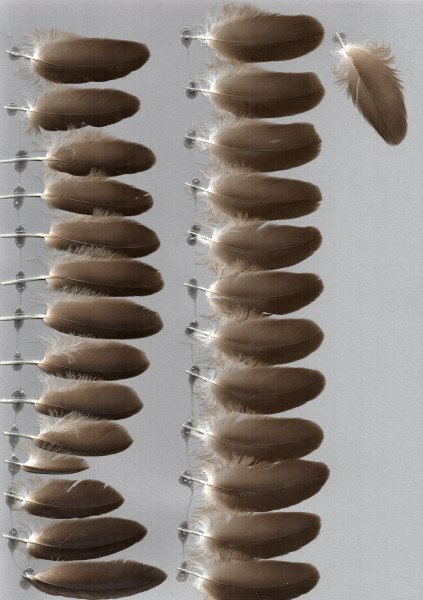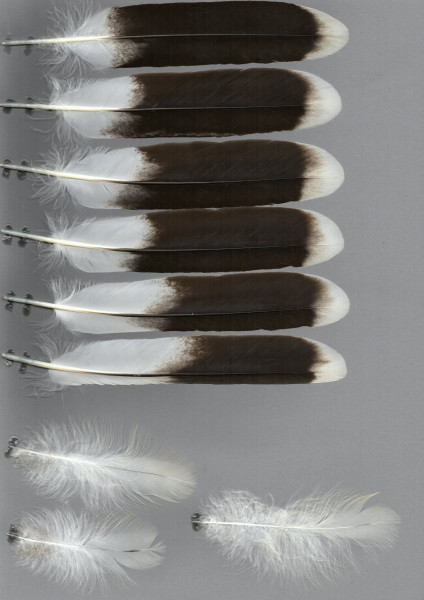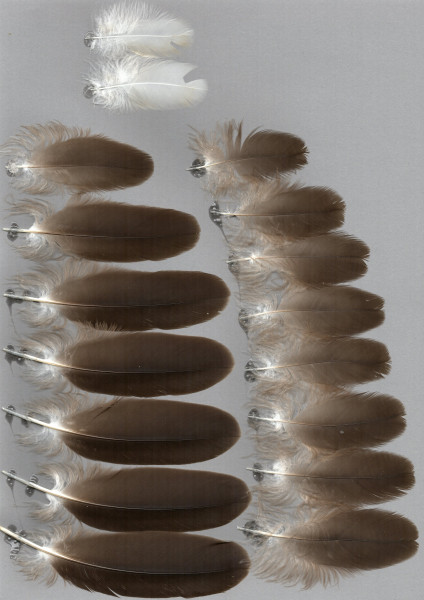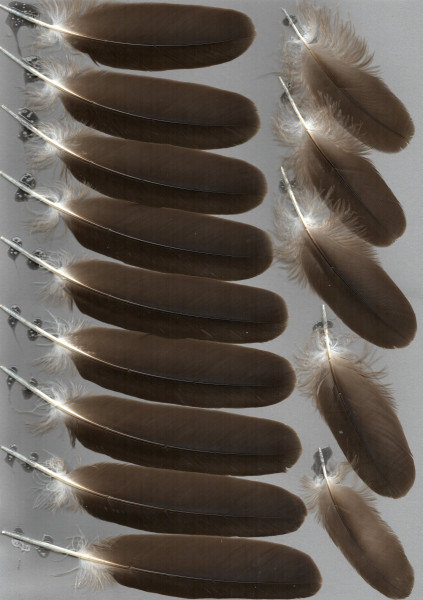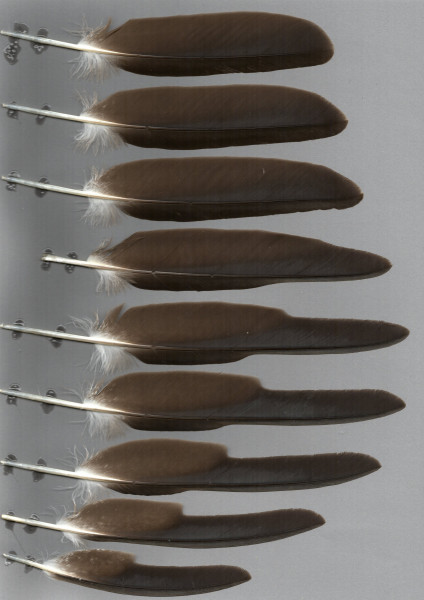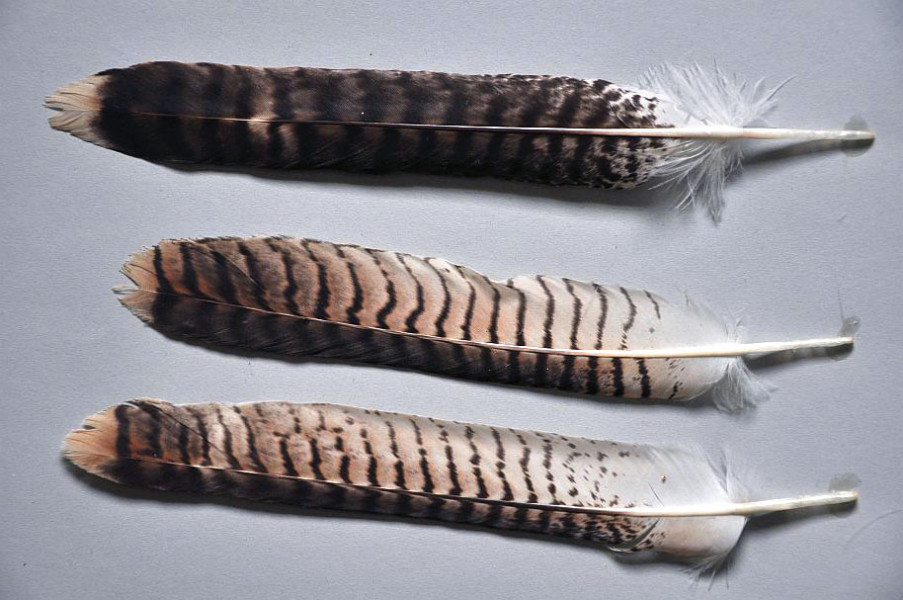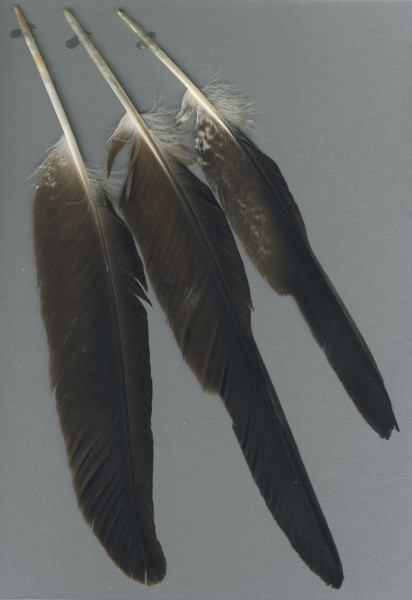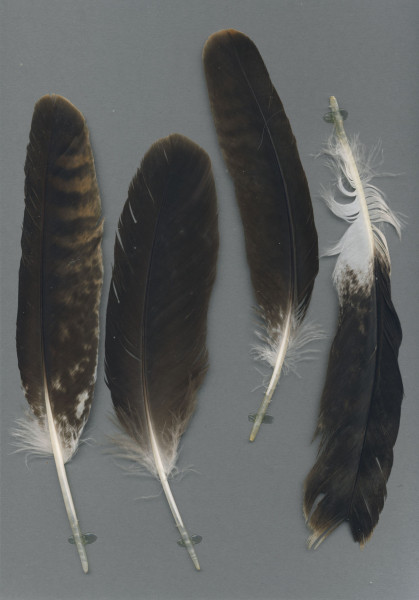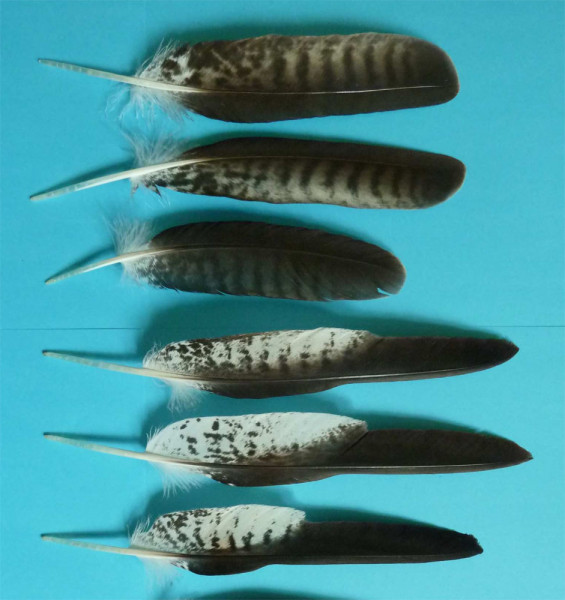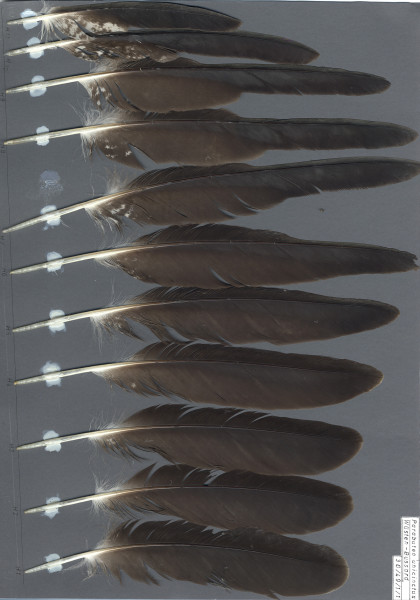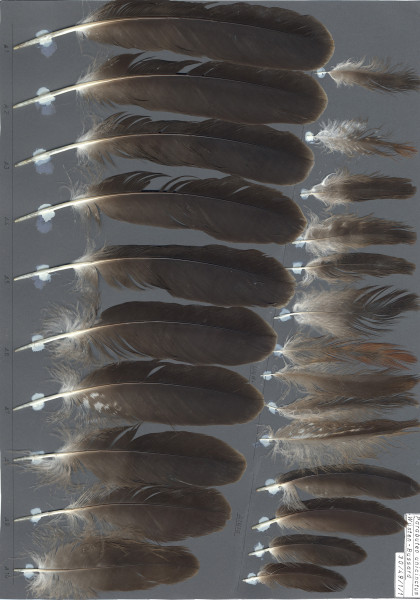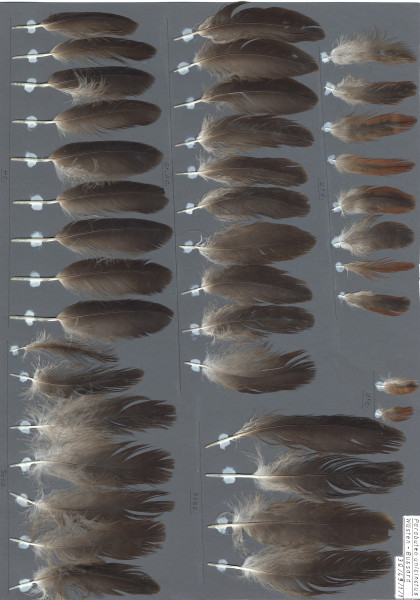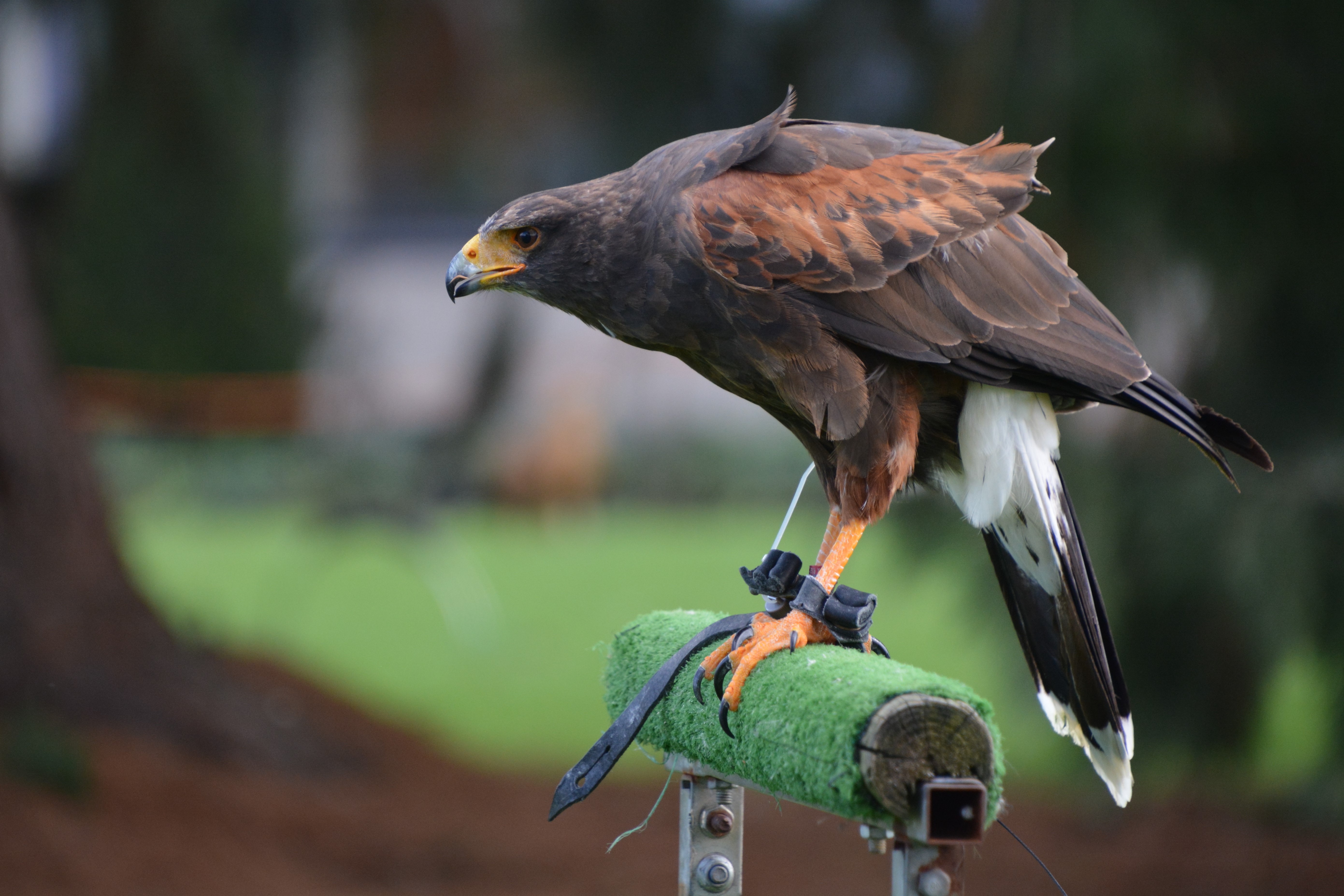

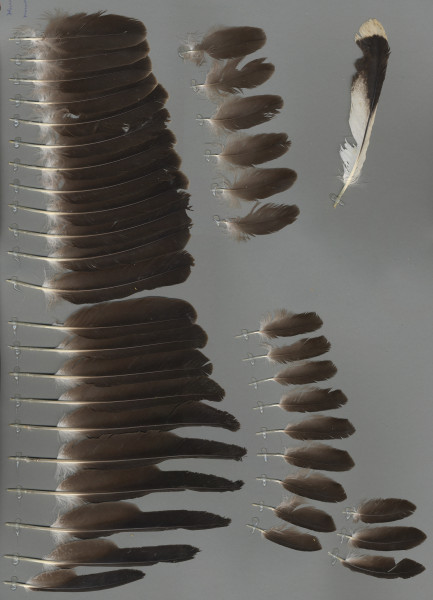
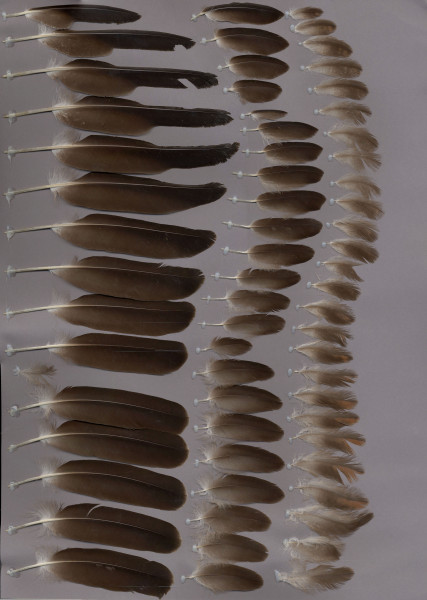
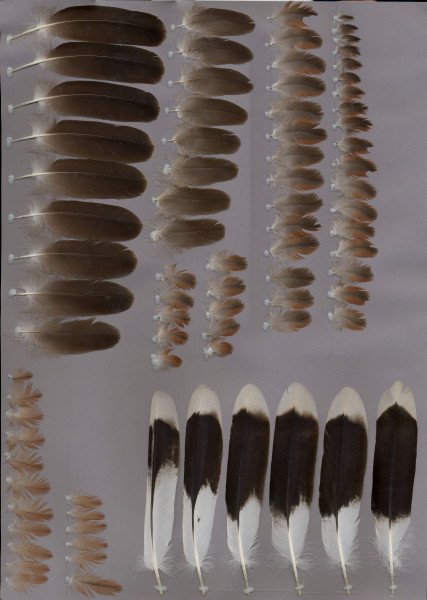


Der Wüstenbussard zeigt zwar in der Größe, nicht aber in der Zeichnung oder Färbung große Geschlechtsunterschiede. Adulte Vögel besitzen schwarzbraune Hand- und Armschwingen mit weißem Basisflaum. Darauf finden sich unregelmäßige helle Flecken auf der Innenfahne, teilweise auch undeutliche Bänderung ähnlich dem Schwarzmilan. Die Steuerfedern sind weiß, teilweise cremefarben verfärbt und geben im oberen Teil fleckig in ein schwarzbraun über. An der Spitze findet sich eine helle Terminalbinde. Der dunkle Farbanteil sowie mögliche Anzeigen einer Querbänderung unterliegen starker Variation. Jungvögel besitze starke Aufhellungen der Innenfahnenflächen der Handschwingen mit fleckiger Bänderung. Die Bänderung kann sich klar und deutlich auch über die Armschwingen erstrecken. Bei dunklen Exemplaren zeigt sich einer weniger starker Kontrast der Bänderung, jedoch ist sie immernoch gut erkennbar. Die Steuerfedern juveniler Vögel ähneln denen des Mäusebussards, sind jedoch deutlich feiner quergebändert. Die Grundfärbung variiert, ist jedoch meist hell cremefarben. Die S1 ist dunkler gefärbt. An der Spitze des Steuers findet sich jedoch schon die gleiche, helle Terminalbinde wie bei den adulten Vögeln. Längste Handschwinge ist die H6, H5 bis H9 zeigen eine partielle Verengung der Außenfahne - H10 vollständig.
| plume | nombre | plus longue |
|---|---|---|
| rémige primaire | 10 par aile |
274.0 - 298.5mm
n=4 P6 (100%) |
| rémige secondaire | 15 par aile |
206.0 - 229.0mm
n=4 S1 (75%) S2 (25%) |
| rectrice |
12
|
245.0 - 251.0mm
n=2 R1 (50%) R3 (50%) |
|
do_not_translate_yet:measurements_remarks.title
do_not_translate_yet:measurements_remarks.number_of_individuals ndo_not_translate_yet:measurements_remarks.selection_of_individuals do_not_translate_yet:measurements_remarks.method_titledo_not_translate_yet:measurements_remarks.method do_not_translate_yet:measurements_remarks.percentage_titledo_not_translate_yet:measurements_remarks.percentage |
||