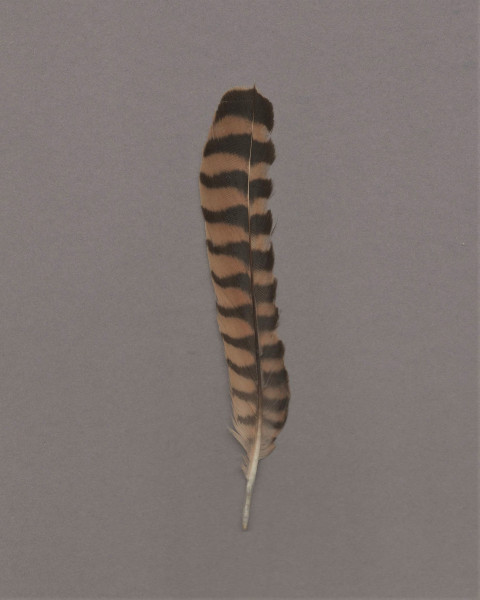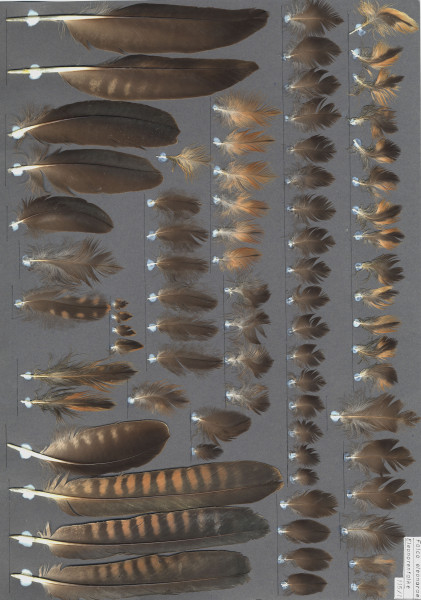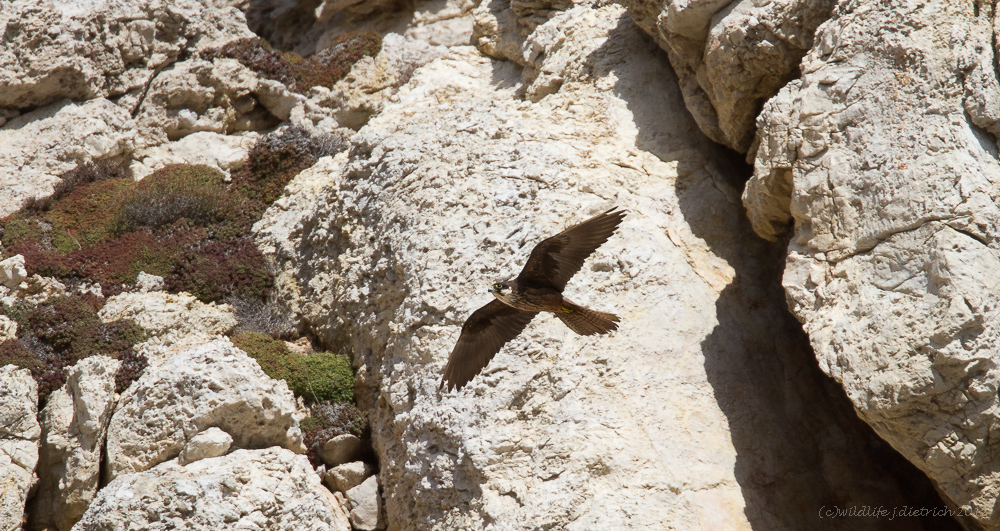
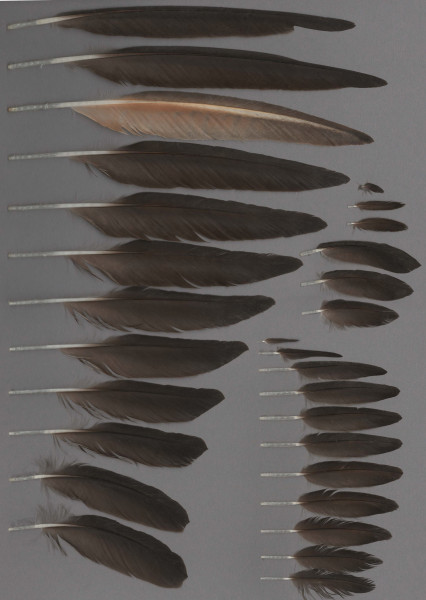
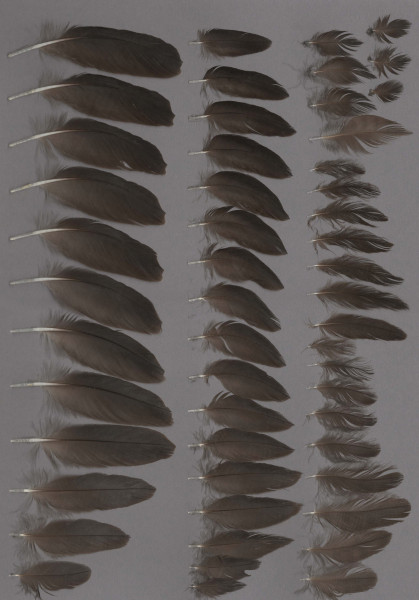
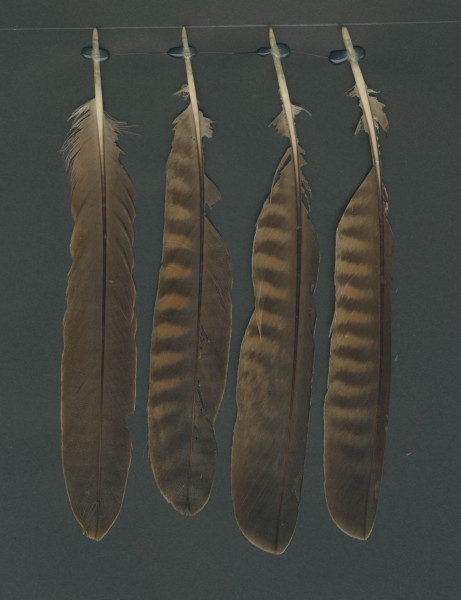


Der Eleonorenfalke (Falco eleonorae) wird in zwei Erscheinungsbilder unterteilt. In die helle und die dunkle Morphe. Die Handschwingen der dunklen Morphe sind ähnlich wie beim Baumfalken graubraun gefärbt mit verwaschenen, fleckigen, cremefarbenen Feldern in der Innenfahne, welche ein leichtes Streifenmuster bilden. Die Flecken können jedoch auch soweit verschwommen sein, dass auf der Innenfahne nur eine unregelmäßige helle Fleckung zu erkennen ist. Die Steuerfedern sind größtenteils gelblich schwarzbraun mit einer verschmommenen blassen Querbänderung auf der Innenfahne in Creme- und / oder Grautönen. Die S1 ist meist einfarbig. Eine helle Spitze zeigt sich auch manchmal am Ende der Steuerfedern. Die helle Morphe ist kontrastreicher gezeichnet. Die Streifen auf den Steuerfedern können eher über beide Fahnen verlaufen. Die Zeichnung auf Hand- und Armschwingen ist deutlicher. Die GrHd und die GrAd besitzen cremefarbene Spitzenkonturen. Das Schulter- und Rückengefieder wirkt durch die Spitzenkonturen geschuppt.
| plume | nombre | plus longue |
|---|---|---|
| rémige primaire | 10 par aile |
approx. 256.0mm
n=1 P9 (100%) |
| rémige secondaire | 14 par aile |
approx. 125.0mm
n=1 S1 (100%) |
| rectrice |
12
|
Aucune donnée disponible |
|
do_not_translate_yet:measurements_remarks.title
do_not_translate_yet:measurements_remarks.number_of_individuals ndo_not_translate_yet:measurements_remarks.selection_of_individuals do_not_translate_yet:measurements_remarks.method_titledo_not_translate_yet:measurements_remarks.method do_not_translate_yet:measurements_remarks.percentage_titledo_not_translate_yet:measurements_remarks.percentage |
||