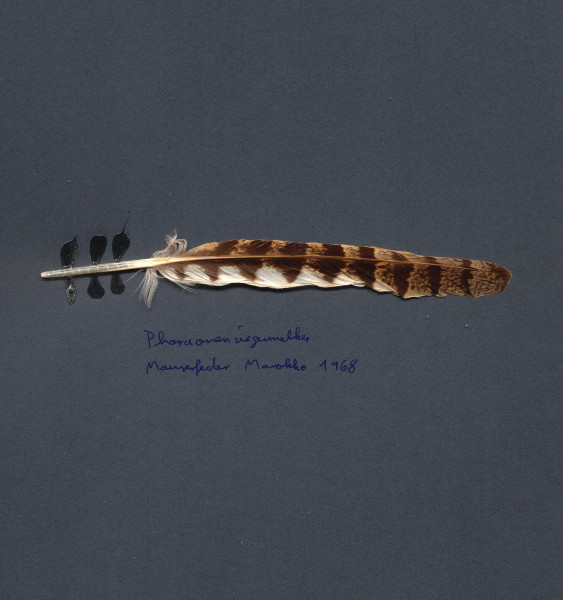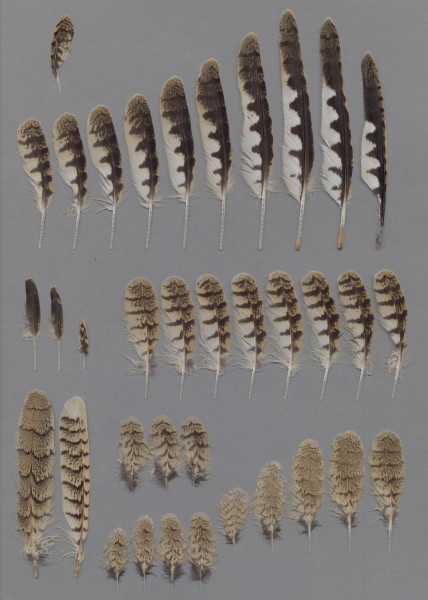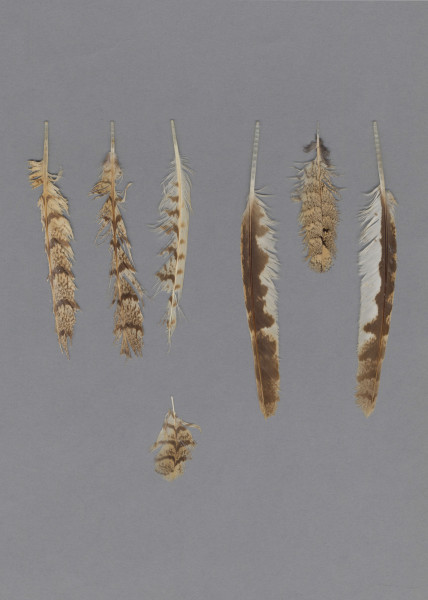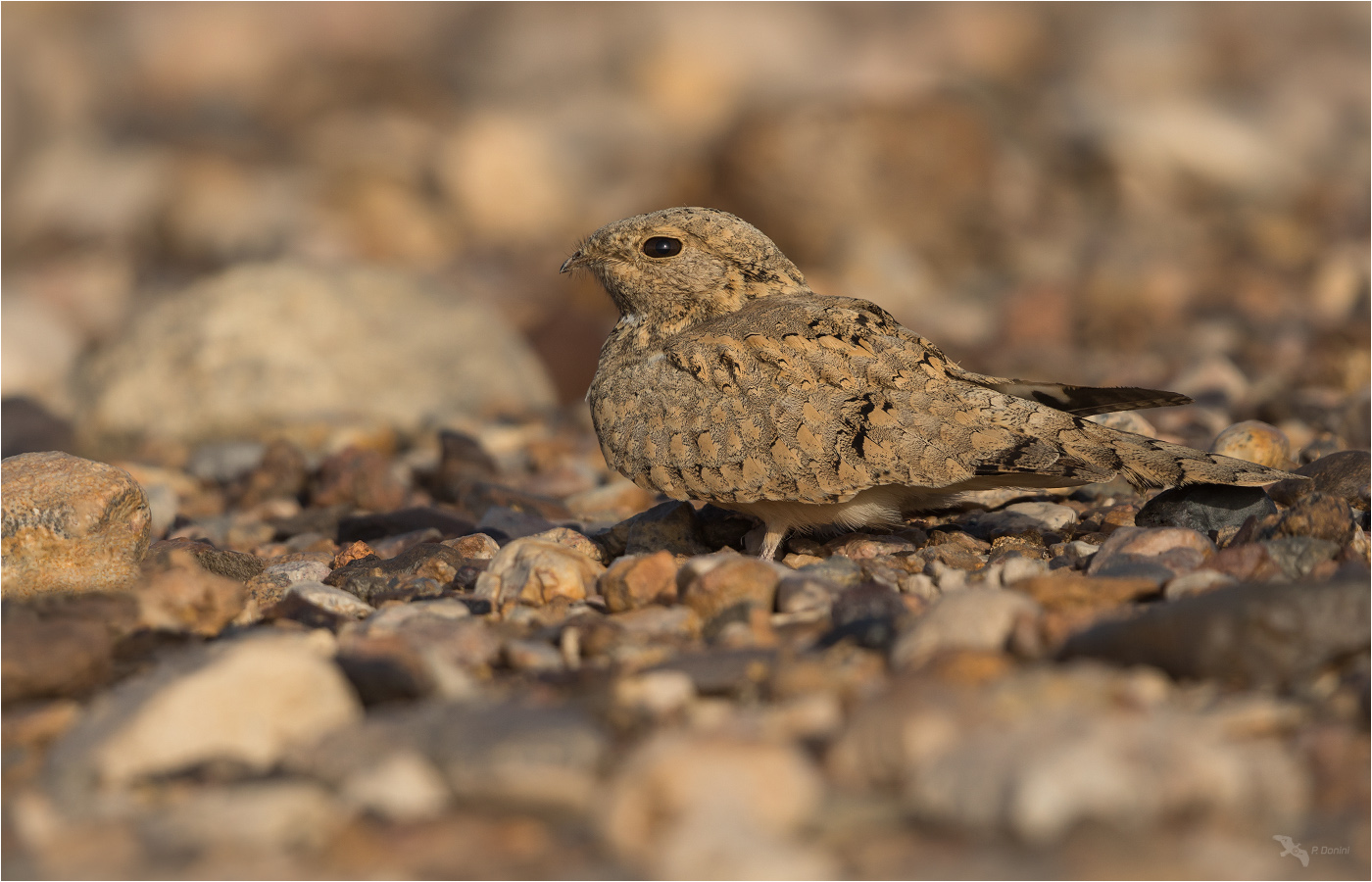
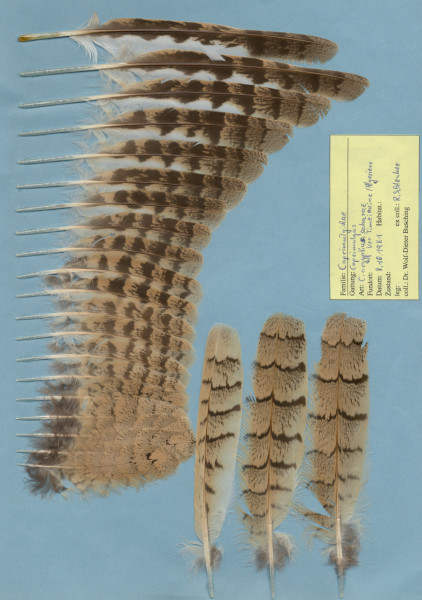
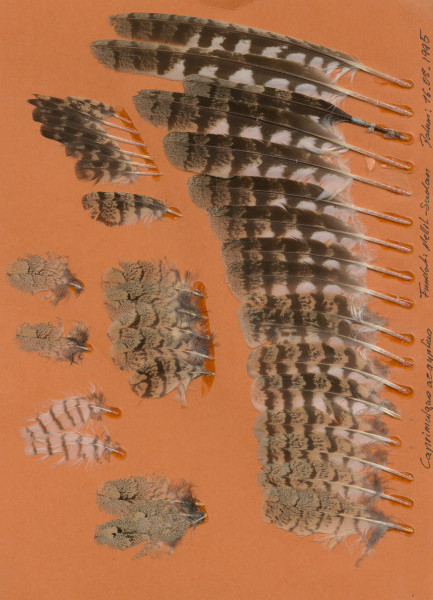
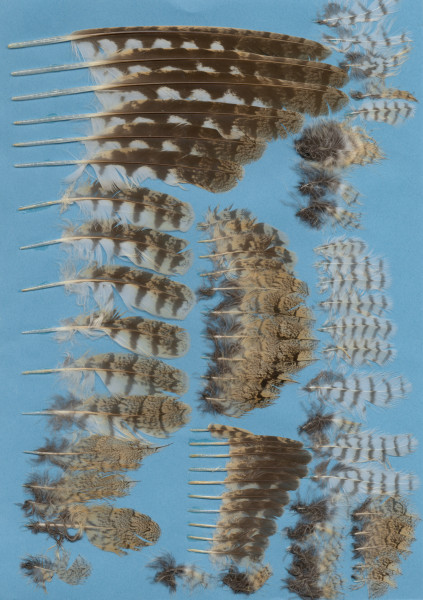

Im Gegensatz zum nördlicheren Ziegenmelker ist die Färbung des Pharaonenziegenmelkers etwas gelblicher sandbraun. Die Bänderung der Hand- und Armschwingen ist größtenteil klar und die Innenfahne vorallem an der Basis weiß aufgehellt. Die äußeren Handschwingen können durch ihre Zeichnung schon sehr an die Handschwingen von Falken erinnern. Die Steuerfedern sind ähnlich sandfarben gefärbt mit feiner Sprenkelung und dunklen, schmalen Querbinden. Die äußeren Steuerfedern sind in der Grundfärbung heller. Die vom Ziegenmelker bekannten weißen Felder in den äußeren Handschwingen sind beim Pharaonenziegenmelker eher durch eine weißere Grundfärbung ausgebildet bzw. mehrere kleine weiße Felder zwischen den Querbinden der Handschwingen. Die äußeren Steuerfeder können ähnliche weiße Flächen in den Spitzen zeigen wie der Ziegenmelker, sind jedoch in ihrer Grundfärbung schon deutlich heller. Längste Handschwinge ist meist die H9.
| plume | nombre | plus longue |
|---|---|---|
| rémige primaire | 10 par aile |
approx. 167.0mm
n=1 P9 (100%) |
| rémige secondaire | 12-13 par aile |
91.5 - 92.0mm
n=2 S1 (100%) |
| rectrice |
10
|
Aucune donnée disponible |
|
do_not_translate_yet:measurements_remarks.title
do_not_translate_yet:measurements_remarks.number_of_individuals ndo_not_translate_yet:measurements_remarks.selection_of_individuals do_not_translate_yet:measurements_remarks.method_titledo_not_translate_yet:measurements_remarks.method do_not_translate_yet:measurements_remarks.percentage_titledo_not_translate_yet:measurements_remarks.percentage |
||