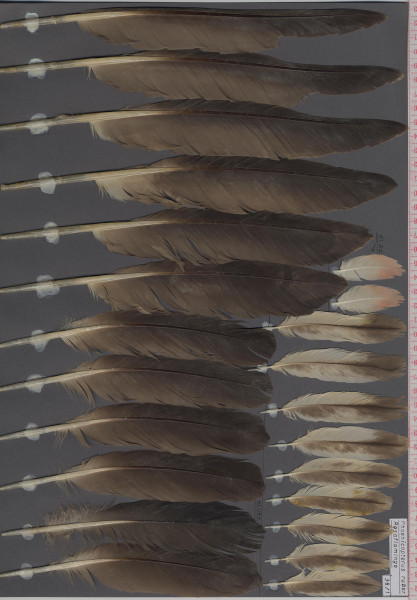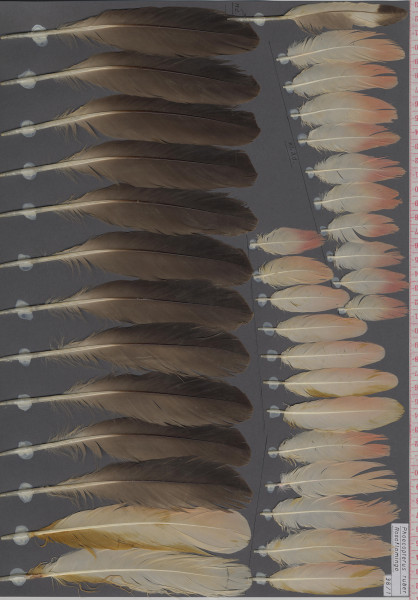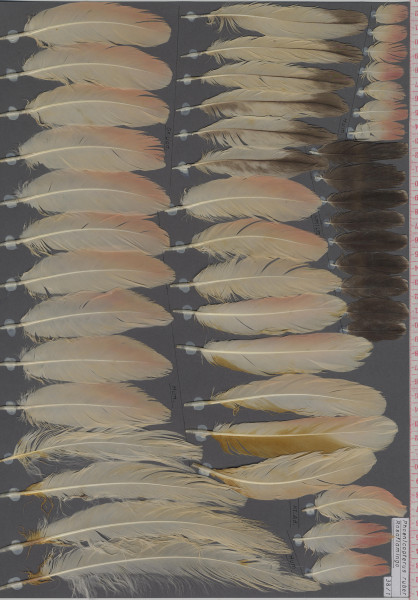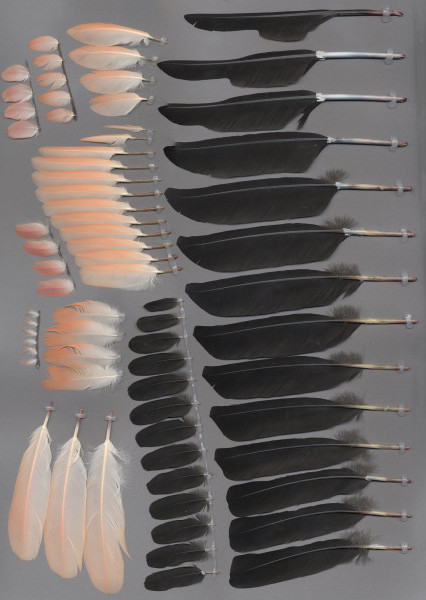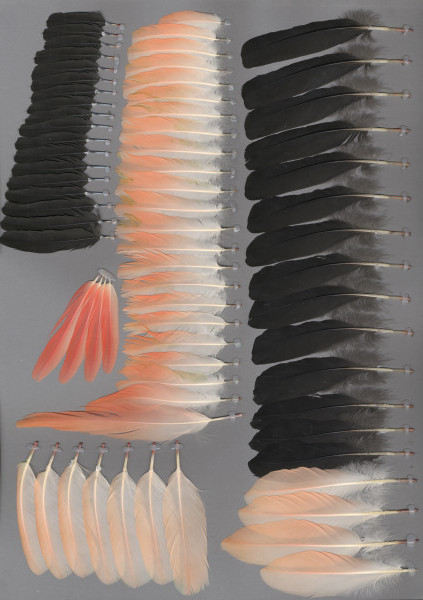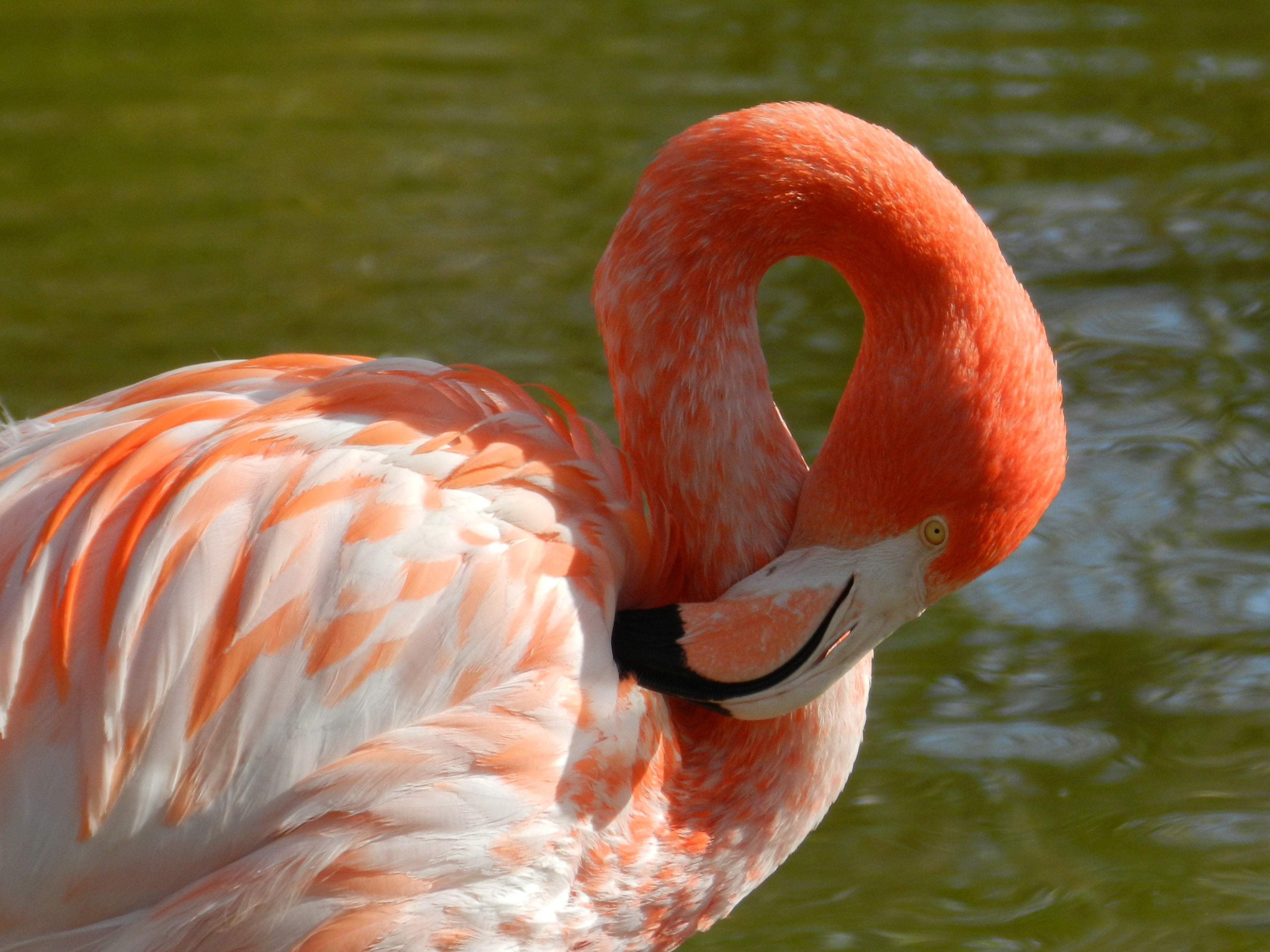
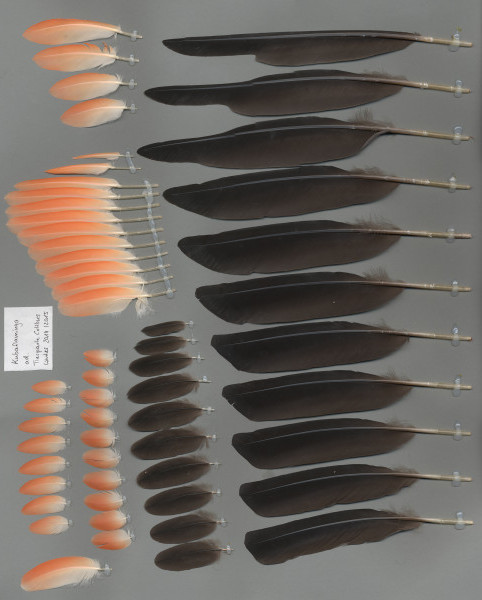
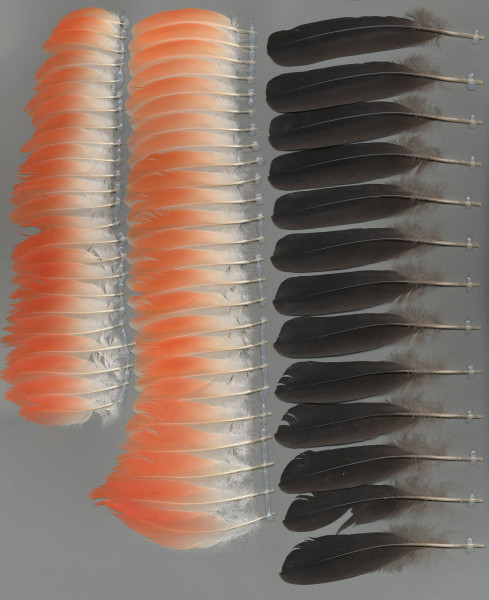
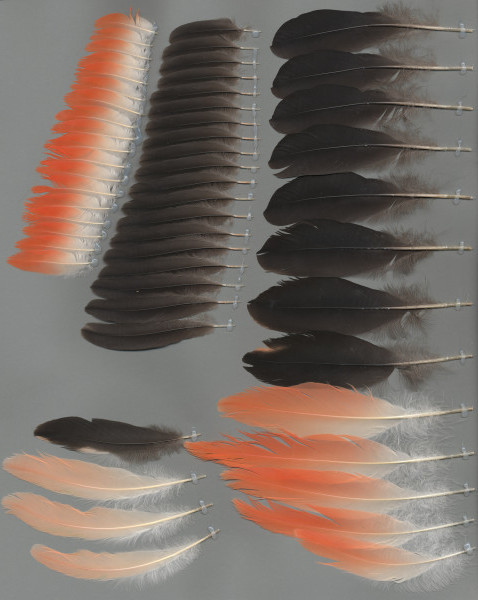
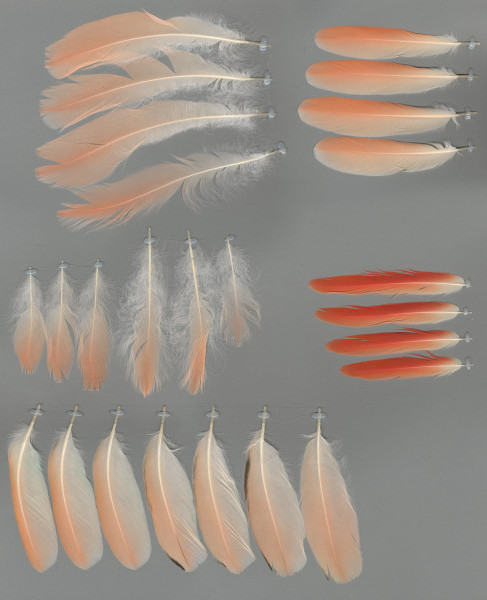



Der Kubaflamingo ist einer der häufigen un großen Vertreter der Ordnung der Flamingos. Im Pracht kleid kann seine rote Färbung kräftiger als die des Rosaflamingos ausgeprägt sein. Die Hand- und Armschwingen sind schlicht schwarzbraun gefärbt. Der Kiel ist an der Basis cremefarben und geht dann in ein schwarzbraun über. Die Handschwingen H9 und H10, H8 teilweise undeutlich, besitzen eine partielle Verengung der Außenfahne. H11 ist vollständig verengt. Die Steuerfedern, GrHd, GrAd und sämtliche weitere Oberflügeldecken sind je nach Farbstoffsättigung in den Federn weiß-blassrosa bis hin zu leuchtend rot gefärbt. Die Färbung auf der Außenfahne ist dabei immer dominierend. Die Unterflügeldecken sind die wie Schwingen schlicht dunkel gefärbt. Die Geschlechter lassen sich anhand des Gefieders nicht unterscheiden. Für einen gezielten Vergleich der Flamingoarten liegen uns noch nicht genügend Belege vor.
| feather | number | longest |
|---|---|---|
| primary | 11 per wing |
approx. 325.5mm
n=1 P9 (100%) |
| secondary | 26 per wing |
approx. 285.5mm
n=1 S23 (100%) |
| retrix |
14
|
approx. 172.5mm
n=1 R1 (100%) |
|
do_not_translate_yet:measurements_remarks.title
do_not_translate_yet:measurements_remarks.number_of_individuals ndo_not_translate_yet:measurements_remarks.selection_of_individuals do_not_translate_yet:measurements_remarks.method_titledo_not_translate_yet:measurements_remarks.method do_not_translate_yet:measurements_remarks.percentage_titledo_not_translate_yet:measurements_remarks.percentage |
||