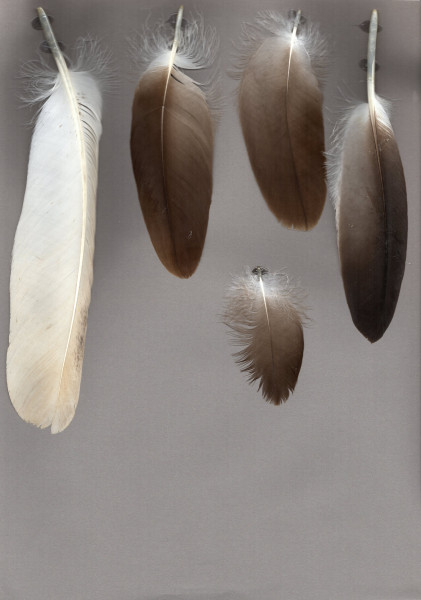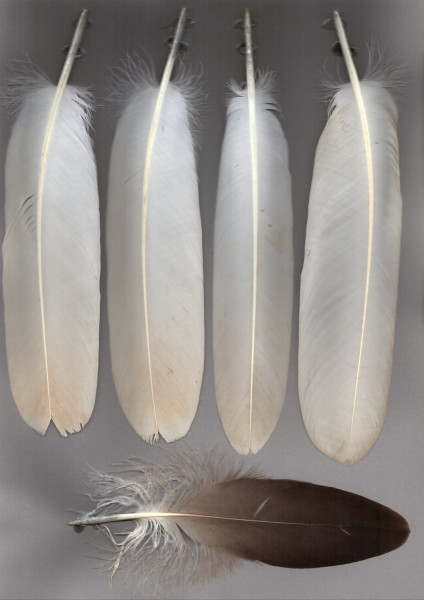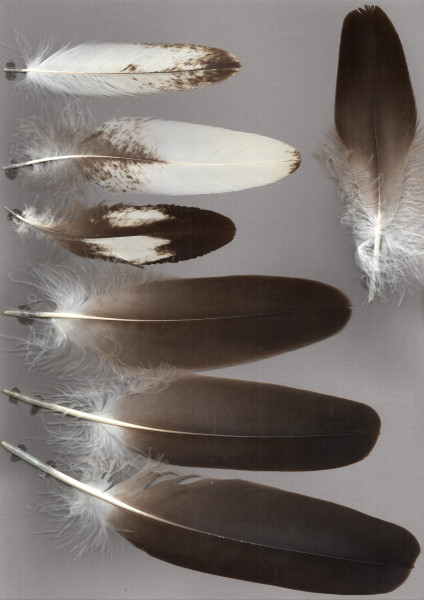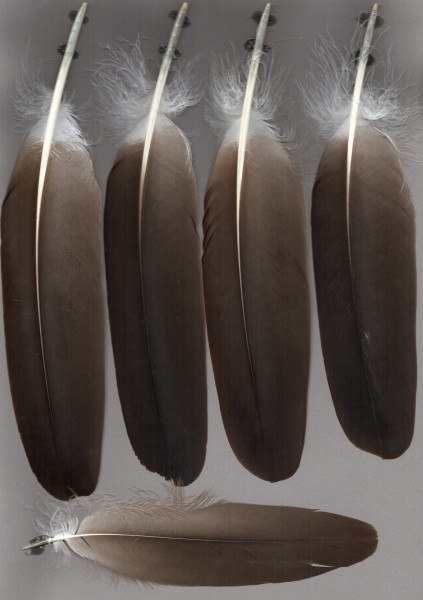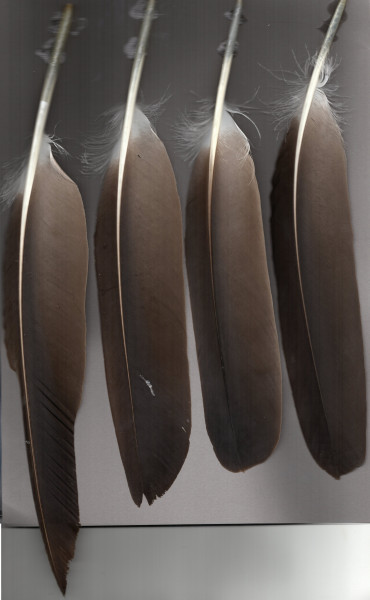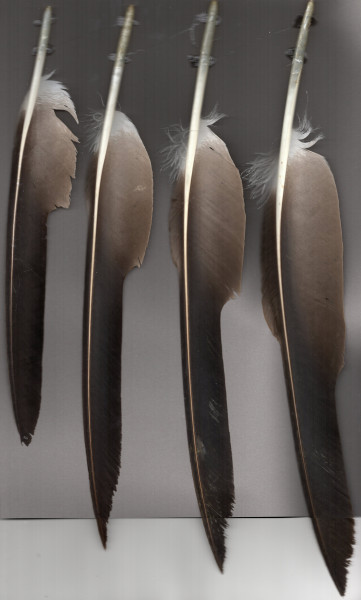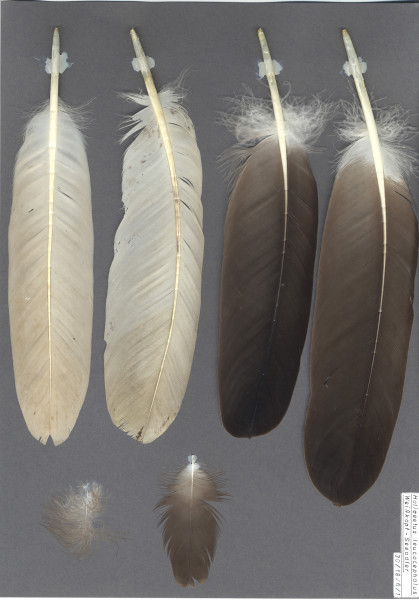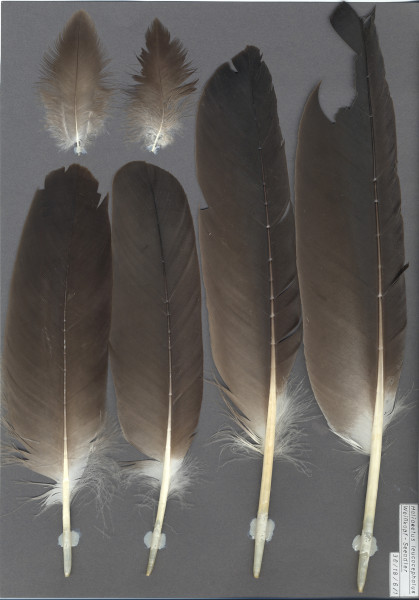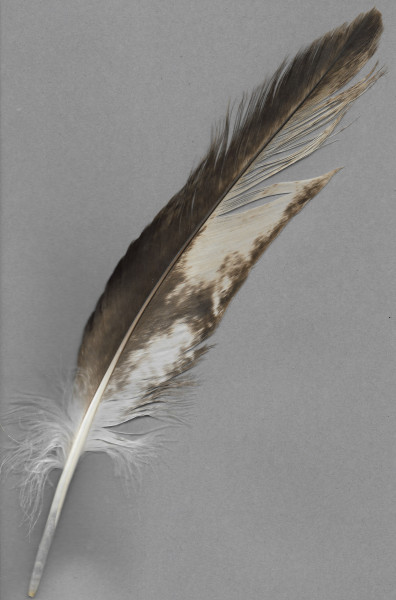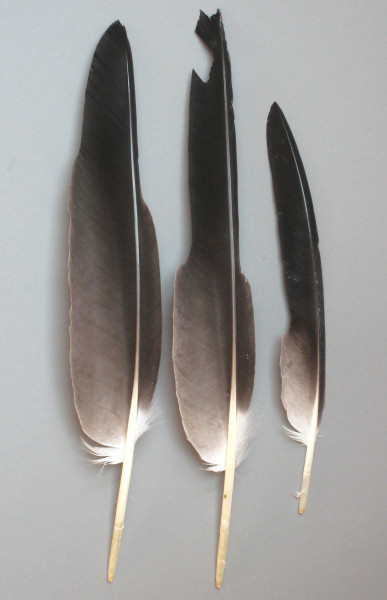
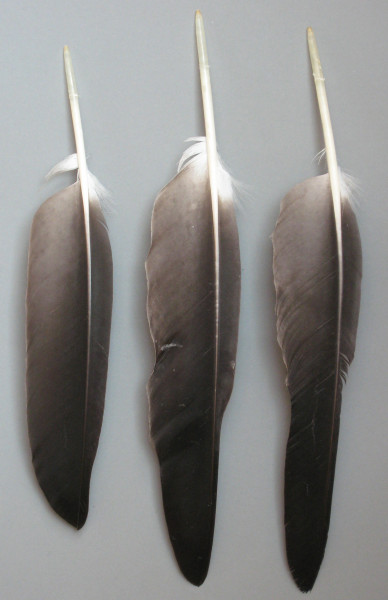
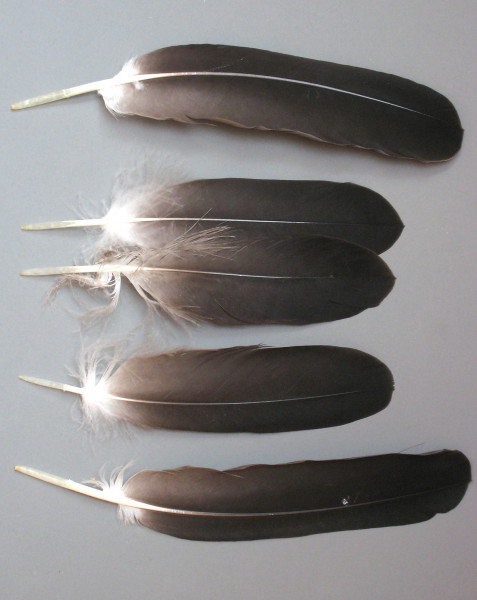
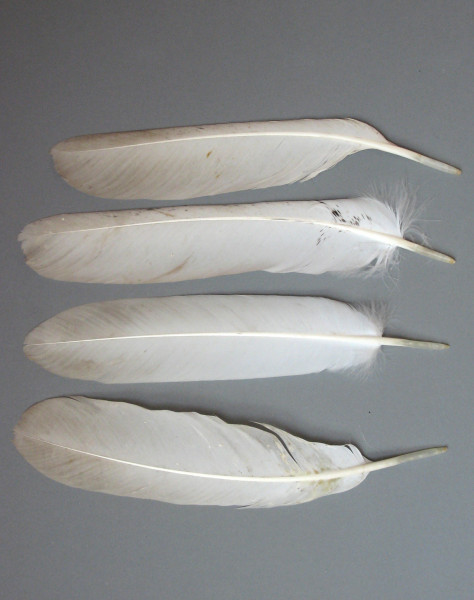



Der Weißkopfseeadler ist bekannt als der Wappenvogel der USA. Die Hand- und Armschwingen sind wie bei anderen Seeadlern auch graubraun gefärbt, zur Spitze hin schwärzer werden. Die Basis von Außen- und Innenfahne ist auffallend weiß gesäumt. Die Handschwingen H5 bis H10 sind sowohl in der Innenfahne als auch in der Außenfahne partiell verengt - H10 in der Außenfahne vollständig. Beim Europäischen Seeadler ist meist auch die H4 in der Außenfahne verengt, das Gefieder ist etwas heller und insgesamt sind die Federmaße größer. Die Steuerfedern adulter Vögel sind rein weiß gefärbt, teilweise cremefarben verfärbt oder mit vereinzelten dunklen Flecken oder Strichen an der Basis. Juvenile Weißkopfseeadler besitzen größtenteils schwarzbraune Steuerfedern mit unregelmäßigen, feinen, weißen Flecken. Die Basis ist dennoch weiß gesäumt. Im Laufe von vier Jahren verliert sich die braune Färbung mit jeder Mauser ein wenig mehr. Im vierten Jahr sind die Steuerfedern größtenteils weiß mit dunkler Spitze oder in der S6 auch mit dunkler Außenfahne. Die S1 ist generell etwas dunkler gefärbt. Durch die Variation im Steuer kann anhand des dunklen Anteils zwar eine Vermutung über das Alter des Vogels angestellt werden, jedoch meist keine eindeutige Bestimmung. Vögel im ersten und im vierten Jahr können teilweise an der starken Ausprägung der Merkmale erkannt werden, adulte Vögel ohnehin.
| feather | number | longest |
|---|---|---|
| primary | 10 per wing |
490.0 - 527.0mm
n=2 P6 (100%) |
| secondary | no data available | |
| retrix |
12
|
no data available |
|
do_not_translate_yet:measurements_remarks.title
do_not_translate_yet:measurements_remarks.number_of_individuals ndo_not_translate_yet:measurements_remarks.selection_of_individuals do_not_translate_yet:measurements_remarks.method_titledo_not_translate_yet:measurements_remarks.method do_not_translate_yet:measurements_remarks.percentage_titledo_not_translate_yet:measurements_remarks.percentage |
||